
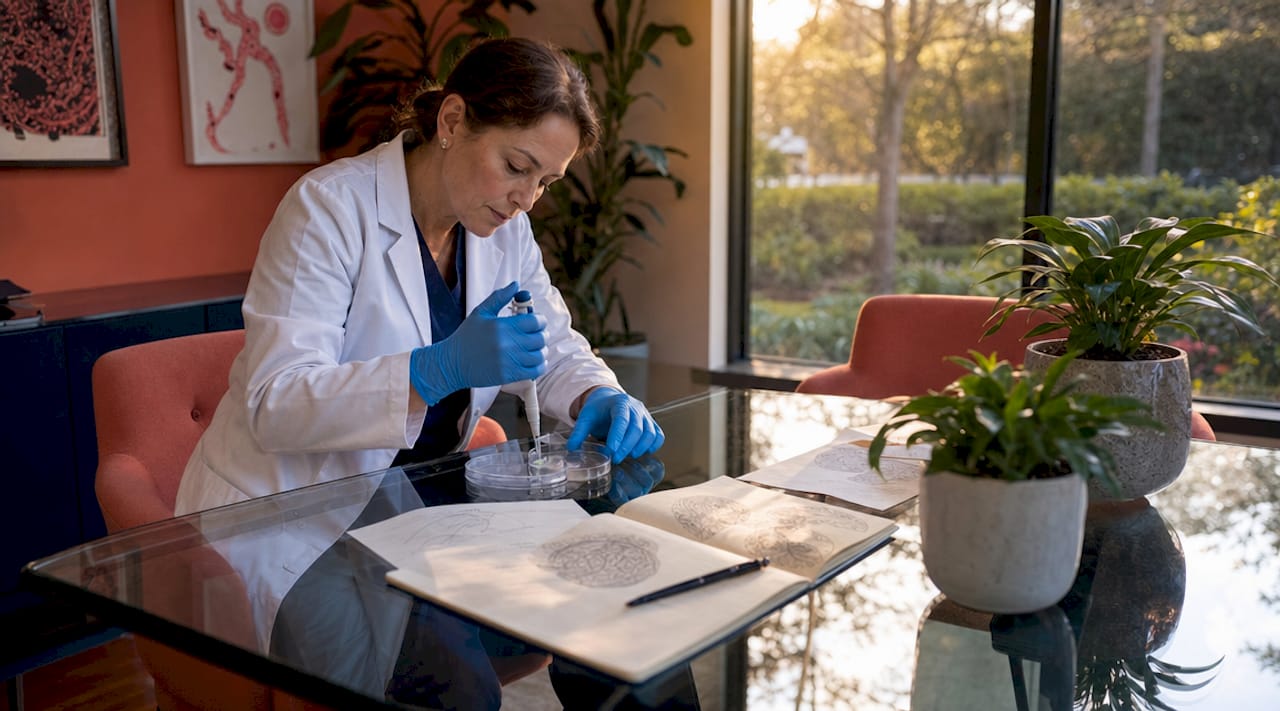
Therapies for tissue repair are medical approaches designed to restore damaged tissue function by activating the body’s own regenerative biology through cellular, biological, and bioengineering methods. Regenerative medicine has expanded well beyond basic wound care. Today, options like stem cell therapy, platelet-rich plasma (PRP), biomaterial scaffolds, and prostaglandin modulation give patients real alternatives to surgery. At Nortextissueregeneration, we work with people who have tried rest, medication, and physical therapy without lasting results. What follows is a clear, evidence-based look at the most effective tissue regeneration therapies available in 2026, how they work, and how to think about choosing between them.
1. What is stem cell therapy and how does it support tissue repair?
Stem cell therapy is one of the most studied tissue repair techniques in regenerative medicine, and for good reason. Mesenchymal stem cells (MSCs), derived from bone marrow or adipose tissue, do not simply replace damaged cells. They release signaling molecules that reduce inflammation, stimulate local cell activity, and guide the remodeling of injured tissue. This paracrine effect is what makes MSC-based therapies so relevant for joint degeneration, tendon injuries, and chronic soft tissue damage.
The most striking recent evidence comes from CD19-CAR T cell therapy in systemic sclerosis patients. Research published in Nature Communications shows that CD19-CAR T cells can reverse fibrosis by restoring dermal papillae and normal fibroblast function. This is significant because fibrosis was previously considered irreversible. The histological and molecular evidence from this study confirms that advanced cellular therapies can remodel tissue that standard treatments cannot touch.
For patients dealing with chronic joint pain or degenerative conditions, stem cell therapies offer a non-surgical path that works with the body rather than around it. Results are not immediate. Most patients see meaningful improvement over eight to twelve weeks, with continued remodeling occurring for months after treatment.
Key advantages of stem cell therapy for tissue repair include:
- Reduces chronic inflammation at the injury site
- Stimulates local progenitor cells to become active
- Supports angiogenesis, which improves blood supply to healing tissue
- Avoids the recovery burden of surgical intervention
- Can be combined with scaffolds or PRP for enhanced outcomes
Pro Tip: If you are considering stem cell therapy, ask your provider whether they use freshly isolated cell populations or culture-expanded cells. Single-point-of-care procedures that preserve cellular heterogeneity tend to maintain more of the cell population’s natural repair capacity.
2. How PRP and gene-enhanced hydrogels accelerate wound healing
Platelet-rich plasma therapy concentrates growth factors from your own blood and delivers them directly to an injury site. PRP releases proteins like PDGF, TGF-beta, and VEGF that signal tissue repair and new blood vessel formation. It is one of the most widely used biological therapies for repair, particularly for tendon injuries, osteoarthritis, and soft tissue wounds.
The core limitation of standard PRP is timing. PRP preparations lose over 80% of their growth factors within 72 hours post-application due to burst-release. This means the therapeutic window is short, often too short to cover the full proliferative and remodeling phases of tissue healing.
The solution gaining traction in 2026 is combining PRP with gene-loaded nanoparticles embedded in a hydrogel carrier. Research published in PLOS ONE demonstrates that combining bFGF/VEGFA nanoparticles with PRP in a hydrogel produces significantly better full-thickness skin healing than either therapy alone. The hydrogel protects growth factors from rapid degradation and allows sustained release across both the proliferative and remodeling phases.
| Therapy | Growth factor duration | Best application |
|---|---|---|
| PRP alone | Less than 72 hours | Acute injuries, mild joint pain |
| PRP plus hydrogel scaffold | 7 to 14 days | Chronic wounds, moderate tissue damage |
| PRP plus gene-loaded nanoparticles in hydrogel | 14 to 21 days | Full-thickness wounds, complex tissue repair |
For patients with chronic wounds or significant soft tissue damage, the combination approach is meaningfully more effective than PRP alone. We often see patients who have had one or two PRP injections elsewhere without lasting relief. In many of those cases, the issue is not PRP itself but the lack of a delivery system that sustains the growth factor effect long enough to matter.
Pro Tip: Ask whether your PRP treatment includes a scaffold or carrier matrix. Standard PRP injections without a sustained-release component may not provide enough growth factor coverage for complex or chronic tissue injuries.
3. How biomaterial scaffolds and electrical stimulation support regeneration
Biomaterial scaffolds are structures designed to mimic the extracellular matrix, the natural framework that surrounds and supports cells in living tissue. Materials like collagen, hyaluronic acid, and fibrin provide a physical environment where cells can attach, proliferate, and differentiate into the tissue type needed for repair. Stromal vascular fraction (SVF) from adipose tissue, when combined with these scaffolds, provides pro-regenerative paracrine and immunomodulatory effects that support angiogenesis and remodeling across multiple tissue types.
Surface engineering has added another layer of precision to scaffold design. Cold Atmospheric Plasma (CAP) treatment modifies scaffold surfaces to improve how cells interact with them. Research published in Biomimetics shows that CAP reduces water contact angle on polymers from approximately 110 degrees to 50 degrees, dramatically increasing hydrophilicity and protein adsorption. This change improves stem cell adhesion and osteogenic differentiation, making CAP-treated scaffolds more effective for bone and cartilage repair applications.
Bioelectric stimulation adds a third dimension to scaffold therapy. Natural tissue repair relies on endogenous electric fields of around 1 microampere. Piezoelectric polymers embedded in scaffolds can simulate these natural electric cues to accelerate wound healing and bone regeneration without external power sources. The scaffold generates its own therapeutic signal in response to mechanical loading, which makes it particularly relevant for weight-bearing joints and musculoskeletal repair.
AI-assisted scaffold design is now being used to optimize material properties for specific tissue types and patient profiles. This integration of Cold Atmospheric Plasma engineering with AI-driven design enables precision tailoring of biomaterial properties for improved regenerative outcomes, a direction that will likely define the next generation of non-invasive tissue repair options.
4. Why prostaglandin E2 matters for muscle and tissue recovery
Prostaglandin E2 (PGE2) is an inflammatory mediator that plays a specific and often underappreciated role in muscle stem cell function. Most people associate inflammation with damage, but PGE2 is part of the body’s repair signaling system. Research published in PNAS confirms that PGE2 via EP4 receptor signaling is required for muscle stem cell proliferation and effective regeneration after injury. Blocking this signal leads to impaired regeneration and measurably lower muscle force recovery.
The clinical implication is direct and important. NSAIDs like ibuprofen and naproxen suppress PGE2 production. Taking them immediately after a muscle or soft tissue injury may reduce short-term pain but also reduces the quality of tissue healing. This is not a theoretical concern. The same PNAS research shows that blocking PGE2 impairs regeneration and weakens overall muscle strength recovery in a measurable way.
“Effective tissue repair therapies are those that orchestrate natural biological feedback loops, such as PGE2-mediated stem cell regulation, to maximize regeneration without forcing cell behavior.” — PNAS, Prostaglandin E2 research
Practical recommendations based on current evidence include:
- Avoid NSAIDs for at least 48 to 72 hours after acute muscle or soft tissue injury when possible
- Discuss pain management alternatives with your provider, including acetaminophen or localized ice therapy
- Consider that therapeutic PGE2 administration may become a clinical option for patients with impaired healing responses
- Understand that natural healing processes depend on a coordinated inflammatory response, not the absence of inflammation
This is one area where common patient behavior, reaching for an NSAID at the first sign of soreness, may actually work against recovery. We explain this to patients regularly, and it often changes how they manage the first few days after an injury.
5. How to choose the right tissue repair therapy for your situation
Selecting among stem cell therapy, PRP, scaffolds, and bioelectric treatments depends on the type of tissue involved, whether the injury is acute or chronic, and what your recovery goals realistically are. There is no single best therapy. There is only the best therapy for your specific condition, timeline, and biology.
For acute soft tissue injuries like muscle tears or tendon strains, PRP is often the first-line biological option. It is minimally invasive, uses your own blood, and delivers growth factors directly to the site. For chronic conditions like osteoarthritis or degenerative joint disease, stem cell therapy or bone marrow cell therapy tends to produce more durable results because the underlying tissue environment requires more than a short-term growth factor boost.
Biomaterial scaffolds are most relevant when there is significant structural tissue loss or when the repair environment lacks the cellular density needed for natural regeneration. They are increasingly used in combination with cellular therapies rather than as standalone treatments. For patients exploring outpatient regenerative options, the one-stage procedure combining freshly isolated SVF with a biomimetic scaffold represents a practical and clinically feasible approach.
Key considerations when choosing a therapy:
- Acute injuries respond well to PRP; chronic degeneration often requires cellular therapy
- Combining therapies generally outperforms single-modality treatment
- Physical rehabilitation should run alongside any regenerative protocol, not after it
- Realistic timelines matter: most regenerative therapies show peak effect at 8 to 16 weeks
- A clinical consultation should precede any treatment decision
Pro Tip: When consulting a provider, ask specifically about combination protocols. The research consistently shows that combining PRP with scaffolds or cellular therapies produces better outcomes than any single treatment alone.
Key takeaways
The most effective therapies for tissue repair combine cellular, biological, and scaffold-based strategies to support the body’s natural regenerative processes rather than replace them.
| Point | Details |
|---|---|
| Stem cell therapy reverses fibrosis | CD19-CAR T cell treatment has shown histological evidence of reversing previously irreversible fibrotic tissue. |
| PRP alone has a short therapeutic window | Standard PRP loses over 80% of growth factors within 72 hours; combining it with a hydrogel scaffold extends this significantly. |
| Bioelectric scaffolds mimic natural repair signals | Piezoelectric polymers generate endogenous-like electric fields around 1 microampere to accelerate wound and bone healing. |
| NSAIDs may impair muscle recovery | Suppressing PGE2 via NSAIDs immediately post-injury reduces muscle stem cell proliferation and lowers strength recovery. |
| Combination protocols outperform single therapies | Pairing PRP, gene-loaded nanoparticles, and hydrogel carriers produces measurably better full-thickness healing than any therapy used alone. |
What I’ve learned about non-surgical tissue repair in clinical practice
After years of working in this space, the pattern I keep returning to is this: patients who do best are the ones who stop thinking about regenerative therapy as a single injection and start thinking about it as a protocol. The research supports this completely. No single modality, whether PRP, stem cells, or scaffolds, performs as well in isolation as it does when combined thoughtfully.
The other thing worth saying plainly is that the regulatory and standardization landscape for some of these therapies is still catching up to the science. Culture-expanded stem cell products, for example, face more regulatory complexity than freshly isolated SVF procedures. That is not a reason to avoid cellular therapy. It is a reason to work with a clinic that understands those distinctions and applies evidence-based protocols rather than marketing-driven ones.
I am genuinely optimistic about where this field is heading. The convergence of AI-assisted scaffold design, bioelectric stimulation, and precision cellular therapies is producing outcomes that were not possible five years ago. But the most important thing you can do right now is get a proper clinical assessment before choosing a therapy. The biology is sophisticated. Your treatment plan should be too.
— Felix
Explore non-surgical tissue repair at Nortextissueregeneration
Nortextissueregeneration offers a range of advanced, non-surgical regenerative treatments for patients dealing with chronic joint pain, sports injuries, and degenerative conditions. Our PRP therapy protocols are designed to go beyond standard injections, incorporating combination approaches that sustain growth factor delivery where it matters most. For patients who need more than PRP, our stem cell therapy program and bone marrow cell therapy options provide cellular-level repair without surgery or extended downtime. Every treatment plan at Nortextissueregeneration is personalized based on your injury type, tissue condition, and recovery goals. Contact us to schedule a consultation and find out which protocol is right for you.
FAQ
What are the most effective therapies for tissue repair?
Stem cell therapy, PRP combined with hydrogel scaffolds, and biomaterial-based treatments are among the most evidence-supported options for non-surgical tissue repair. Combination protocols consistently outperform single-modality treatments in clinical research.
How long does tissue regeneration therapy take to work?
Most patients see meaningful improvement between 8 and 16 weeks after treatment, with continued remodeling occurring for several months. Results depend on the therapy used, the severity of tissue damage, and whether rehabilitation is integrated into the recovery plan.
Should I avoid NSAIDs after a tissue injury?
Avoiding NSAIDs for 48 to 72 hours after acute muscle or soft tissue injury is advisable when possible. Research published in PNAS confirms that NSAIDs suppress PGE2, a signaling molecule required for muscle stem cell proliferation and quality tissue regeneration.
Is PRP therapy enough on its own for tissue repair?
PRP alone is effective for mild to moderate injuries, but its growth factors degrade rapidly. For chronic wounds or significant tissue damage, combining PRP with a hydrogel scaffold or gene-loaded nanoparticles produces sustained growth factor release and better healing outcomes.
Who is a good candidate for non-surgical tissue repair therapies?
Patients with chronic joint pain, tendon injuries, osteoarthritis, or soft tissue degeneration who want to avoid surgery are typically good candidates. A clinical consultation is the only reliable way to determine which therapy matches your specific tissue condition and recovery goals.