

Restoring joint function without surgery is genuinely possible for most people, and the evidence behind it is stronger than ever. The core strategies are movement, targeted exercise, anti-inflammatory nutrition, weight management, and consistent lifestyle habits that support synovial fluid production. What we’ve found, both in the research and in working with patients, is that no single intervention does the job alone. These approaches work best together, and the results tend to build over weeks and months rather than days. One important expectation to set early: joint degeneration cannot be fully reversed, but symptoms can improve meaningfully with the right non-pharmacological plan.
Daily actions that support joint function recovery:
- Move regularly throughout the day, even short walks count
- Eat foods rich in omega-3 fatty acids and antioxidants
- Stay well hydrated to maintain synovial fluid volume
- Strengthen the muscles surrounding your most affected joints
- Prioritize sleep and allow adequate recovery between activity sessions
- Manage your body weight to reduce mechanical load on knees and hips
- Work with a physical therapist to build a plan suited to your specific condition
1. How movement and exercise improve joint lubrication
Exercise is the single most supported non-surgical intervention for joint health, and the biology behind it is worth understanding. When you move a joint through its range of motion, the synovial membrane responds by secreting hyaluronan, the molecule responsible for synovial fluid’s lubricating viscosity. Research shows that cyclic joint movement nearly doubles hyaluronan secretion compared to a joint held at rest, rising from 11.2 μg/h to 22.6 μg/h. That’s not a small difference. It means morning stiffness after a night of immobility is partly a fluid deficit, and gentle movement is the most direct way to address it.
Beyond lubrication, physical activity stimulates autophagy, a cellular process where damaged components in joint tissue are cleared away. Think of it as routine maintenance at the cellular level. Exercise also increases blood flow to the synovial membrane, delivering oxygen and nutrients that support ongoing repair.
Exercise types that benefit joint function:
- Resistance training: Strengthens muscles around the joint, reducing the load the joint itself must bear
- Stretching and flexibility work: Maintains range of motion and reduces stiffness
- Balance training and tai chi: Protect joints by improving coordination and reducing fall risk
- Yoga: Combines flexibility, strength, and controlled breathing to reduce inflammation
- Low-impact aerobic activity: Walking, swimming, and cycling stimulate synovial fluid without excessive joint stress
Pro Tip: Start every session with 5–10 minutes of gentle movement before loading the joint. Warming up gradually increases synovial fluid distribution across the cartilage surface, which reduces friction during more demanding activity.
2. What you eat affects your joints more than most people realize
Nutrition shapes the synovial environment at a molecular level. High-fat diets increase systemic inflammation that impairs joint fluid quality, while anti-inflammatory eating patterns do the opposite. Omega-3 fatty acids, found in fatty fish like salmon and mackerel, are among the most studied nutrients for reducing joint inflammation. Antioxidants from leafy greens, berries, and colorful vegetables help neutralize free radicals that degrade hyaluronan in the joint cavity.
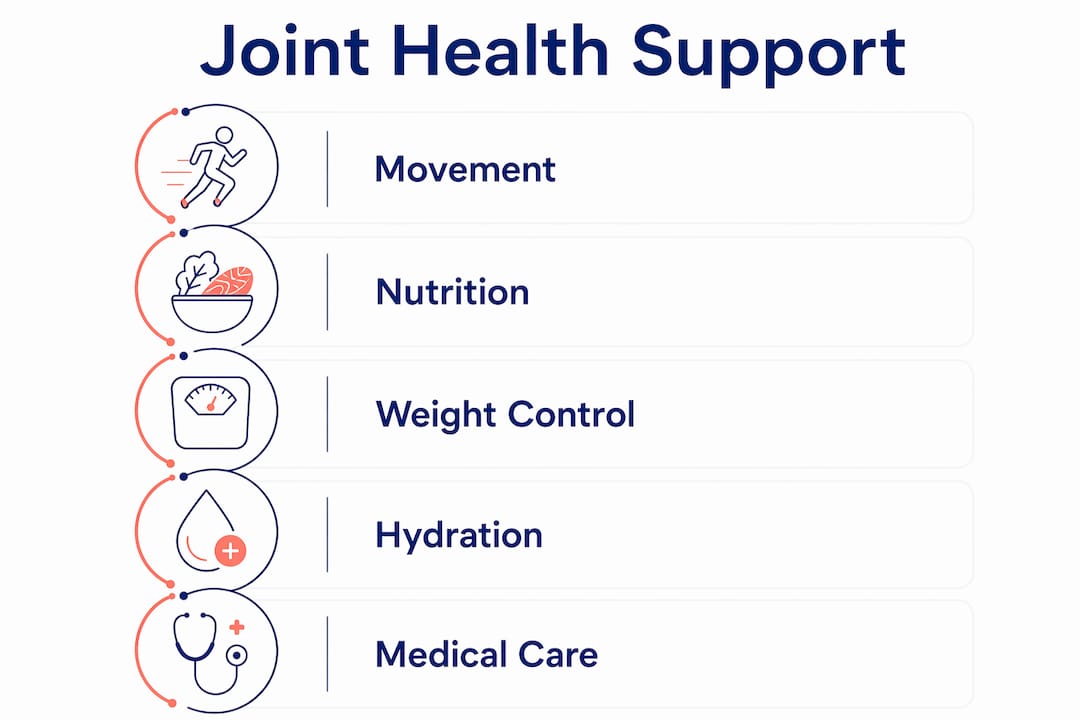
Hydration deserves its own mention. Synovial fluid is primarily water, and when the body is dehydrated, it prioritizes vital organs, leaving joints with thinner, less effective lubrication. Eight to ten cups of water daily is a reasonable baseline for most adults, though individual needs vary.
Nutrients and foods that support joint health:
- Omega-3 fatty acids: fatty fish, flaxseed, walnuts
- Vitamin C: citrus fruits, bell peppers, broccoli (supports collagen synthesis)
- Vitamin D: fortified foods, sunlight exposure, fatty fish
- Antioxidants: leafy greens, berries, green tea
- Collagen-supporting foods: bone broth, eggs, legumes
On supplements: glucosamine and chondroitin are widely used, but clinical evidence shows mixed results, with many trials finding no significant benefit over placebo. They’re generally safe, but we’d caution against treating them as a substitute for dietary and lifestyle changes.
3. How weight and lifestyle habits shape joint health
Excess body weight places a disproportionate mechanical load on weight-bearing joints. Research cited by the Arthritis Foundation notes that losing one pound of body weight removes four pounds of pressure from the knees. For someone carrying even 20 extra pounds, that math adds up quickly. Weight loss also reduces circulating inflammatory markers, which benefits joint tissue beyond the purely mechanical effect.

Sleep is another factor we often see underestimated. During deep sleep, the body performs tissue repair and regulates inflammatory cytokines. Poor sleep quality tends to amplify pain sensitivity and slow recovery. Aiming for 7–9 hours of consistent sleep is not just general health advice; for someone managing joint pain, it’s part of the treatment plan.
Lifestyle and ergonomic adjustments that reduce joint strain:
- Use supportive footwear with adequate cushioning and arch support
- Adjust workstation height to avoid prolonged awkward joint positions
- Take movement breaks every 30–60 minutes if you sit for long periods
- Use assistive devices (canes, braces, ergonomic tools) when appropriate
- Work with a physical therapist to correct movement patterns that overload specific joints
Physical therapy deserves particular emphasis. A trained physical therapist can identify compensatory movement patterns, prescribe exercises matched to your specific joint condition, and teach you how to progress safely. If you’re working with a personal training program that incorporates individualized strength and conditioning, that structure can meaningfully support what you’re doing in a clinical setting.
4. Understanding synovial fluid and how to support it without surgery
Synovial fluid does two things that are easy to underestimate: it lubricates the joint under movement and serves as the primary nutrient delivery system for cartilage, which has no direct blood supply. The fluid’s viscosity depends heavily on hyaluronan concentration and molecular weight. In osteoarthritic joints, hyaluronan degrades faster and is produced in lower concentrations, which is why the fluid becomes thinner and less effective.
Movement is the most reliable way to stimulate hyaluronan secretion naturally. The movement-secretion coupling mechanism means that even moderate daily activity keeps this cycle running. Hydration maintains the fluid volume. Anti-inflammatory nutrition slows hyaluronan degradation.
Methods that support synovial fluid health:
- Regular low-impact movement throughout the day
- Adequate daily hydration
- Anti-inflammatory diet to reduce oxidative degradation of hyaluronan
- Avoiding prolonged immobility, especially overnight without morning movement
- Medical injections of hyaluronic acid or PRP as short-term adjuncts when clinically indicated
On injections: hyaluronic acid and PRP injections can reduce friction and provide temporary relief, but the lasting benefit depends on the underlying strengthening and lifestyle work. They’re adjuncts, not replacements for the foundational approach.
5. Non-surgical medical treatments that support joint function
When lifestyle interventions alone aren’t providing enough relief, several non-surgical medical options can be layered in. These are worth understanding clearly, because the evidence behind them varies.
NSAIDs and topical medications are often the first pharmacological step. Oral anti-inflammatory medications reduce pain and swelling enough to allow more consistent exercise, which then drives longer-term improvement. Topical NSAIDs, applied directly to the joint, carry a lower systemic risk profile and work well for accessible joints like the knee.
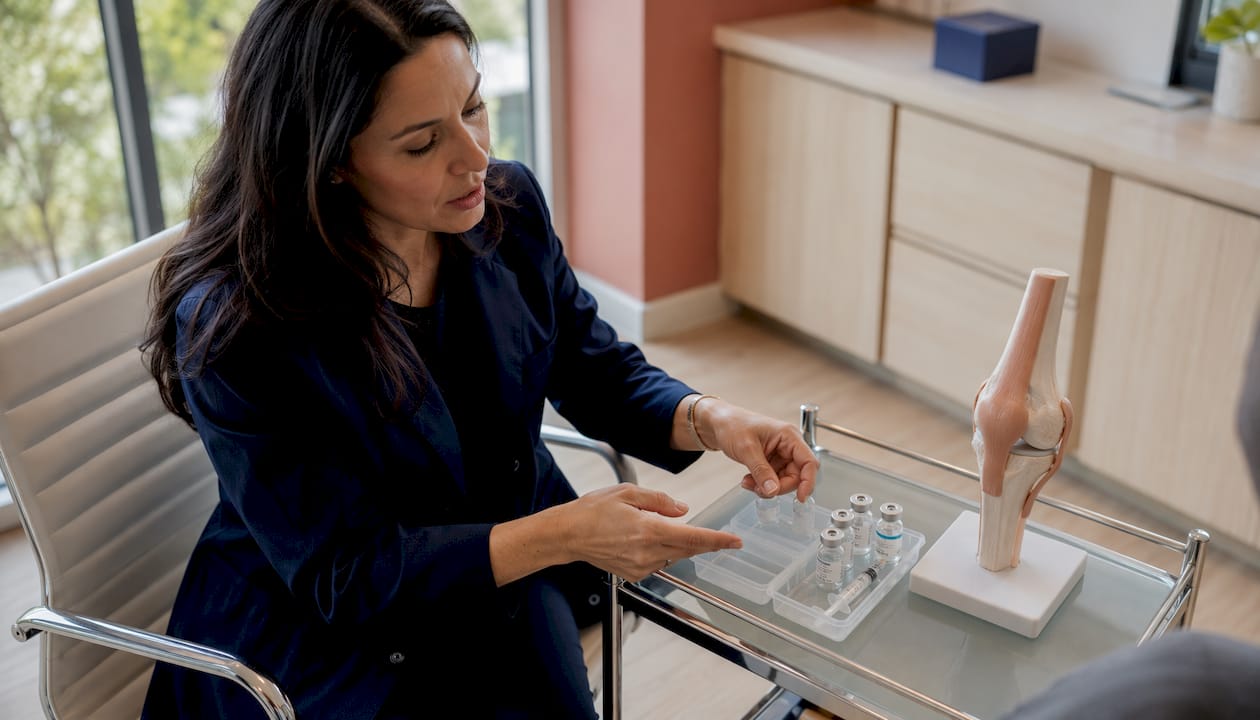
Corticosteroid injections deliver anti-inflammatory medication directly into the joint. They work quickly and can meaningfully reduce acute flares, though the effect typically lasts 2–3 weeks. They’re conditionally recommended when inflammation is the dominant symptom.
Hyaluronic acid injections take 3–5 weeks to reach peak effect but can sustain relief for 5–13 weeks. They work by temporarily restoring viscosity to degraded synovial fluid.
PRP (Platelet-Rich Plasma) therapy uses growth factors drawn from your own blood to support tissue repair. For younger, active patients with lower-grade joint degeneration, PRP therapy has shown meaningful benefit. At Nortextissueregeneration, we use PRP as part of a broader plan that includes exercise and lifestyle support, not as a standalone fix.
Radiofrequency ablation is an option for patients with significant pain who are not candidates for surgery. It targets the nerves transmitting pain signals from the joint and can improve function within a 3–12 month window.
6. Signs that mean you should see a professional
Most joint discomfort responds to the strategies above, but some presentations warrant prompt evaluation. Waiting too long can allow a manageable condition to progress further.
Seek professional assessment when you notice:
- Joint pain that persists beyond 6 weeks despite rest and basic care
- Significant swelling, warmth, or redness around a joint
- Sudden loss of range of motion or joint locking
- Pain that wakes you from sleep consistently
- Joint instability or a feeling that the joint may “give way”
- Symptoms that worsen despite following a structured exercise and nutrition plan
- Fever accompanying joint pain, which may indicate infection or inflammatory arthritis
We often see patients who waited months before coming in, having tried over-the-counter medications and rest without a clear plan. Earlier evaluation typically means more options and a faster path back to function.
7. Risk factors and how to prevent joint deterioration
Understanding what accelerates joint deterioration helps you make targeted changes rather than generic ones. Age is a factor, but it’s far from the only one, and many of the modifiable risks are addressable with the approaches already covered.
Key risk factors for joint deterioration:
- Excess body weight, particularly for knee and hip joints
- Sedentary lifestyle leading to muscle weakness and poor joint support
- Repetitive high-impact activity without adequate recovery
- Previous joint injuries, especially ligament or cartilage damage
- Inflammatory conditions like rheumatoid arthritis or gout
- Poor nutrition, particularly diets high in processed foods and saturated fat
- Smoking, which impairs circulation and tissue repair
- Occupational demands that involve prolonged kneeling, squatting, or heavy lifting
Prevention centers on the same pillars as treatment: consistent movement, weight management, and anti-inflammatory nutrition. Resistance training and patient education are strongly supported as core interventions for managing knee osteoarthritis, and both apply equally to prevention. For patients with a history of joint injury, working with a 1-on-1 coaching program to build structured, progressive strength training can reduce the risk of re-injury and long-term deterioration.
Key Takeaways
Non-surgical joint function recovery depends on consistent movement, anti-inflammatory nutrition, weight management, and targeted clinical support when lifestyle changes alone are insufficient.
| Point | Details |
|---|---|
| Movement drives lubrication | Cyclic joint movement nearly doubles hyaluronan secretion, from 11.2 μg/h to 22.6 μg/h, compared to a joint at rest. |
| Degeneration is manageable, not reversible | Symptoms improve with exercise, diet, and education, but structural degeneration does not fully reverse. |
| Weight loss reduces joint load | Losing excess body weight reduces pressure on the knees significantly, easing mechanical load and improving joint health. |
| Injections are adjuncts, not cures | PRP and hyaluronic acid injections provide short-term relief; lasting benefit requires muscle strengthening and lifestyle change. |
| Prevention uses the same tools as treatment | Resistance training, weight management, and anti-inflammatory nutrition reduce both deterioration risk and active symptoms. |
FAQ
Can you get fluid back in your joints naturally?
Yes. Regular movement stimulates synovial cells to secrete hyaluronan, which restores synovial fluid viscosity. Staying well hydrated also maintains fluid volume, since synovial fluid is primarily water.
What vitamins support synovial fluid production?
Vitamin C supports collagen synthesis in the synovial membrane, and vitamin D plays a role in reducing joint inflammation. Neither directly “refills” synovial fluid, but both support the tissue environment that produces and maintains it.
Can joint degeneration be reversed?
Joint degeneration cannot be fully reversed, but its symptoms, including pain, stiffness, and reduced mobility, can improve significantly with non-pharmacological interventions like exercise, diet, and education.
What can you drink to help lubricate your joints?
Water is the most direct answer, since synovial fluid is primarily water and dehydration reduces its quality. Green tea, which contains anti-inflammatory antioxidants, is a reasonable addition, though no beverage replaces consistent hydration and movement.