

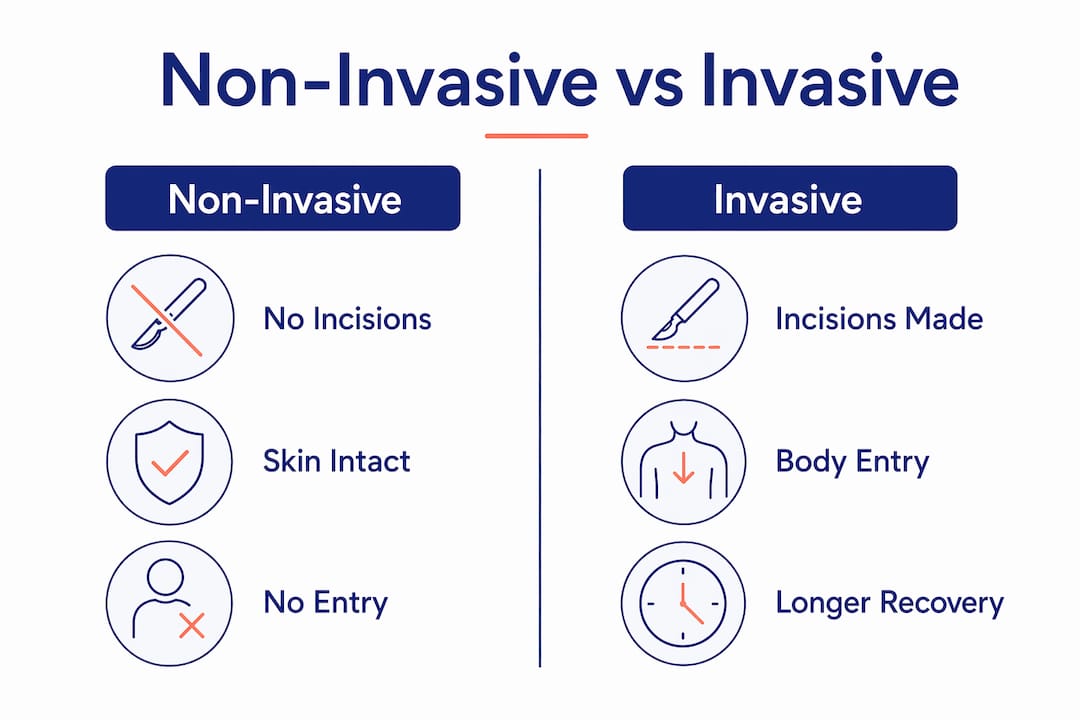
Non-invasive therapies are medical treatments performed without cutting the skin, creating incisions, or inserting instruments beyond the body’s natural openings. According to MedlinePlus, noninvasive procedures do not involve tools that break the skin or physically enter the body. That definition covers a wide range of both diagnostic and therapeutic approaches, from an MRI scan to a guided exercise program.
A few key traits define whether a procedure qualifies as non-invasive:
- No skin incision or puncture
- No insertion of instruments into body cavities
- No tissue removal or internal disruption
- Examples include x-rays, massage, physical therapy, and mindfulness practices
One nuance worth knowing: some procedures marketed as “non-invasive” actually involve minor needle penetrations, such as certain injection-based treatments. Research published in PMC highlights that inconsistent terminology can create confusion, so asking your provider exactly what a procedure involves is always a reasonable step.
What are some common examples of non-invasive therapies?
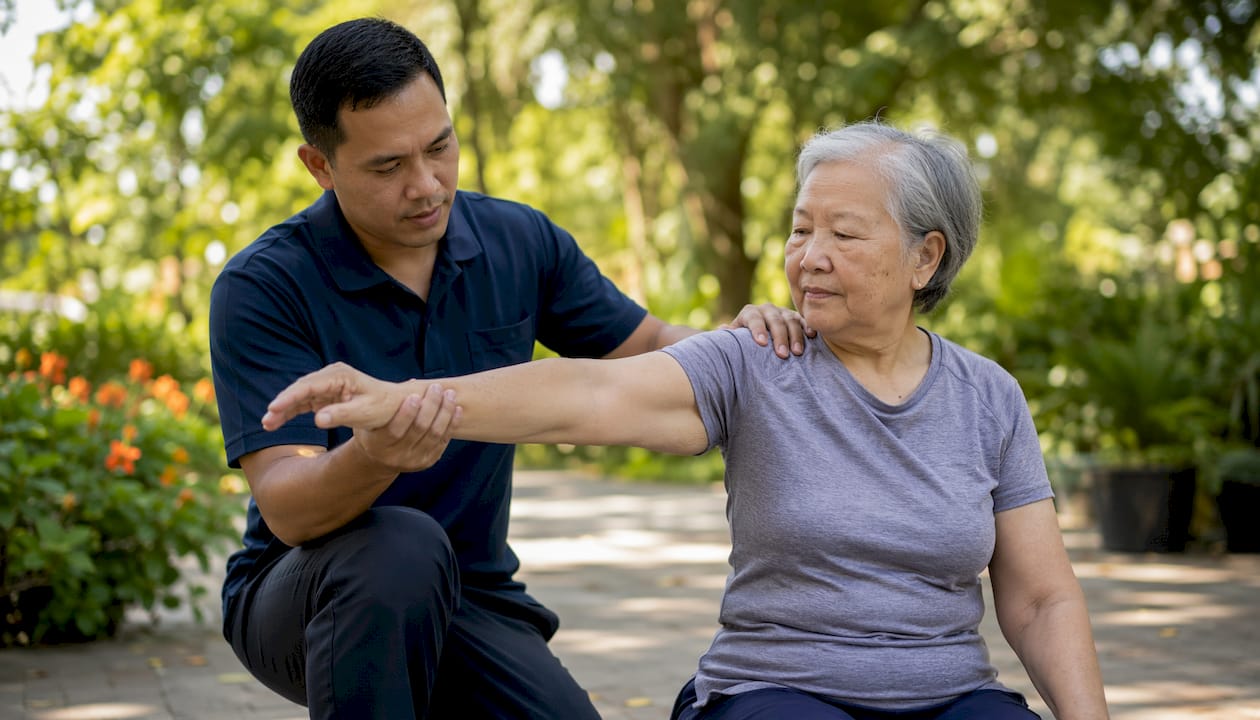
Non-invasive treatments span both diagnosis and active care. On the diagnostic side, MedlinePlus confirms that x-rays, CT scans, MRI, ECG, and Holter monitoring all qualify as noninvasive because none of them breach the skin.
Therapeutic non-invasive options are broader:
- Physical therapy and exercise therapy, including aerobic, aquatic, and resistance-based programs
- Spinal manipulation and chiropractic care
- Massage therapy
- Acupuncture (typically classified as minimally invasive rather than non-invasive, since it involves needle penetration of the skin)
- Mind-body practices such as yoga, tai chi, and qigong
- Mindfulness-based stress reduction (MBSR)
- Cognitive behavioral therapy (CBT) for pain management
- Low-level laser therapy
- Heat and ice application, rest, and elevation
The CDC’s clinical guidelines list all of these as recognized nonpharmacologic approaches for managing pain. Many patients come in after trying one or two of these in isolation. What we often see is that combining several modalities produces more consistent relief than any single approach alone.
Why non-invasive therapies matter in modern healthcare
The benefits of non-invasive therapy go beyond simply avoiding a surgical scar. Research supports that these approaches carry reduced risk of infection and bleeding, faster recovery times, and greater accessibility for patients who cannot or prefer not to undergo surgery.
Key advantages include:
- Lower complication rates compared to surgical procedures
- Minimal to no downtime, allowing patients to maintain daily routines
- Broad applicability across chronic pain, musculoskeletal conditions, and rehabilitation
- Patient-centered flexibility, with treatments adjustable to individual tolerance and progress
For patients managing chronic joint pain, arthritis, or degenerative conditions, these therapies often serve as a first line of care rather than a last resort. The goal is to restore function and reduce pain without the risks that come with surgery.

How do non-invasive and invasive procedures differ?
Understanding the distinction helps you weigh your options clearly. The table below contrasts the three main categories.
| Feature | Non-invasive | Minimally invasive | Invasive |
|---|---|---|---|
| Skin integrity | Unbroken | Small incision or needle | Full incision |
| Body entry | None | Limited | Instruments or organs accessed |
| Recovery time | Minimal | Days to weeks | Weeks to months |
| Infection risk | Very low | Low to moderate | Higher |
| Examples | MRI, massage, exercise | Injections, arthroscopy | Open surgery |
According to Wikipedia’s clinical definition, procedures like biopsies, injections, and endoscopy fall into the minimally invasive or invasive categories, not the non-invasive one. For conditions like carpal tunnel syndrome, Cochrane Review evidence shows that surgery’s long-term advantages over comprehensive non-surgical treatment are relatively minor, which often shifts the decision toward conservative care first.
What clinical evidence supports non-invasive pain management?
The evidence base here is solid and growing. The CDC’s 2025/2026 clinical guidelines explicitly recommend noninvasive, nonpharmacologic therapies as preferred first-line treatments for subacute and chronic musculoskeletal pain.
Clinical Guideline Highlight: The CDC states that nonopioid therapies are preferred for subacute and chronic pain, and that noninvasive approaches can improve pain and function without risk for serious harms.
A systematic review from NCBI covering 233 randomized controlled trials found that exercise, multidisciplinary rehabilitation, acupuncture, CBT, mindfulness practices, massage, and mind-body practices most consistently improve function and pain beyond the course of therapy for specific chronic pain conditions.
The CDC also emphasizes that building patient-provider trust and presenting the full range of treatment options is central to effective non-invasive care. That aligns with what we’ve found in practice: patients who understand why a therapy is recommended tend to engage more actively and see better results.
At Nortextissueregeneration, our approach to regenerative pain relief is grounded in these same principles. Treatments like PRP therapy work with the body’s own biology to support healing without surgery or prolonged downtime. For patients exploring their options, chronic pain treatment resources can also help clarify what different non-invasive approaches involve before your first appointment.
Key Takeaways
Non-invasive therapies are the preferred first-line option for chronic and subacute pain, supported by CDC clinical guidelines and a growing body of randomized controlled trial evidence.
| Point | Details |
|---|---|
| Core definition | Non-invasive therapies involve no skin incision, no body entry, and no tissue removal. |
| CDC endorsement | CDC guidelines recommend noninvasive nonpharmacologic therapies as preferred for subacute and chronic pain. |
| Evidence base | Multiple randomized controlled trials have found that exercise, acupuncture, CBT, and massage can improve pain and function. |
| Surgical comparison | For conditions like carpal tunnel syndrome, surgery’s long-term advantages over non-surgical care are relatively minor. |
| Patient commitment | Outcomes improve when therapies are combined in a coordinated, multidisciplinary plan with active patient participation. |
FAQ
What is non-invasive therapy?
Non-invasive therapy is any medical treatment that does not involve cutting the skin, creating incisions, or inserting instruments into the body. Examples include physical therapy, massage, and MRI scans. Acupuncture is typically considered minimally invasive since it involves needle penetration.
What are examples of non-invasive treatments?
Common examples include exercise therapy, spinal manipulation, mindfulness-based stress reduction, low-level laser therapy, cognitive behavioral therapy, and diagnostic imaging such as x-rays and MRI. Acupuncture, since it involves needle insertion, is considered minimally invasive.
What is considered a non-invasive procedure?
A procedure is considered non-invasive when it leaves the skin intact and does not enter body cavities. According to MedlinePlus, standard examples include CT scans, ECG, and Holter monitoring.
What is meant by a non-invasive method?
A non-invasive method refers to any clinical approach that achieves a therapeutic or diagnostic goal without physically disrupting the body’s surface or internal structures, carrying lower risk and typically faster recovery than invasive alternatives.