

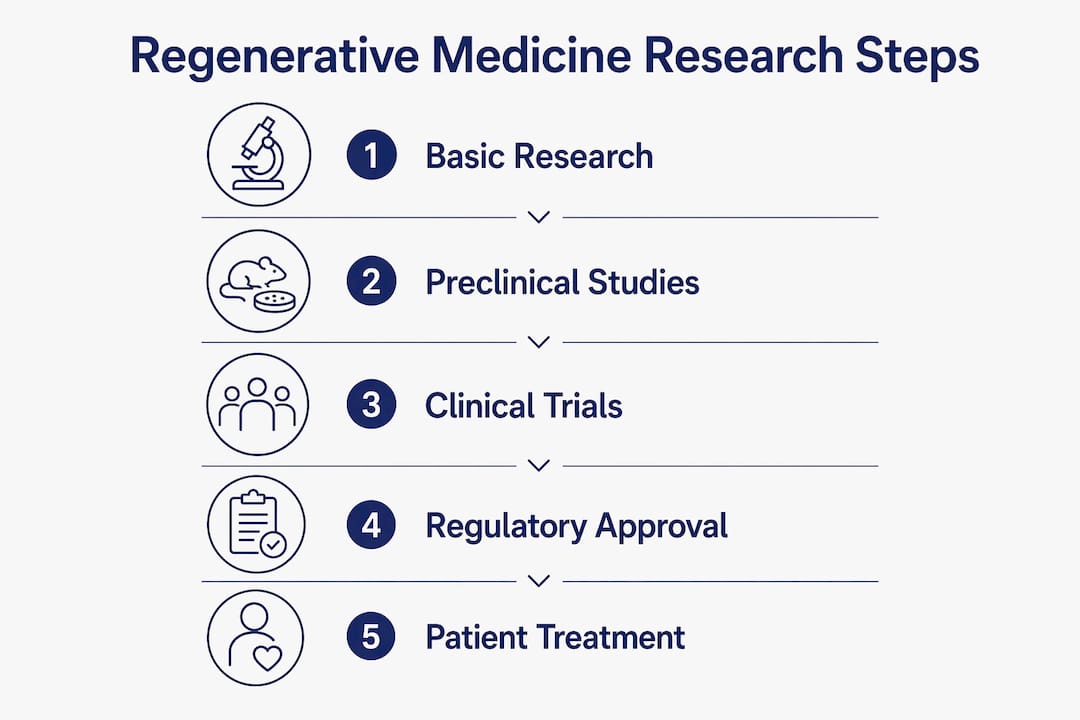
Research is the foundational engine of regenerative medicine, generating the scientific evidence and technological innovation that transform experimental therapies into safe, effective treatments for repairing damaged tissues and restoring function. The role of research in regenerative medicine spans three interconnected domains: basic science that identifies biological mechanisms, translational work that moves findings from bench to bedside, and clinical trials that confirm safety and efficacy in real patients. For healthcare professionals managing joint pain, sports injuries, and degenerative conditions, understanding this research pipeline is not academic. It directly informs which therapies you recommend, how you counsel patients, and what outcomes you can realistically expect.
How clinical trials have shaped regenerative medicine advancements
Clinical trials are the mechanism by which regenerative therapies earn their place in practice. Without them, even the most promising laboratory findings remain theoretical. The BioVAT-HF trial published in the New England Journal of Medicine demonstrated this clearly: human-engineered heart muscle patches produced a 3.9% increase in ejection fraction at three months and a 6.9% increase at twelve months, alongside a 4.5 mm increase in heart wall thickness. Those numbers represent measurable, sustained organ-level recovery in patients with advanced heart failure, which is the kind of endpoint that moves a therapy from experimental to adoptable.
What makes trial design in regenerative medicine particularly demanding is the need to track both structural and functional outcomes over extended follow-up periods. Short-term safety data is necessary but not sufficient. Clinicians need to know whether tissue integration holds, whether immune responses emerge later, and whether patient quality of life improves in ways that matter beyond imaging results. The BioVAT-HF data addressed all three, which is why it carries weight in clinical decision-making.
Multidisciplinary teams are not optional in this process. Successful clinical translation consistently requires biologists, biomedical engineers, clinicians, and ethicists working together from protocol design through data interpretation. When any one of those perspectives is absent, trials tend to produce results that are either scientifically incomplete or clinically unusable.
Clinical insight: When evaluating trial data for regenerative therapies, look beyond the primary efficacy endpoint. Secondary outcomes like patient-reported function scores, imaging-confirmed tissue changes, and adverse event profiles at twelve months or beyond are often more informative for practice decisions than the headline result.
Pro Tip: When reviewing a regenerative medicine trial for clinical application, prioritize studies that report both structural outcomes (imaging, biopsy) and functional outcomes (pain scores, range of motion) at multiple time points. Single-endpoint trials rarely provide enough information to guide individualized treatment decisions.
What is the shift from cell-based to cell-free regenerative therapies?
The most significant research trend reshaping regenerative medicine in 2026 is the move away from live cell transplantation toward cell-free precision approaches. This shift is grounded in practical biology. Cell-free therapies using exosomes, microRNAs, and secreted factors reduce the risks of immune rejection and offer manufacturing scalability that live cell products cannot match. For clinicians, this matters because it expands the pool of eligible patients and simplifies the logistics of treatment delivery.
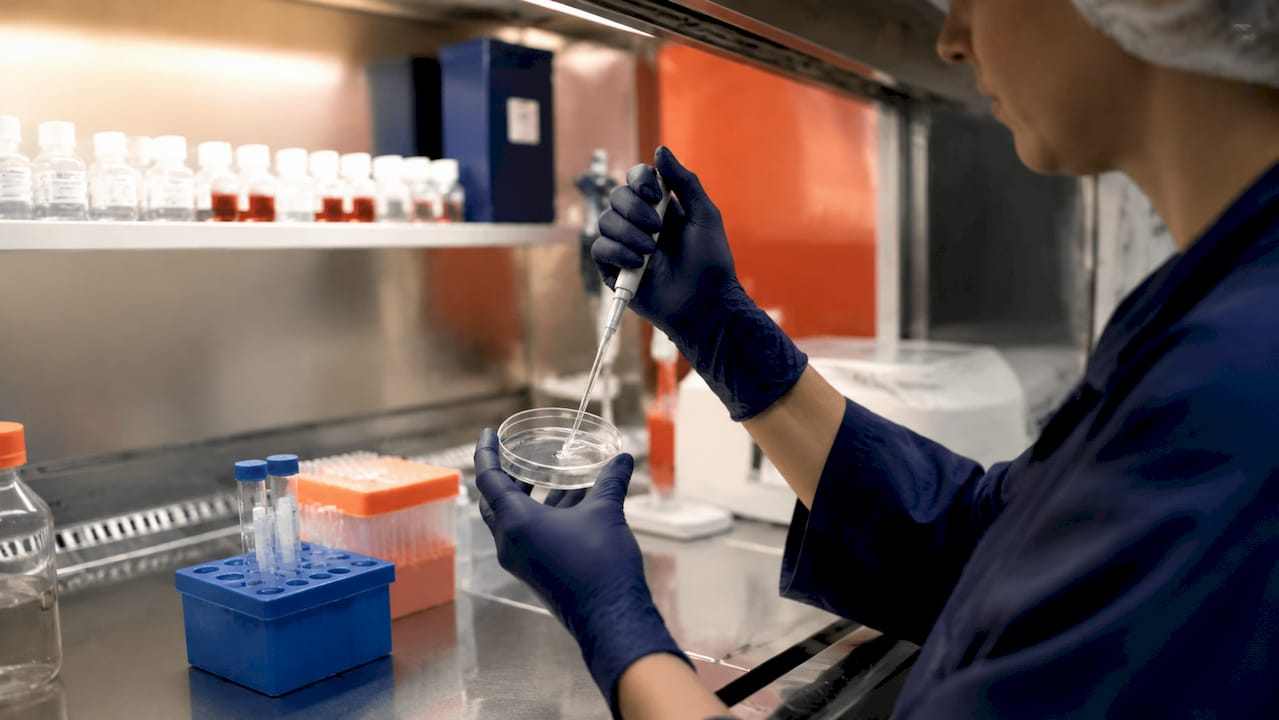
The scientific rationale centers on what researchers now understand about how cell-based therapies actually work. Therapeutic effects are increasingly attributed to secreted paracrine factors, including cytokines and exosomes, rather than direct cell engraftment. In other words, the cells themselves may not need to survive and integrate. What they secrete in the process of doing so may be doing most of the therapeutic work. That insight has opened an entirely new research direction focused on harvesting and delivering those secreted factors directly.
Gene editing is accelerating this transition. Advanced techniques like SMArT allow transient editor expression that minimizes genotoxicity while improving the selection of therapeutically relevant cells. This addresses one of the longest-standing safety concerns in the field and brings cell-derived products closer to clinical compliance standards.
Artificial intelligence is also reshaping how therapies are designed and personalized. AI-driven bioprinting combined with multi-omics data allows researchers to model gene expression patterns, predict patient responses, and optimize scaffold architecture before a single procedure is performed. For musculoskeletal applications specifically, this means the possibility of designing tissue constructs matched to a patient’s biological profile rather than applying a one-size approach.
| Approach | Advantages | Limitations |
|---|---|---|
| Cell-based therapies | Direct tissue integration potential; established research base | Immune rejection risk; complex manufacturing; variable engraftment |
| Cell-free therapies (exosomes, secretome) | Reduced immune risk; scalable production; stable storage | Mechanism not fully characterized; dosing standards still developing |
| Gene-edited cell products | Improved safety profile; precise cell selection | Regulatory complexity; early-stage clinical data |
| AI-optimized biomaterials | Personalized scaffold design; predictive modeling | Requires large datasets; validation still ongoing |
Pro Tip: Understanding secretome biology gives you a more accurate framework for explaining to patients why stem cell therapies work. The mechanism is paracrine signaling, not cell replacement. That distinction helps set realistic expectations and builds informed consent.
What drives research infrastructure in regenerative medicine?
Funding and institutional infrastructure determine which research questions get answered and at what pace. The Australian MRFF has grown to $25.4 billion, supporting large-scale, long-term clinical trials that generate the kind of longitudinal data regenerative medicine requires. That scale of investment reflects a policy recognition that regenerative therapies represent a genuine shift in how medicine treats chronic and degenerative disease, not just an incremental improvement on existing options.
Translational research centers play a specific structural role that individual labs or hospital departments cannot replicate. They create the physical and organizational space for interdisciplinary collaboration across biology, engineering, clinical medicine, and regulatory science. Ethical and regulatory frameworks embedded early in product development consistently improve both the quality of research and the likelihood of successful commercialization. When those considerations are added late, they tend to create delays or require protocol redesigns that set timelines back significantly.
Key stakeholders in a functioning regenerative medicine research ecosystem include:
- Academic research institutions providing basic science discovery and early-phase trial capacity
- Government funding bodies like the MRFF and the NIH sustaining long-term, high-cost research programs
- Biotech and pharmaceutical companies translating findings into manufacturable, scalable products
- Regulatory agencies including the FDA and EMA setting safety and efficacy standards that protect patients
- Clinical networks generating real-world outcome data that feeds back into research design
- Ethics boards ensuring patient protection and research integrity throughout the development pipeline
Research integrity across this ecosystem also depends on secure data management. Secure research portals in biotech and healthcare protect trial data, patient records, and proprietary findings from compromise, which is increasingly relevant as multi-site international trials become the norm.
Real-world implications for joint pain and injury recovery
For healthcare professionals treating musculoskeletal conditions, the impact of research on regenerative medicine is most visible in how treatment selection has changed. A decade ago, platelet-rich plasma and stem cell therapies were largely offered based on early-phase safety data and clinical intuition. Today, a growing body of trial evidence supports more specific protocols: which cell sources perform best for cartilage repair, which delivery methods optimize tissue contact, and which patient profiles predict favorable outcomes.
Research has also clarified limitations that were initially underappreciated. Patient outcomes vary significantly depending on cell type, delivery method, and clinical protocol. That variability is not a reason to avoid these therapies. It is a reason to apply them with precision, using standardized protocols informed by the best available evidence rather than improvised approaches.
Translating research into routine clinical practice involves several practical steps:
- Identify the evidence tier. Distinguish between therapies supported by randomized controlled trials, those backed by cohort studies, and those still in early-phase investigation. Treatment decisions should reflect that hierarchy.
- Match therapy to pathology. PRP performs differently in tendinopathy versus osteoarthritis. Stem cell approaches vary by tissue type and patient age. Research now provides enough specificity to guide these distinctions.
- Set realistic timelines. Most regenerative therapies produce gradual improvements over weeks to months, not immediate relief. Patients who understand this are more likely to complete protocols and report outcomes accurately.
- Monitor and document outcomes. Standardized outcome measures like KOOS, WOMAC, or VAS pain scores allow your clinical data to contribute to the broader evidence base, which benefits future patients.
- Stay current with emerging data. The shift toward cell-free precision medicine is moving quickly. Therapies available in 2026 differ meaningfully from those available three years ago, and that pace is unlikely to slow.
We often see patients who have tried multiple conventional options before arriving at a regenerative medicine consultation. For that population, the research-informed approach matters most, because they need honest guidance about what the evidence actually supports, not optimism that overpromises.
Key takeaways
Research in regenerative medicine is the direct determinant of which therapies reach patients safely, how they are applied, and what outcomes clinicians can realistically deliver.
| Point | Details |
|---|---|
| Clinical trials define practice | Landmark trials like BioVAT-HF provide the structural and functional outcome data clinicians need for treatment decisions. |
| Cell-free therapies are advancing fast | Exosomes and secreted factors reduce immune risk and improve scalability over live cell transplants. |
| Funding infrastructure matters | Large-scale programs like the MRFF sustain the long-term research that regenerative medicine requires. |
| Outcomes vary by protocol | Cell type, delivery method, and patient profile all affect results, making standardized, evidence-based protocols necessary. |
| AI and gene editing are reshaping design | SMArT gene editing and AI-optimized bioprinting are moving precision regenerative therapies closer to clinical reality. |
What I’ve learned watching this field mature
I have followed regenerative medicine research closely enough to notice a pattern that does not always get discussed directly. The field tends to cycle between periods of genuine excitement and periods of sobering recalibration. The excitement is usually justified. The recalibration is always necessary.
What concerns me most right now is not the pace of innovation. It is the gap between what research demonstrates in controlled trial settings and what gets communicated to patients in clinical practice. The importance of research in medicine is that it moves us from managing symptoms toward addressing underlying mechanisms. But that only holds if the findings are applied with the same rigor they were generated with.
The shift toward cell-free approaches is genuinely significant. It is not marketing. The paracrine mechanism data is solid, and the manufacturing advantages are real. What I would caution against is treating exosome therapies as a solved problem before the dosing standards and long-term safety profiles are fully established. We are in a productive middle stage, not at the finish line.
The most effective clinicians in this space are the ones who stay connected to the research literature, apply evidence-based regenerative medicine workflows, and resist the pressure to offer therapies before the evidence supports them. That discipline is what builds patient trust over time, and it is what separates a practice that contributes to the field from one that simply borrows from it.
— Felix
Explore regenerative therapies at Nortex Tissue Regeneration
At Nortextissueregeneration, our treatment protocols are built directly on the research findings discussed in this article. We offer PRP therapy, stem cell treatments, and bone marrow cell therapy for patients managing chronic joint pain, sports injuries, and degenerative conditions. Each treatment plan is individualized based on current evidence, your clinical presentation, and realistic outcome expectations. If you are evaluating regenerative options for a patient or for yourself, our specialists are available to walk through the evidence and determine whether you are a candidate for these therapies.
FAQ
What is the role of research in regenerative medicine?
Research generates the scientific evidence that validates whether regenerative therapies are safe and effective, moving them from laboratory discovery through clinical trials to standard practice. Without this evidence base, therapies cannot be applied responsibly or refined over time.
How do clinical trials improve regenerative therapy outcomes?
Clinical trials establish which protocols produce measurable improvements in tissue function and patient quality of life, and they identify risks that laboratory studies cannot predict. The BioVAT-HF trial, for example, confirmed sustained cardiac improvement at twelve months, providing the longitudinal data clinicians need.
What are cell-free regenerative therapies?
Cell-free therapies use exosomes, microRNAs, and secreted factors derived from stem cells to promote tissue repair without transplanting live cells. They reduce immune rejection risk and offer greater manufacturing scalability than traditional cell-based approaches.
Why do patient outcomes vary in regenerative medicine?
Outcomes depend on cell type, delivery method, clinical protocol, and individual patient biology. Standardized, research-informed protocols reduce this variability, which is why ongoing clinical research and outcome documentation remain critical for the field.
How does AI contribute to regenerative medicine research?
AI integrates multi-omics data and bioprinting to optimize scaffold design, predict patient responses, and personalize therapy delivery. This allows researchers and clinicians to move toward treatments tailored to individual biological profiles rather than generalized approaches.