

Orthopedic regenerative treatments are minimally invasive biologic injections drawn from your own body that target tissue repair in joints, tendons, and ligaments rather than simply reducing pain signals. The field is formally known as orthopedic regenerative medicine, and it centers on two primary therapies: platelet-rich plasma (PRP) and stem cell therapy. Unlike corticosteroid injections or anti-inflammatory medications, these treatments aim to restore the structural integrity of damaged tissue. If you are dealing with knee osteoarthritis, a tendon injury, or chronic joint pain and want to understand what these options actually involve, this article gives you a clear, evidence-based picture of what works, what does not, and what questions to ask before you commit to a protocol.
What are the main types of orthopedic regenerative treatments?
Explaining orthopedic regenerative treatments starts with understanding the two modalities you will encounter most often: PRP and stem cell therapy. Both fall under the broader category of orthobiologics, meaning they use biological material to stimulate the body’s own repair processes.
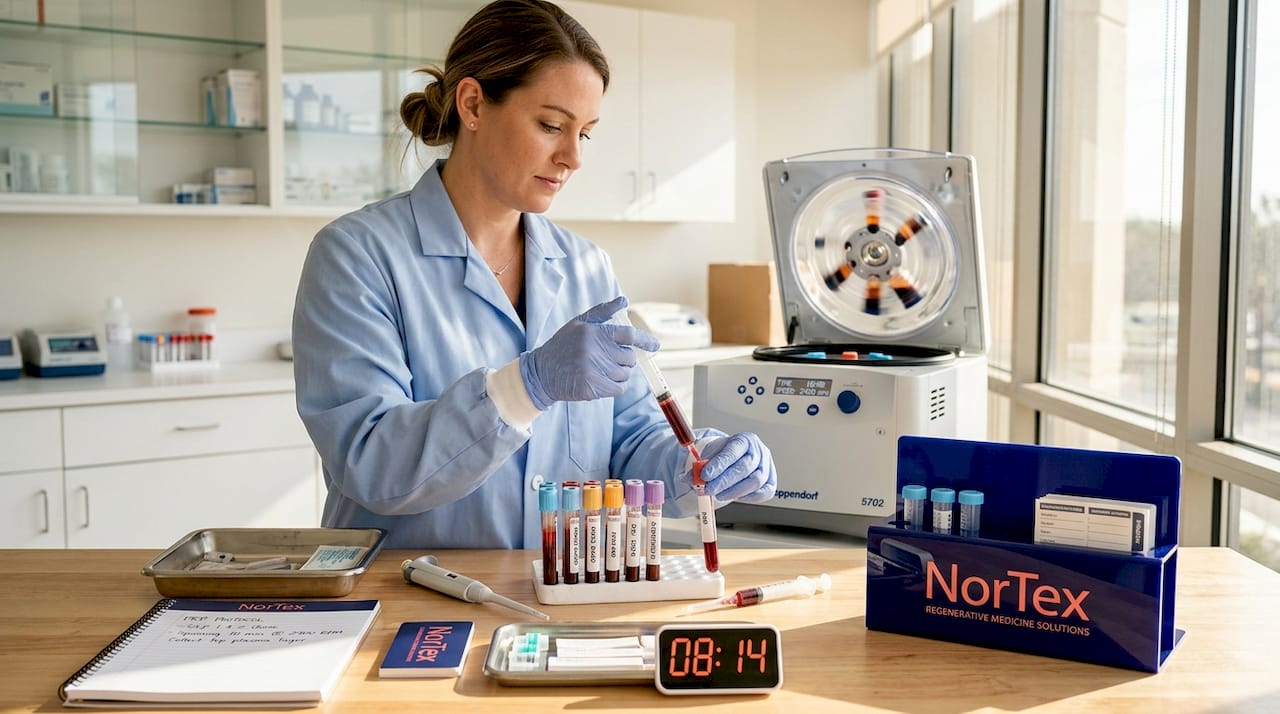
Platelet-Rich Plasma (PRP) is prepared by drawing a sample of your blood, spinning it in a centrifuge to concentrate the platelets, and injecting that concentrate directly into the affected joint or tissue. Platelets carry growth factors including PDGF, TGF-beta, and VEGF, which signal the surrounding cells to begin repair activity. The procedure takes roughly 45 to 60 minutes from blood draw to injection, and most patients return to light activity the same day.
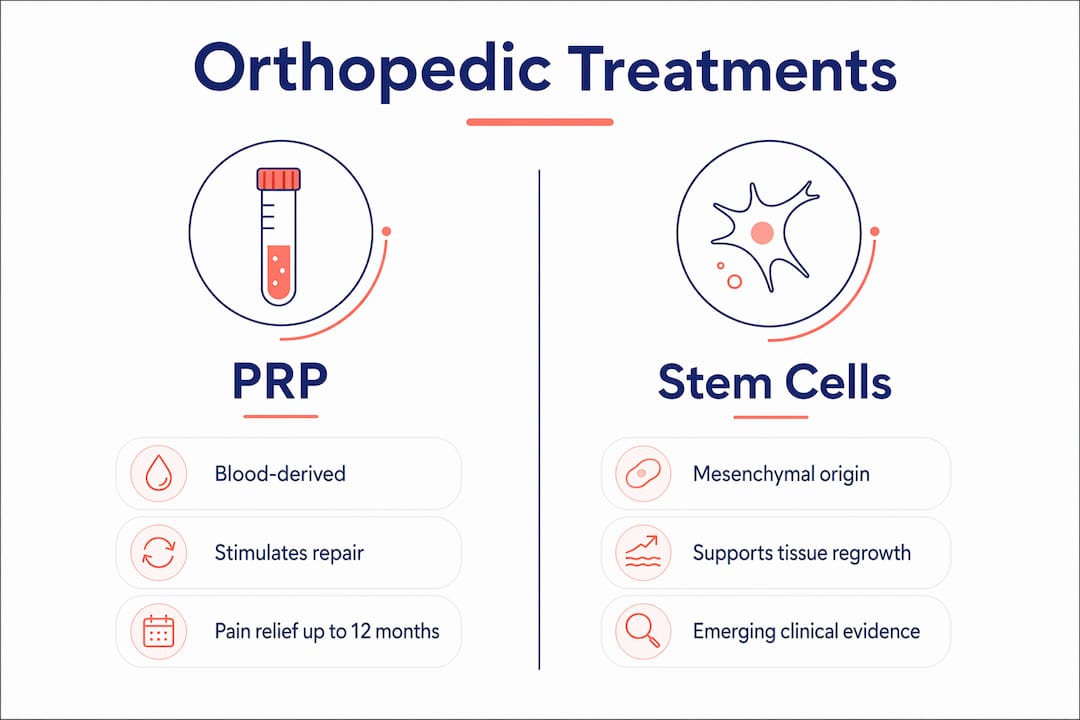
Stem cell therapy is more complex. Cells are typically harvested from bone marrow (most often from the iliac crest) or adipose tissue, processed, and then injected into the target area. The goal is to introduce cells with the potential to differentiate into cartilage, tendon, or bone tissue. Stem cell therapy holds promise for more extensive tissue regeneration than PRP, but its clinical role is less established and remains under active research. We often tell patients that PRP has a stronger evidence base right now, while stem cell therapy is a reasonable consideration for more complex or advanced cases.
Beyond PRP and stem cells, orthopedic providers also use other biologic injections such as bone marrow aspirate concentrate (BMAC), amniotic membrane allografts, and alpha-2-macroglobulin (A2M) injections. These are less commonly discussed but represent the expanding toolkit of what is orthopedic regenerative care in practice.
- PRP is the most widely studied and clinically applied regenerative option for joint pain
- Stem cell therapy offers broader regenerative potential but requires more patient-specific evaluation
- BMAC and A2M injections are used in specific clinical scenarios, often for tendon or cartilage pathology
- All of these procedures are performed without general anesthesia and involve minimal recovery time
Pro Tip: Ask your provider specifically whether they use leukocyte-rich or leukocyte-poor PRP. The leukocyte content affects the inflammatory response after injection and may influence your outcome depending on the condition being treated.
What does the clinical evidence say about effectiveness?
The research on PRP for knee osteoarthritis is the most mature body of evidence in regenerative orthopedics. Systematic reviews show that PRP provides superior pain relief and functional improvement compared to corticosteroids, hyaluronic acid, and placebo, with effects lasting approximately 12 months. That 12-month window is meaningful. It suggests PRP is not a permanent fix, but it offers a substantially longer relief period than a corticosteroid shot, which typically lasts 6 to 12 weeks before effects diminish.
“PRP benefits are maintained for up to a year but show variability in long-term durability and outcome robustness.” — Meta-analysis published in the Journal of Arthroscopy and Sports Surgery Medicine, 2026
The comparison with hyaluronic acid (HA) is more nuanced. PRP tends to outperform HA in many protocols, but the wide variation in HA products on the market makes direct comparisons difficult. PRP outperforms corticosteroids in both duration and chondrocyte safety, meaning it is less likely to cause cartilage degradation over time, which is a known risk with repeated steroid injections.
Here is a summary of how PRP compares to other common orthopedic injections:
| Treatment | Pain relief duration | Cartilage safety | Evidence strength |
|---|---|---|---|
| PRP | Up to 12 months | Favorable | Strong (multiple RCTs) |
| Corticosteroids | 6 to 12 weeks | Concerns with repeated use | Strong (but limited duration) |
| Hyaluronic acid | 3 to 6 months | Generally safe | Moderate (product variability) |
| Stem cell therapy | Variable | Promising | Emerging (fewer large RCTs) |
Safety is also worth addressing directly. PRP injections are generally safe with mild, transient adverse effects such as soreness or swelling at the injection site. Serious adverse events are rare across multiple randomized controlled trials. This tolerability profile is one reason PRP has gained traction as a first-line biologic option before considering more invasive procedures.
How do patient factors and protocols affect your results?
Not everyone responds to PRP the same way, and this is one of the most important things to understand before pursuing treatment. PRP is most effective in patients with mild-to-moderate knee osteoarthritis, specifically those graded Kellgren-Lawrence (KL) grade 1 to 3 on imaging. Patients with KL grade 4, meaning severe joint space narrowing and bone-on-bone contact, tend to see limited benefit. In those cases, PRP may still offer some palliative relief, but the structural damage is too advanced for biologic injections to meaningfully reverse.
Protocol differences also matter more than most patients realize. Here is what affects your outcome:
- Blood volume drawn. Trials using higher blood volumes (above 40 mL) report better outcomes than those using lower volumes, because blood volume serves as a proxy for total platelet dose delivered. More platelets generally means a stronger healing signal.
- Leukocyte content. Leukocyte-rich PRP may increase post-injection inflammation, which can be counterproductive in osteoarthritis but potentially beneficial in tendon injuries. Your provider should tailor this to your specific condition.
- Number of injections. Most clinical protocols involve a series of two to three injections spaced several weeks apart rather than a single treatment. A single injection is unlikely to produce the same result as a properly spaced series.
- Activation method. Some protocols activate platelets before injection using calcium chloride or thrombin; others do not. The clinical significance of this step is still debated, but it is worth asking about.
Pro Tip: Before your first appointment, ask your provider what blood volume they draw, how many injections are included in the protocol, and whether they track outcomes using validated scales like WOMAC or VAS. Providers who measure outcomes systematically are more likely to adjust your plan based on real data.
Rehabilitation also plays a direct role in how well regenerative treatments work. We see better outcomes in patients who combine their injections with structured physical therapy that addresses joint mechanics and muscle support. Biology alone is not sufficient. The injection creates a healing environment; your movement and load management determine whether that environment produces lasting results.
How do regenerative treatments fit into your overall care plan?
Regenerative medicine explained in isolation can make it sound like a replacement for everything else. It is not. These treatments occupy a specific place in the orthopedic care spectrum, and understanding that position helps you make better decisions.
Combining biologic injections with physical therapy and load management produces better tissue outcomes than injections alone. This is consistent across clinical literature and reflects what we observe in practice. Patients who treat PRP as a standalone quick fix tend to be disappointed. Patients who use it as one component of a broader recovery plan tend to do well.
Here is where regenerative treatments fit most naturally within orthopedic care:
- Before surgery: For patients with mild-to-moderate joint degeneration, PRP or stem cell therapy may delay or eliminate the need for surgical intervention. Many patients come in after trying physical therapy and anti-inflammatories without adequate relief, and PRP becomes the next logical step before considering a joint replacement.
- After surgery: Biologic injections are increasingly used to support tissue healing following procedures like ACL reconstruction or rotator cuff repair, though this application is still being refined in clinical trials.
- Alongside conservative care: PRP pairs well with weight management, activity modification, and targeted exercise programs. These are not competing approaches. They reinforce each other.
- When surgery remains the standard: Severe structural damage, complete ligament tears, or advanced bone-on-bone arthritis (KL grade 4) often require surgical correction. Regenerative treatments are not a substitute in those scenarios, and a responsible provider will tell you that clearly.
The future of this field is moving toward more personalized protocols. Researchers are studying how to match specific PRP formulations to individual patient biology, and ongoing trials comparing stem cell therapies head-to-head with PRP will likely reshape clinical recommendations over the next several years. For now, PRP remains the most evidence-supported biologic option for joint pain, with stem cell therapy as a promising but still-evolving alternative.
Key takeaways
Orthopedic regenerative treatments work best when matched to the right patient, delivered through a well-designed protocol, and integrated with rehabilitation rather than used as a standalone fix.
| Point | Details |
|---|---|
| PRP is the most evidence-backed option | Systematic reviews confirm superior pain relief versus corticosteroids and hyaluronic acid, lasting up to 12 months. |
| Patient selection determines success | PRP produces the strongest results in mild-to-moderate osteoarthritis (KL grade 1 to 3), not advanced joint damage. |
| Protocol details affect outcomes | Blood volume, leukocyte content, and injection frequency all influence how well PRP works for your condition. |
| Stem cell therapy is promising but evolving | It holds potential for broader tissue repair but requires more clinical evidence before it matches PRP’s established track record. |
| Rehab is not optional | Biologic injections combined with physical therapy and load management consistently outperform injections alone. |
What I have learned from years of watching this field develop
A perspective from Felix
The most common mistake I see patients make is treating regenerative medicine as a binary choice: either it works or it does not. The reality is far more conditional than that. PRP for a 52-year-old with KL grade 2 knee osteoarthritis and a structured rehab plan behind it is a very different intervention than PRP for someone with bone-on-bone arthritis who expects a single injection to replace a joint replacement. Both patients might receive the same product, but their outcomes will be completely different.
What I find genuinely encouraging about this field in 2026 is that the research is getting more specific. We are moving away from asking “does PRP work?” toward asking “which PRP formulation, at what dose, for which patient, combined with what rehabilitation protocol?” That is the right question. And the variability in PRP preparation that currently limits consistent conclusions is also the thing that, once standardized, will make these treatments significantly more predictable.
My honest view is that patients who come in well-informed get better results. Not because knowledge heals tissue, but because they ask better questions, follow through on rehab, and have realistic expectations about timelines. If you are exploring PRP versus other joint therapies, do not just look at whether it works. Ask how it is prepared, what the protocol involves, and what you will need to do alongside the injections to give it the best chance of working.
— Felix
How Nortex Tissue Regeneration can help you move forward
At Nortextissueregeneration, we work with patients across North Texas who are dealing with chronic joint pain, sports injuries, and degenerative conditions and want a clear, non-surgical path forward. Our PRP therapy protocols are designed around the clinical evidence, including attention to platelet dose, leukocyte content, and injection series rather than a one-size approach. For patients whose conditions may benefit from more advanced biologic intervention, we also offer stem cell therapy as part of a personalized treatment plan. Every consultation starts with a thorough evaluation of your imaging, history, and goals so that the treatment we recommend is actually matched to your situation. If you are ready to understand your options, we are here to walk through them with you.
FAQ
What is orthopedic regenerative medicine?
Orthopedic regenerative medicine uses biologic substances, primarily PRP and stem cells, to stimulate natural tissue repair in joints, tendons, and ligaments rather than masking pain with medications or surgery.
How long does PRP relief last for joint pain?
Clinical evidence shows PRP pain relief and functional improvement last approximately 12 months for knee osteoarthritis, which is longer than corticosteroid injections typically provide.
Is PRP safe for joint injections?
PRP injections are generally safe, with mild transient side effects like soreness or swelling. Serious adverse events are rare across multiple randomized controlled trials assessing intra-articular use.
Who is the best candidate for PRP therapy?
Patients with mild-to-moderate osteoarthritis, specifically Kellgren-Lawrence grade 1 to 3, respond most consistently to PRP. Those with severe, bone-on-bone joint damage tend to see limited structural benefit.
Can regenerative treatments replace joint surgery?
Regenerative treatments can delay or reduce the need for surgery in appropriate candidates, but they are not a substitute for surgical correction in cases of severe structural damage or complete ligament tears.