
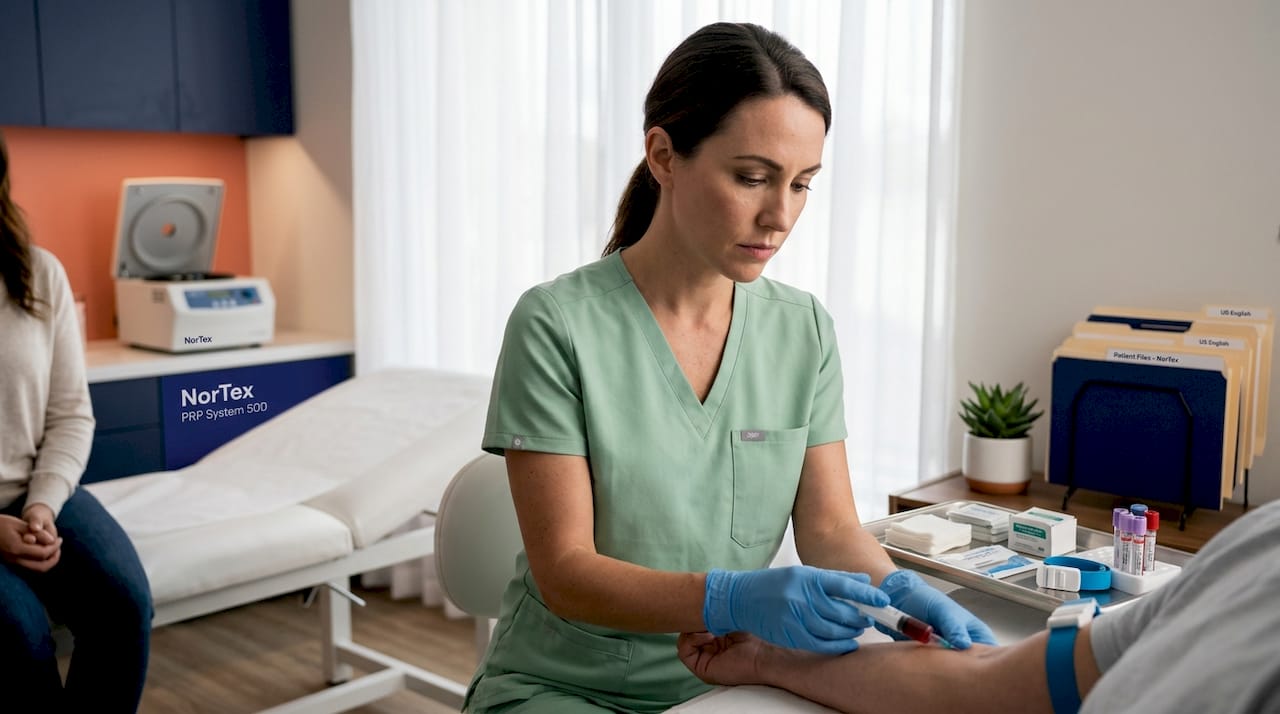
The difference between PRP and stem cells comes down to their biological composition and how each one interacts with damaged tissue. Platelet-Rich Plasma (PRP) is a concentrated preparation of your own platelets that releases growth factors to accelerate the body’s existing repair process. Stem cell therapy, specifically using mesenchymal stem cells (MSCs), introduces live cells capable of immune modulation, paracrine signaling, and potential differentiation into target tissue types. Both are regenerative medicine approaches used for joint pain and injury recovery, but they work through distinct mechanisms, on different timelines, and with different evidence bases behind them.
What is the difference between PRP and stem cells?
PRP is prepared by drawing a small amount of your blood and spinning it in a centrifuge to concentrate the platelets. Those platelets then release growth factors including PDGF, TGF-β, VEGF, and IGF-1, which promote cell proliferation, new blood vessel formation, and resolution of inflammation. The result is a treatment that amplifies the body’s own repair signals at the injury site.
Stem cell therapy works differently at a fundamental level. MSCs sourced from bone marrow, adipose (fat) tissue, or umbilical cord tissue do not simply deliver chemical signals. They interact with the local tissue environment, modulate immune responses, and in some cases differentiate into the cell types needed for repair. This is why MSC therapy effects often appear gradually and reach their peak around 24 months after treatment.
The practical distinction matters for patients. PRP is best thought of as a repair accelerator. Stem cell therapy is better understood as a tissue remodeling process. Neither is a cure, and both require realistic expectations about what they can and cannot do.
How are PRP and stem cells prepared and administered?
The preparation process for each treatment reflects their biological differences, and the details matter more than most patients realize.
PRP preparation variables include:
- Centrifuge speed and duration, which determine platelet concentration
- Leukocyte content: leukocyte-rich PRP (LR-PRP) versus leukocyte-poor PRP (LP-PRP)
- Activation method: some protocols use calcium chloride or thrombin to activate platelets before injection
- Volume and injection frequency, which vary by condition and provider
Stem cell sources and preparation include:
- Bone marrow aspirate concentrate (BMAC), drawn from the iliac crest under local anesthesia
- Adipose-derived MSCs, harvested through a minor liposuction procedure
- Umbilical cord-derived MSCs, sourced from donated birth tissue and processed in a lab
- Expanded MSCs, grown in culture to increase cell numbers before injection
Stem cell injections are typically administered as a single treatment or a small series, while PRP is often given in two to four sessions spaced several weeks apart. The right PRP protocol depends on matching the preparation type to the specific tissue and condition being treated, not a one-size-fits-all approach.
Pro Tip: When consulting any clinic about these therapies, ask specifically whether they use LR-PRP or LP-PRP, what the platelet concentration is, and for stem cell treatments, what the cell source and dose are. These details directly affect your outcomes.
What mechanisms of action distinguish PRP from stem cell therapy?
Understanding how each treatment works at a biological level helps set realistic expectations for what you will feel and when.
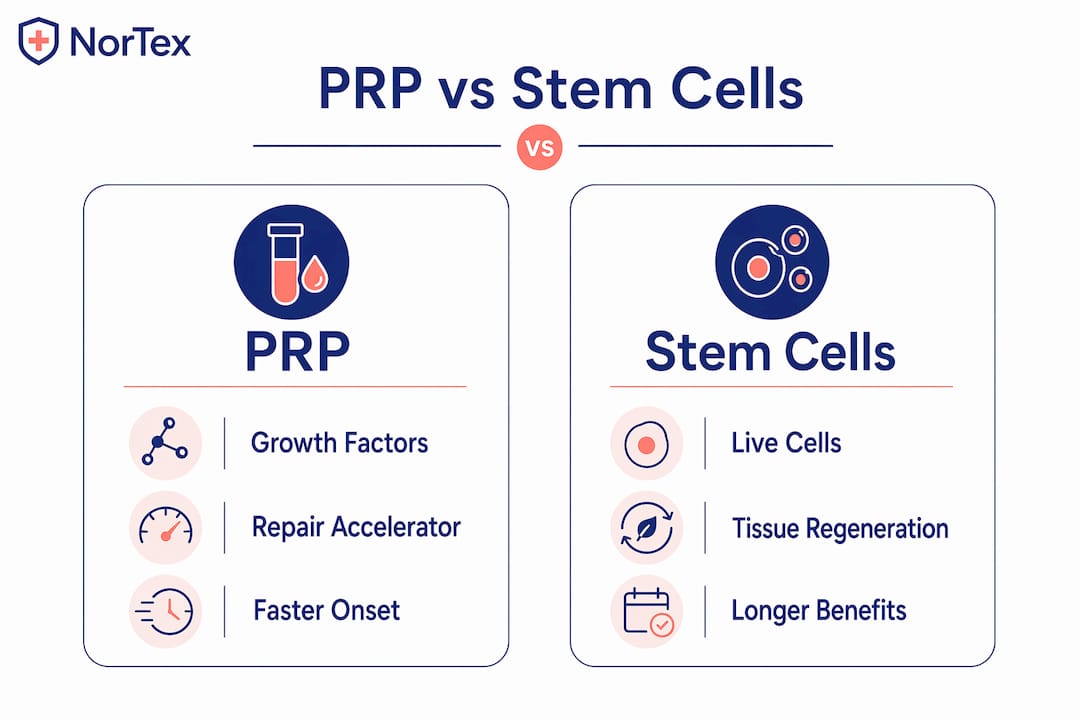
PRP’s mechanism is relatively direct. Once injected, platelets degranulate and release their growth factors into the local tissue environment. This creates a pro-healing microenvironment that recruits fibroblasts, stimulates collagen synthesis, and calms excessive inflammation. The biological effects of PRP are largely complete within weeks, which is why some patients notice improvement within the first month.
Stem cell therapy operates on a longer biological timeline through three main pathways:
- Paracrine signaling: MSCs secrete cytokines and extracellular vesicles that communicate with surrounding cells, reducing inflammation and stimulating local repair.
- Immune modulation: MSCs suppress overactive immune responses, which is particularly relevant in conditions like osteoarthritis where chronic inflammation drives tissue breakdown.
- Differentiation potential: Under the right conditions, MSCs can develop into chondrocytes, osteoblasts, or other target cell types, contributing directly to tissue replacement.
“Comparing PRP and MSC therapies for joint pain involves contrasting their mechanistic timelines: PRP ramps up local repair signals quickly whereas MSCs orchestrate slower, but more sustained tissue remodeling and immune modulation leading to durable clinical benefits.” — Frontiers in Cell and Developmental Biology, 2025
This difference in mechanism explains why PRP and stem cell therapy are not simply interchangeable. They address tissue repair at different stages and through different biological pathways.
How do clinical outcomes and recovery timelines compare?
Recent systematic reviews and meta-analyses provide a clearer picture of what patients can realistically expect from each treatment.
PRP produces measurable improvements in pain and function relatively quickly. Significant PRP effects are typically observed within one to three months, making it a practical option for patients who need earlier functional relief. Outcome measures like the Visual Analog Scale (VAS) for pain and the WOMAC score for joint function show consistent improvement in mild to moderate osteoarthritis cases.
Stem cell therapy follows a different trajectory. MSC therapy reduces pain and improves function over longer timelines, with maximal outcome effects around 24 months. This does not mean nothing happens before then. Many patients report gradual improvement starting at six to twelve months, but the full benefit of tissue remodeling takes time to manifest.
| Treatment | Onset of effects | Peak benefit window | Common outcome measures |
|---|---|---|---|
| PRP | 1 to 3 months | 3 to 6 months | VAS, WOMAC, IKDC |
| MSC stem cell therapy | 6 to 12 months | 18 to 24 months | VAS, WOMAC, MRI cartilage scoring |
| Combined PRP + MSC | Variable | Potentially synergistic | VAS, WOMAC, functional scores |
Studies also show that combining MSCs with PRP sometimes yields greater improvements in pain and function than either treatment alone. This makes clinical sense: PRP creates a favorable healing environment while MSCs carry out longer-term remodeling.
Pro Tip: If you are tracking your own recovery, use a consistent pain scale and document your functional milestones at 1, 3, 6, and 12 months. This gives your provider the data needed to assess whether the treatment is working on the expected timeline.
You can also review realistic PRP result timelines to understand what the early recovery phase typically looks like before committing to a treatment plan.
What are the safety profiles and regulatory considerations?
Both treatments carry a favorable safety record in clinical trials, but the specifics differ and the regulatory landscape adds an important layer of context.
PRP safety considerations:
- Local pain and swelling at the injection site are the most common side effects
- LR-PRP is linked with higher odds of local adverse reactions compared to LP-PRP in joint injections
- Serious complications are rare when performed by trained providers using sterile technique
- Because PRP is derived from your own blood, systemic allergic reactions are not a concern
Stem cell safety considerations:
- Mild, transient local reactions such as temporary swelling or soreness are the most reported side effects
- MSC doses below 50 million cells per injection are associated with sustained improvement and fewer side effects than higher doses
- No serious complications have been reported in well-designed clinical trials for bone marrow or adipose-derived MSCs
- Umbilical cord and expanded MSC products carry additional regulatory scrutiny
On the regulatory side, FDA 510(k) clearance applies to PRP preparation devices, not to the clinical claims made about PRP therapy. Stem cell products lack FDA approval for most regenerative indications. This does not mean these treatments are unsafe or ineffective. It means patients should ask their providers about the specific product being used, the evidence supporting it, and whether the clinic follows published clinical protocols rather than marketing claims.
Understanding the FDA status of PRP therapy is a reasonable first step before any consultation.
Which treatment is right for you?
The answer depends on your condition severity, your recovery timeline expectations, and what the clinical evidence supports for your specific situation.
PRP is generally the better starting point when:
- Your injury or joint degeneration is mild to moderate
- You want earlier functional improvement within the first few months
- You prefer a simpler, lower-cost procedure with a well-established safety record
- You are managing a soft tissue injury such as a tendon or ligament condition
Stem cell therapy tends to be more appropriate when:
- You have more significant cartilage loss or chronic joint degeneration
- You are willing to commit to a longer recovery and evaluation window
- Earlier treatments including PRP or physical therapy have not provided lasting relief
- You are looking for a treatment with the potential for more durable tissue remodeling
Combined approaches are worth discussing when:
- Your provider identifies both an acute inflammatory component and underlying tissue loss
- You want to potentially accelerate early healing while supporting longer-term regeneration
- Your condition involves multiple tissue types, such as both cartilage and surrounding soft tissue
Many patients we see at Nortex Tissue Regeneration come in after trying anti-inflammatory medications or cortisone injections without lasting results. For those patients, the conversation often starts with understanding which biological approach fits their condition best, rather than which treatment sounds most advanced. Consulting a provider who can explain the types of regenerative medicine available for joint pain helps frame that decision clearly.
Key takeaways
PRP and stem cell therapy differ fundamentally in their biological composition, mechanism of action, and clinical timeline, making treatment selection a matter of matching the right tool to the right condition and patient goal.
| Point | Details |
|---|---|
| Biological identity | PRP delivers growth factors; stem cells deliver live cells capable of immune modulation and differentiation. |
| Timeline of effects | PRP shows results within 1 to 3 months; MSC therapy peaks around 18 to 24 months. |
| Safety profiles | Both are well-tolerated; LP-PRP reduces joint inflammation risk compared to LR-PRP. |
| Regulatory status | PRP devices hold FDA 510(k) clearance; most stem cell products lack FDA approval for regenerative indications. |
| Combined use | PRP and MSC combination therapy may produce greater outcomes than either treatment alone. |
What the evidence actually tells us, and what it doesn’t
I want to be direct about something that often gets lost in these conversations. Patients frequently come in expecting one of these treatments to work like a reset button. The clinical evidence does not support that framing for either therapy.
What the research does show is that both PRP and MSC therapy produce real, measurable improvements in pain and function for the right patients. But the word “right” carries a lot of weight. PRP outcomes vary considerably depending on preparation protocol, and treatment success depends on fit-for-purpose protocols, meaning the formulation has to match the tissue and pathology. A clinic that uses the same PRP preparation for every condition is not applying the evidence correctly.
Stem cell therapy requires even more patience. Patients who evaluate their results at three months and conclude the treatment failed are often measuring too early. The biological remodeling process simply does not complete on that timeline. What we have found is that patients who commit to the full evaluation window and maintain realistic expectations tend to report more satisfying outcomes, not because the treatment worked better, but because they understood what they were measuring.
The honest answer to “is PRP better than stem cells” is that neither is universally better. They address different problems at different stages of tissue damage. The most useful question is which one fits your condition, your timeline, and the evidence available for your specific diagnosis.
— Felix
Explore PRP and stem cell therapy at Nortex Tissue Regeneration
At Nortex Tissue Regeneration, we offer both PRP therapy and stem cell treatment as part of personalized, non-surgical care plans for joint pain, sports injuries, and degenerative conditions. Our protocols are grounded in current clinical evidence, not marketing trends. We take time to explain which treatment fits your diagnosis, what the preparation involves, and what a realistic recovery timeline looks like for your situation. If you are weighing your options and want a clear, evidence-based conversation about which approach makes sense for you, we are here to help you work through it.
FAQ
What is the main difference between PRP and stem cell therapy?
PRP uses concentrated platelets from your own blood to release growth factors that stimulate tissue repair, while stem cell therapy uses live mesenchymal stem cells that modulate immune responses and support longer-term tissue remodeling. PRP acts faster; stem cells work on a slower, more sustained timeline.
How long does it take to see results from PRP versus stem cells?
PRP typically produces noticeable improvement within one to three months. Stem cell therapy effects generally emerge at six to twelve months and reach their peak around 18 to 24 months after treatment.
Is PRP or stem cell therapy safer?
Both treatments have favorable safety profiles in clinical trials. PRP carries a small risk of local pain and swelling, particularly with leukocyte-rich formulations. Stem cell therapy at appropriate doses below 50 million cells shows mild, transient side effects with no serious complications reported in well-designed studies.
Can PRP and stem cells be used together?
Yes. Studies show that combining MSCs with PRP may produce greater improvements in pain and function than either treatment alone, likely because PRP creates a favorable healing environment that supports the stem cells’ longer-term remodeling work.
Are PRP and stem cell treatments FDA approved?
PRP preparation devices hold FDA 510(k) clearance, but this applies to the device itself, not therapeutic claims. Most stem cell products currently lack FDA approval for regenerative indications. Patients should ask their provider about the specific product and the clinical evidence supporting its use.
Recommended
- PRP vs Stem Cell Therapy: Which One Makes Sense for You? – Nortex Tissue Regeneration
- PRP Therapy FAQs: Straight Answers from Regenerative Specialists – Nortex Tissue Regeneration
- What Is Stem Cell Therapy: A 2026 Patient Guide
- Why Some PRP Treatments Work Better Than Others – Nortex Tissue Regeneration