

Autologous therapy is defined as a medical treatment that uses a patient’s own cells or tissues to promote healing, reduce pain, and restore function. Because the biological material comes from you, the risk of immune rejection drops significantly compared to donor-based treatments. This distinction matters clinically: autologous therapies reduce the risk of graft-versus-host disease (GvHD) and often eliminate the need for immunosuppression entirely. Applications range from hematologic cancer treatment to musculoskeletal pain relief, making autologous cell therapy one of the most versatile categories in regenerative medicine today.
What is autologous therapy and how does it work?
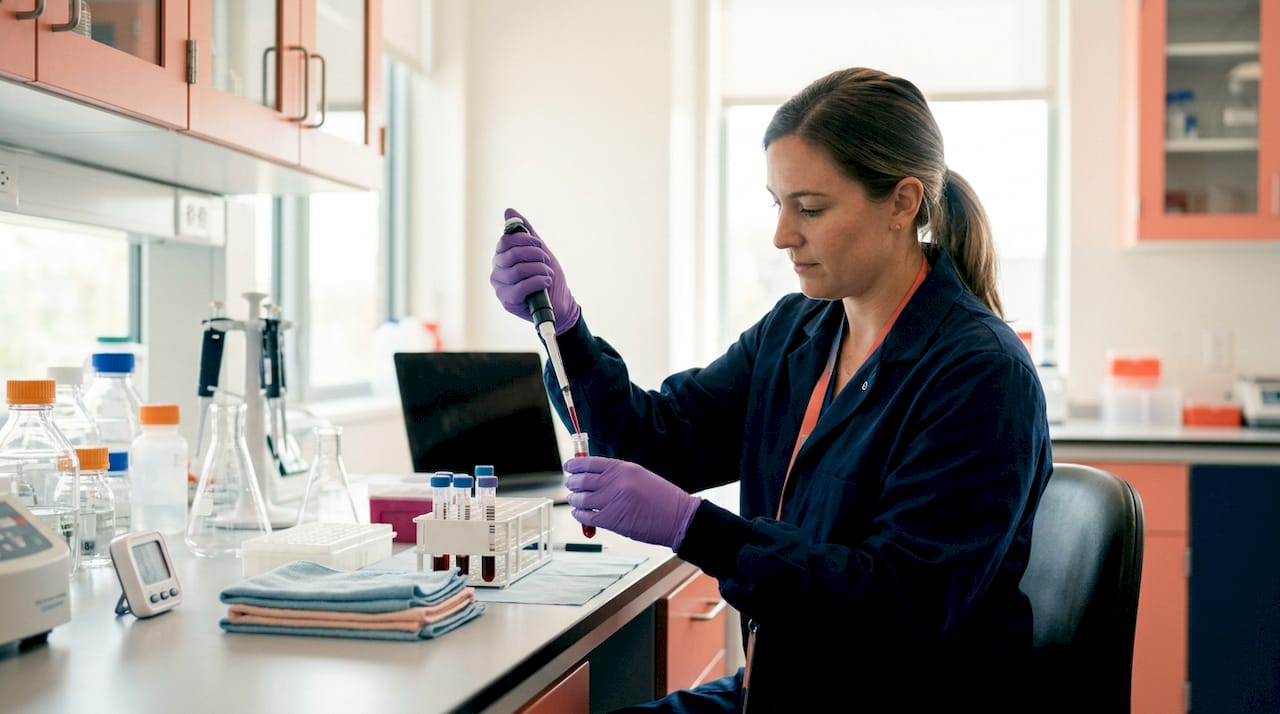
The process follows a clear biological logic. Cells or tissue are collected from your body, processed or concentrated outside the body, and then reintroduced to the site that needs repair. The body recognizes the material as its own, which allows the treatment to work without triggering an immune defense response.
The procedural steps vary by therapy type, but the general sequence looks like this:
- Collection. A clinician draws blood, performs a bone marrow aspirate, or harvests tissue depending on the therapy. For autologous stem cell transplants, cell collection occurs outpatient over 1–3 days.
- Mobilization (stem cell protocols only). Patients receive daily injections for 7–10 days before collection to stimulate stem cell production in the bloodstream.
- Processing. The collected material is concentrated, purified, or in some cases genetically modified in a lab. CAR T-cell therapy, for example, requires 3–5 weeks of engineering and cell expansion before re-infusion.
- Reintroduction. The processed cells are injected or infused back into the patient at the target site, whether that is a joint, a tendon, or the bloodstream.
- Recovery and engraftment. After infusion, engraftment takes 10–16 days in stem cell protocols, requiring monitoring and sometimes additional clinical support.
The biological mechanisms at work include growth factor delivery, immune modulation, and direct tissue regeneration. In PRP therapy, for instance, concentrated platelets release signaling proteins that coordinate the repair process at the cellular level.
Pro Tip: Ask your provider specifically how your cells will be processed and what quality controls are in place. The processing step is where outcomes can vary most between clinics.
What are the main types of autologous therapies?
Several distinct autologous therapy types are used clinically today, each with a different mechanism and target condition.
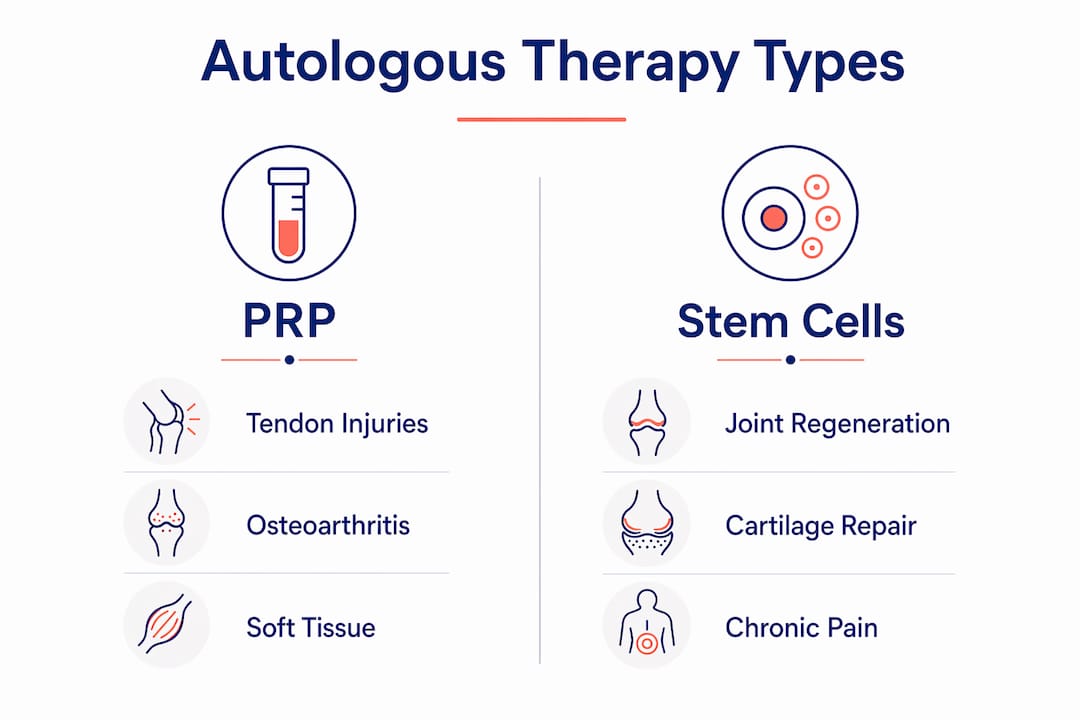
- Platelet-Rich Plasma (PRP) therapy. Blood is drawn, spun in a centrifuge to concentrate platelets, and injected into the affected area. PRP contains growth factors including PDGF, TGF-β, VEGF, and IGF, which coordinate tissue repair and regulate inflammation. It is most commonly used for osteoarthritis, tendon injuries, and soft tissue damage.
- Autologous stem cell transplantation. Stem cells are harvested from the patient’s own bone marrow or peripheral blood, stored, and reinfused after high-dose chemotherapy. This approach is standard in treating hematologic cancers such as multiple myeloma and non-Hodgkin lymphoma.
- CAR T-cell therapy. A patient’s T-cells are genetically reprogrammed to target cancer cells. This therapy functions as what researchers describe as a living drug, persisting in the body and continuing to act over time.
- Autologous protein solutions and biomimetic scaffolds. These are newer approaches in orthopedics. Biomimetic scaffolds and autologous protein solutions show promise in joint repair and pain relief by providing both structural support and biological signaling, though more clinical trials are needed.
| Therapy type | Primary indication | Typical setting |
|---|---|---|
| PRP | Tendon injuries, osteoarthritis, soft tissue | Outpatient clinic |
| Autologous stem cell transplant | Hematologic cancers, bone marrow failure | Inpatient hospital |
| CAR T-cell therapy | Blood cancers (relapsed/refractory) | Specialized cancer center |
| Autologous protein solutions | Joint degeneration, early arthritis | Outpatient orthopedic clinic |
| Biomimetic scaffolds | Cartilage repair, joint reconstruction | Surgical or outpatient setting |
Understanding which therapy fits your condition requires a clinical evaluation. The table above reflects general patterns, not individual recommendations.
What are the benefits and limitations of autologous therapy?
The core advantage of autologous cell therapy is immune compatibility. Because the material comes from your own body, the risk of rejection is minimal. That eliminates the need for long-term immunosuppression drugs, which carry their own side effects and risks.
Key benefits include:
- Reduced risk of GvHD and immune rejection compared to allogeneic (donor-based) options
- No need for donor matching, which simplifies logistics and reduces wait times
- Personalized treatment based on your own biology, which can improve targeting
- Potential for long-lasting effects, particularly with living therapies like CAR T-cells
- Lower infection risk from foreign biological material
Limitations are real and worth understanding:
- High manufacturing costs, particularly for engineered cell therapies
- Time delays between collection and treatment, which can be weeks in complex protocols
- No standardized protocol exists across autologous therapy preparation methods, which limits consistent outcomes
- Patient-specific variability means results differ based on age, health status, and cell quality
- Many therapies remain investigational or off-label, requiring careful patient counseling
Pro Tip: If you are considering autologous therapy for a musculoskeletal condition, ask whether the clinic follows published clinical practice guidelines. Standardization is still evolving, and protocol quality varies.
The commitment required from patients is also significant. Stem cell protocols involve weeks of preparation, collection, and recovery. PRP is far simpler, typically completed in a single outpatient visit, but even PRP outcomes depend on preparation quality and injection technique.
How is autologous therapy used in pain management and recovery?
Pain management is one of the most active areas for autologous therapy applications, particularly through PRP and stem cell treatments. We see many patients arrive after trying physical therapy, anti-inflammatory medications, or cortisone injections with limited lasting relief. Autologous options offer a different mechanism entirely.
PRP works by shifting the immune environment at the injury site. PRP shifts macrophage dominance from M1 (pro-inflammatory) to M2 (anti-inflammatory) phenotypes, which supports tissue repair rather than ongoing inflammation. This is why PRP can reduce pain in conditions like knee osteoarthritis and rotator cuff tendinopathy, where chronic inflammation is the primary driver of discomfort. You can read more about PRP for joint pain and how it applies to specific injuries.
Stem cell therapy targets joint regeneration more directly. Mesenchymal stem cells can differentiate into cartilage and bone tissue, and they also release anti-inflammatory signals that calm the local immune response. For patients with moderate joint degeneration, this dual action, structural repair plus inflammation control, is what makes stem cell therapy worth considering. Research on joint mobility improvements from regenerative treatments shows meaningful functional gains in appropriate candidates.
| Condition | Therapy used | Mechanism | Expected timeline |
|---|---|---|---|
| Knee osteoarthritis | PRP | Macrophage modulation, growth factor delivery | 4–12 weeks |
| Rotator cuff tendinopathy | PRP | Tissue repair signaling, collagen stimulation | 6–12 weeks |
| Joint degeneration | Stem cell therapy | Cartilage regeneration, anti-inflammatory signaling | 3–6 months |
| Soft tissue injury | PRP or stem cell | Growth factor cascade, immune modulation | 4–8 weeks |
Therapy success depends on patient condition, preparation quality, and protocol adherence. That means managing expectations honestly is part of good clinical practice. Not every patient responds the same way, and results are rarely immediate.
Key takeaways
Autologous therapy is the most immune-compatible treatment approach available because it uses your own cells, eliminating rejection risk and reducing the need for immunosuppression.
| Point | Details |
|---|---|
| Core definition | Autologous therapy uses your own cells or tissues, eliminating immune rejection risk. |
| Main therapy types | PRP, stem cell transplants, CAR T-cell therapy, and biomimetic scaffolds each target different conditions. |
| Pain management role | PRP and stem cell therapy reduce inflammation and support tissue repair in joints and tendons. |
| Key limitation | No universal preparation standard exists, so protocol quality varies significantly between providers. |
| Patient commitment | Stem cell protocols require weeks of preparation and recovery; PRP is typically a single outpatient visit. |
What I’ve learned about autologous therapy after years in regenerative medicine
The science behind autologous therapy is genuinely compelling. What I find most interesting is not the technology itself but the gap between what the research shows and what patients actually experience in practice.
The biggest issue I see is expectation management. Patients often arrive having read about dramatic outcomes, and while those outcomes are real for some people, they are not universal. The variability in clinical results is not a flaw in the therapy. It reflects the fact that biology is individual. Your cells, your health history, and your specific condition all shape what is possible.
What I have also noticed is that the preparation phase matters more than most patients realize. A well-processed PRP injection and a poorly processed one are not the same treatment, even if they carry the same name. This is where choosing a provider with clear protocols and quality controls makes a real difference. The lack of universal standardization in this field is a genuine challenge, and it is one the clinical community is actively working to address.
My honest view is that autologous therapy is most valuable when it is matched carefully to the right patient and the right condition. It is not a replacement for surgery in every case, and it is not a guarantee of pain relief. But for patients with musculoskeletal conditions who want a non-surgical path forward, it represents one of the most biologically sound options available today.
— Felix
Autologous therapy options at Nortextissueregeneration
Nortextissueregeneration offers both PRP therapy and stem cell therapy for patients dealing with chronic joint pain, tendon injuries, arthritis, and degenerative conditions. Each treatment plan is built around a clinical evaluation, not a one-size-fits-all protocol. The clinic follows evidence-based preparation standards to support consistent, quality outcomes. If you are weighing your options and want a clear picture of what autologous treatment could realistically do for your condition, a consultation with the Nortextissueregeneration team is a practical first step.
FAQ
What is autologous therapy in simple terms?
Autologous therapy is a treatment that uses your own cells or tissues, collected from your body, processed, and reintroduced to promote healing. Because the material is yours, the immune system does not reject it.
How is autologous therapy different from allogeneic therapy?
Autologous therapy uses the patient’s own cells, while allogeneic therapy uses cells from a donor. Autologous treatments carry a significantly lower risk of immune rejection and graft-versus-host disease.
Is autologous therapy safe?
Autologous therapy is generally considered safe because it uses the patient’s own biological material, eliminating the risk of donor-related immune reactions. Risks vary by therapy type and preparation method, so clinical oversight is necessary.
How long does autologous therapy take to work?
Timelines depend on the therapy and condition. PRP for joint pain typically shows results within 4–12 weeks, while stem cell protocols for joint regeneration may take 3–6 months for meaningful improvement.
What conditions can autologous therapy treat?
Autologous therapy is used for hematologic cancers, osteoarthritis, tendon injuries, soft tissue damage, and joint degeneration. PRP and stem cell treatments are the most common options for pain management and musculoskeletal recovery.