
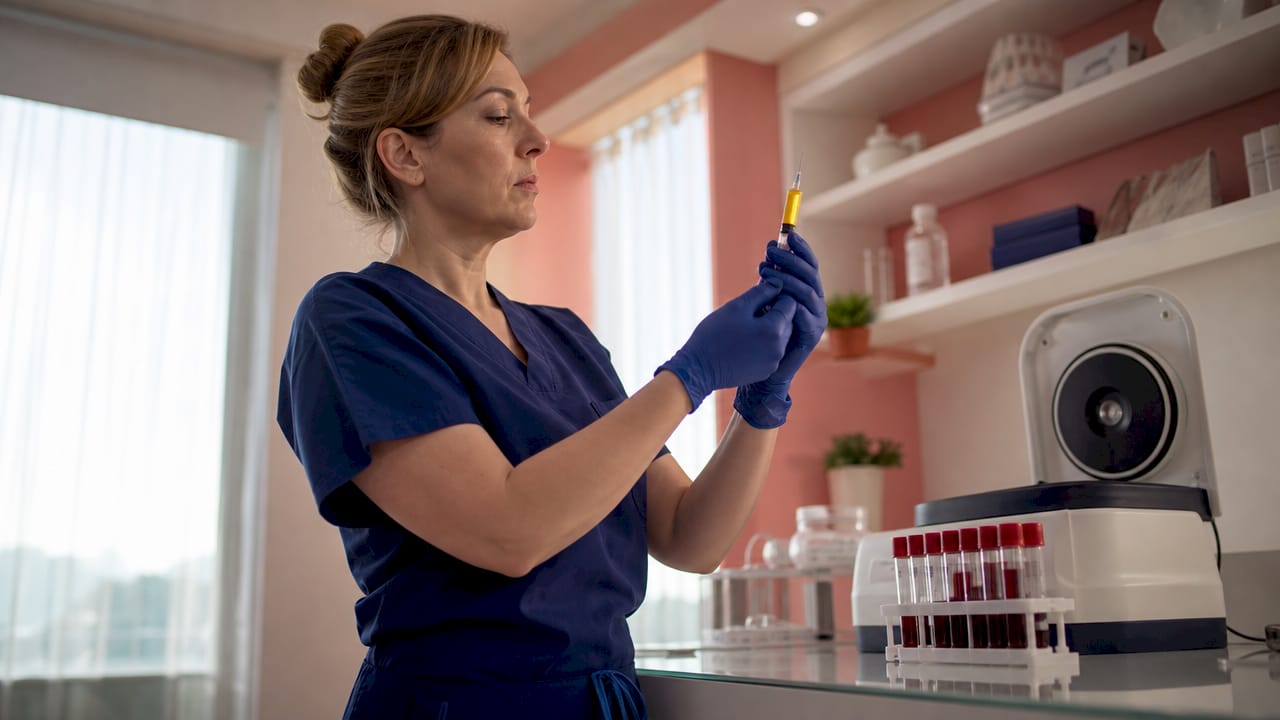
Platelet-rich plasma (PRP) therapy is defined as a treatment that concentrates a patient’s own platelets to deliver a high-dose signal of growth factors directly to injured or damaged tissue. The process works by drawing a small amount of your blood, spinning it in a centrifuge to separate and concentrate the platelets, then injecting that concentrated plasma into the target area. Those platelets release key signaling molecules, including platelet-derived growth factor (PDGF), vascular endothelial growth factor (VEGF), and insulin-like growth factor 1 (IGF-1), which stimulate tissue repair and regeneration. Understanding how does PRP work at a biological level helps you set realistic expectations and choose the right provider.
How does PRP work at the cellular level?
PRP concentrates autologous platelets 2–5 times above baseline, which means the injured tissue receives a far stronger healing signal than it would generate on its own. That concentration matters because platelets are not just clotting agents. They are biological messengers packed with growth factors, cytokines, and extracellular vesicles that coordinate a cascade of repair activity.
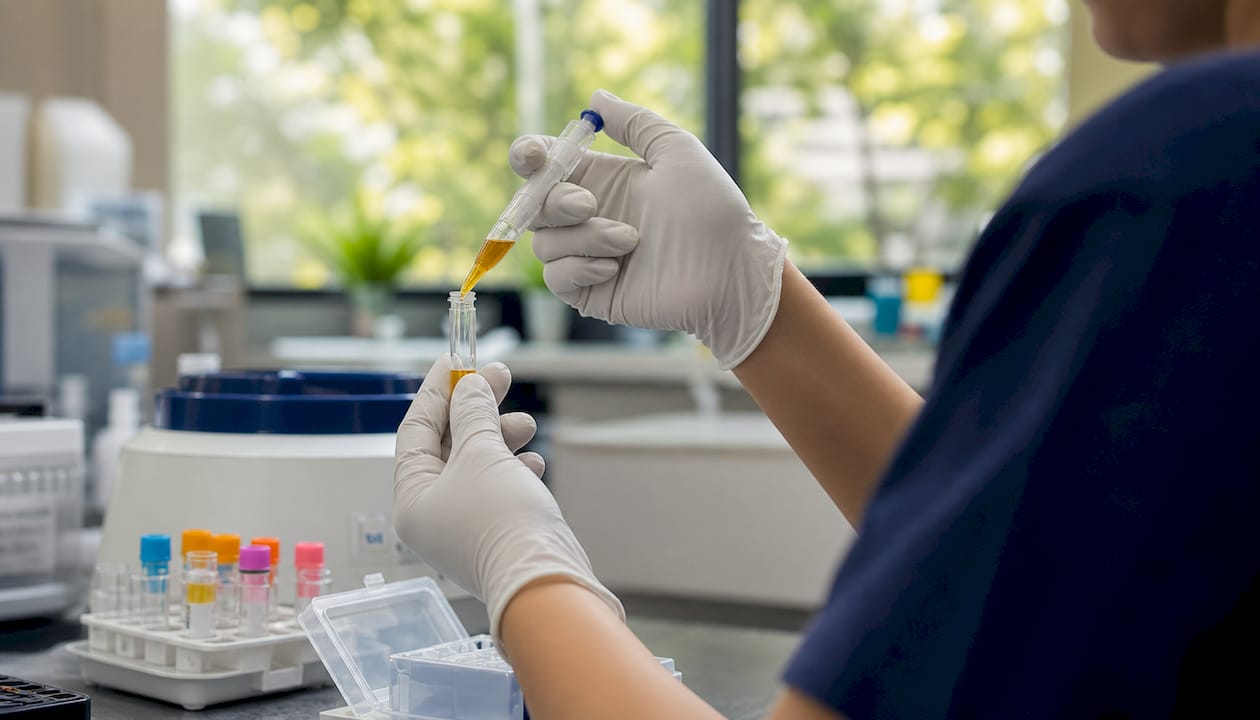
Once injected, activated platelets release over 300 signaling molecules, including growth factors and cytokines that direct cell migration, proliferation, immune modulation, and tissue remodeling. This is not a single action. It is a coordinated biological response that unfolds over weeks.
The key processes PRP stimulates include:
- Cell proliferation: Growth factors like PDGF signal local stem cells and fibroblasts to divide and repopulate damaged tissue.
- Angiogenesis: VEGF promotes the formation of new blood vessels, which restores oxygen and nutrient supply to the injured area.
- Collagen synthesis: IGF-1 drives fibroblast activity, increasing collagen production to rebuild structural integrity in tendons, ligaments, and cartilage.
- Inflammation modulation: PRP does not simply suppress inflammation. It recalibrates it, shifting the local environment from a chronic inflammatory state toward an active repair state.
- Extended regenerative effects: Activated platelets release mitochondria and extracellular vesicles that extend anti-inflammatory and regenerative effects beyond what growth factors alone can achieve.
PRP acts primarily as a biological dose of signaling molecules rather than a structural scaffold. That distinction is clinically important. PRP does not physically rebuild tissue. It tells your body’s own cells to do the rebuilding.
How is PRP prepared and administered?
The quality of PRP therapy depends heavily on how the plasma is prepared and delivered. A poorly prepared sample with insufficient platelet concentration will produce a weaker biological signal, regardless of how skilled the injector is.
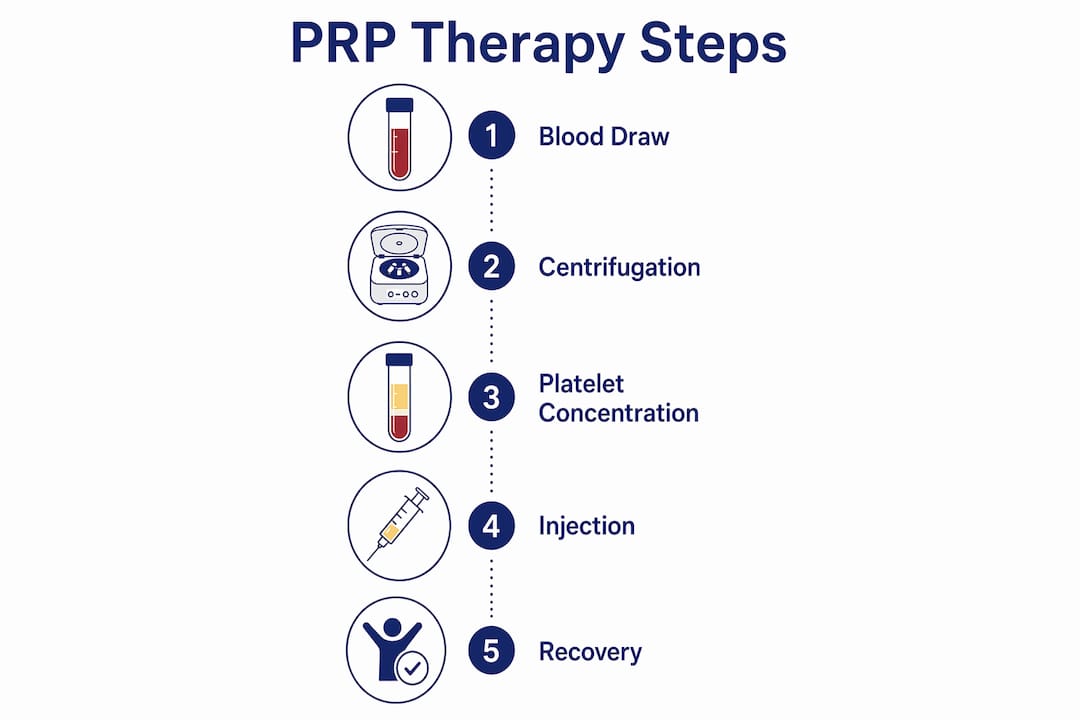
The standard preparation process follows these steps:
- Blood draw: A clinician draws 30–60 milliliters of blood from your arm, similar to a standard lab draw.
- Centrifugation: The blood is placed in a centrifuge and spun to separate red blood cells, white blood cells, and plasma. Double-spin centrifugation yields a higher platelet concentration than single-spin and is the preferred method for quality outcomes.
- Plasma extraction: The platelet-rich layer is carefully extracted. Depending on the clinical goal, the preparation may be leukocyte-rich or leukocyte-poor, since white blood cell content affects the inflammatory profile of the final product.
- Activation (optional): Some protocols activate the platelets with calcium chloride or thrombin before injection to trigger immediate growth factor release. Others rely on the injection environment to activate them naturally.
- Injection: The PRP is injected into the target tissue. Image guidance, such as ultrasound, is often used to confirm accurate placement, particularly for deep structures like tendons or joints.
A full PRP session typically lasts 45–60 minutes from blood draw to injection. Most patients are in and out within an hour.
Pro Tip: Ask your provider whether they use double-spin centrifugation and ultrasound guidance. These two factors have a direct impact on platelet yield and injection accuracy, both of which influence your results.
Medication management before treatment also matters. Anti-inflammatory medications like ibuprofen or naproxen can blunt the biological cascades that PRP initiates. Most clinicians recommend pausing these medications for a period before and after treatment, under medical supervision.
What outcomes and recovery can you realistically expect?
PRP therapy is not an immediate fix. The biological process it initiates takes time to produce visible results, and patients who understand this tend to have better experiences overall.
Mild redness and tenderness at the injection site are normal and typically resolve within 1–2 days. Some patients notice a temporary increase in discomfort in the first week as the inflammatory cascade activates. This is a sign the treatment is working, not a sign something went wrong.
Full benefits generally develop over a 3–6 month window post-treatment. Collagen remodeling and tissue repair are slow biological processes. Expecting significant improvement at two weeks is unrealistic. Expecting meaningful change at three months is reasonable.
Research supports PRP’s effectiveness across several injury types:
- Hamstring strains: Meta-analyses show PRP shortens return-to-play by 8.6 days on average for acute hamstring injuries compared to controls. For competitive athletes, that difference is significant.
- Osteoarthritis: Leukocyte-poor PRP formulations show improvements in pain and function in osteoarthritis patients compared to hyaluronic acid injections.
- Hair restoration: In scalp applications, PRP can trigger a temporary shedding phase as growth cycles reset. This is a normal part of the process, not a treatment failure.
Understanding your post-injection recovery phase helps you interpret what you feel in the days and weeks after treatment. Patients who expect gradual improvement tend to stay the course and see better long-term results.
What factors determine whether PRP therapy succeeds?
PRP is not a one-size-fits-all treatment. Several variables interact to determine how well it works for any individual patient.
Patient-specific factors play a large role. Age affects platelet function and growth factor concentration. Patients with certain chronic conditions or those on immunosuppressive medications may have a reduced biological response. Overall health, nutrition, and activity level all influence how well your body responds to the regenerative signal PRP delivers.
Technical factors are equally important. PRP efficacy depends on preparation protocol and individual patient variables, which is why standardized methods matter so much. A centrifuge that does not reach the correct speed, a clinician who estimates injection depth rather than confirming it with imaging, or a preparation that is contaminated with too many red blood cells will all reduce the treatment’s effectiveness.
Key variables that affect outcomes include:
- Platelet concentration in the final preparation
- Leukocyte content (rich vs. poor, depending on the condition being treated)
- Injection accuracy and depth
- Number of treatment sessions
- Patient compliance with post-procedure protocols, including activity modification
Pro Tip: Be cautious of providers offering PRP at significantly below-market prices. Underpriced sessions often correlate with insufficient centrifugation, low platelet yield, and operators who lack the training to deliver injections accurately. The preparation and delivery are where the therapy either works or falls short.
Some patients need multiple sessions to achieve their goals, particularly for chronic conditions or degenerative joint disease. PRP can also be combined with other regenerative approaches for more complex cases. The decision to layer therapies should come from a thorough clinical evaluation, not a standard package.
Key Takeaways
PRP therapy works because it delivers a concentrated biological signal, not a drug, that activates your body’s own repair mechanisms through growth factors, cytokines, and extracellular vesicles.
| Point | Details |
|---|---|
| Core mechanism | PRP concentrates platelets 2–5 times baseline to release PDGF, VEGF, and IGF-1 at the injury site. |
| Preparation quality matters | Double-spin centrifugation and ultrasound-guided injection directly improve platelet yield and placement accuracy. |
| Results take time | Full benefits develop over 3–6 months; mild soreness in the first 1–2 days is a normal part of the process. |
| Patient factors influence outcomes | Age, health status, and medications all affect how strongly your body responds to PRP’s biological signal. |
| Provider selection is critical | Underpriced treatments often indicate inferior protocols that reduce platelet concentration and injection precision. |
What I’ve learned from watching PRP outcomes up close
Many patients come in after trying cortisone injections, physical therapy, or over-the-counter anti-inflammatories for months. They arrive with reasonable skepticism, and honestly, that skepticism is healthy. PRP is not magic. It is biology, and biology takes time.
What I find most telling is the difference in outcomes between patients who understand the mechanism and those who do not. Patients who know that PRP initiates a biological cascade rather than delivering instant relief tend to stay consistent with their post-procedure protocols. They avoid anti-inflammatories when instructed, they modify activity appropriately, and they give the treatment the three to six months it needs to work. Those patients consistently report better results.
The other thing worth saying plainly: the preparation method and the injector’s skill are not minor details. They are the treatment. A poorly spun sample with a low platelet count injected without imaging guidance is a fundamentally different intervention than a properly prepared, accurately delivered dose. When you are evaluating providers, ask specific questions about centrifuge protocol and whether they use ultrasound guidance. A provider who cannot answer those questions clearly is a provider worth reconsidering.
PRP is a process. It works with your body’s biology, not around it. Respecting that timeline and choosing a provider who respects it too makes all the difference.
— Felix
Nortextissueregeneration’s approach to PRP therapy
Nortextissueregeneration follows evidence-based preparation and delivery protocols for every PRP therapy treatment it provides. That means double-spin centrifugation, image-guided injection where clinically indicated, and individualized treatment planning based on a thorough evaluation of your condition, health history, and goals. For patients with more complex or degenerative conditions, Nortextissueregeneration also offers stem cell therapy as a complementary regenerative option. If you are ready to understand what treatment makes sense for your specific situation, a consultation with the Nortextissueregeneration team is the right next step.
FAQ
What is PRP therapy used to treat?
PRP therapy is used to treat sports injuries, tendon damage, osteoarthritis, joint pain, and hair loss, among other conditions. Its effectiveness varies by condition, with strong evidence for acute muscle injuries and certain joint conditions.
How long does a PRP session take?
A standard PRP session lasts 45–60 minutes from blood draw through injection. Most patients return to light activity the same day.
How many PRP sessions do you need?
Most patients receive one to three sessions depending on the severity of their condition and their biological response. Chronic or degenerative conditions may require additional treatments or complementary therapies.
Does PRP hurt during or after the injection?
Mild discomfort at the injection site is common and typically resolves within 1–2 days. Some patients experience a temporary increase in soreness in the first week as the healing response activates.
How does PRP therapy compare to cortisone injections?
Cortisone suppresses inflammation quickly but does not repair tissue. PRP initiates a biological repair process that takes longer to produce results but addresses the underlying tissue damage rather than masking symptoms.
Recommended
- How Many PRP Sessions Do I Need? A Clear Guide for Real Results – Nortex Tissue Regeneration
- How to Maximize PRP Outcomes: A Practical Guide
- Does PRP Therapy Work Better on Certain Body Parts? | Expert Guide to PRP Effectiveness – Nortex Tissue Regeneration
- Why Some PRP Treatments Work Better Than Others – Nortex Tissue Regeneration