

Stem cell therapy is defined as a biological treatment that uses the body’s own repair cells to reduce inflammation and improve joint function in arthritis. The role of stem cells in arthritis management has grown significantly as research confirms clinically meaningful pain relief, especially in mild to moderate knee osteoarthritis. Mesenchymal stem cells (MSCs) are the most studied cell type in this field. They work through immunomodulation, paracrine signaling, and targeted migration to damaged tissue. Current evidence shows pain improvements of 30–50% lasting up to 24 months post-injection. These results are real, but they come with important nuances every patient should understand before pursuing treatment.
How do stem cells work to relieve arthritis symptoms?
Stem cells do not simply replace damaged cartilage. Their primary value in arthritis lies in how they communicate with the joint environment and shift it away from chronic inflammation.

MSCs secrete a range of bioactive growth factors including VEGF, bFGF, HGF, and IGF-1, along with anti-inflammatory cytokines such as IL-10 and TGF-β. These molecules calm the inflammatory cycle that drives cartilage breakdown. Think of it less like patching a pothole and more like changing the road conditions so potholes form more slowly.
Three biological mechanisms explain most of the benefit:
- Immunomodulation. MSCs suppress overactive immune signals that attack joint tissue. This is especially relevant in inflammatory arthritis types like rheumatoid arthritis.
- Paracrine signaling. Injected cells release chemical messengers that prompt surrounding cells to repair tissue. The stem cells themselves may not survive long, but their signals persist.
- Cellular homing. MSCs migrate toward sites of injury and inflammation, concentrating their effects where the joint needs them most.
What stem cells do not reliably do is fully regrow articular cartilage. Current therapies focus on inflammation modulation and symptom management rather than cartilage regeneration. That distinction matters when setting expectations.
Pro Tip: Ask any provider to clarify whether their treatment goal is symptom relief or cartilage regrowth. If they promise full cartilage restoration, that claim is not supported by current evidence.
Understanding how stem cells heal joints helps you evaluate what a treatment can realistically deliver for your specific condition.
What does the scientific evidence say about stem cell therapy for arthritis?
The evidence base for stem cell therapy for arthritis is growing, but it is not yet definitive. Systematic reviews confirm statistically significant improvements in pain and joint function, particularly for early-stage knee osteoarthritis. The results are encouraging, not conclusive.
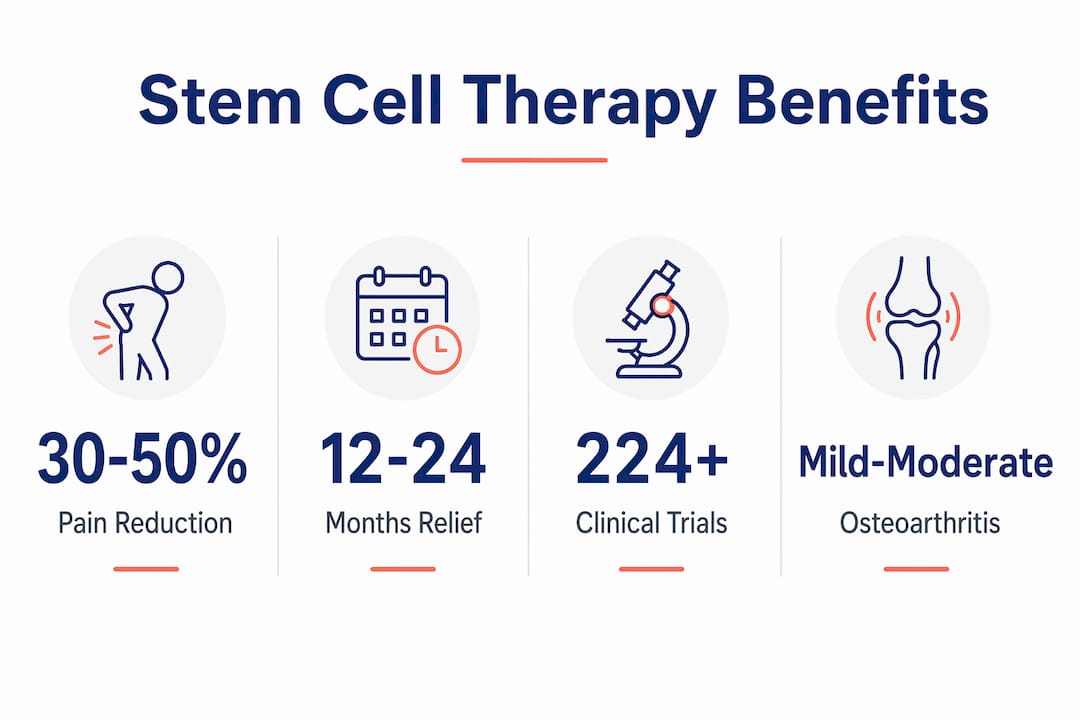
MSC therapies improve pain 30–50% in mild to moderate osteoarthritis, with durability lasting 12–24 months. That range reflects real variability across patients, cell sources, and dosing protocols.
| Outcome measure | Reported finding | Duration |
|---|---|---|
| Pain reduction | 30–50% improvement in mild to moderate OA | Up to 24 months |
| Joint function | Statistically significant improvement in early-stage knee OA | Up to 2 years post-injection |
| Cartilage regrowth | Not reliably confirmed by injectable products as of 2026 | Not established |
| Adverse events | Mostly transient, local reactions | Short-term data available |
Intra-articular MSC injections show statistically significant, clinically meaningful pain and function improvements for knee osteoarthritis, especially in early-stage cases. Benefits often increase over time rather than peaking immediately after injection.
Adipose-derived MSCs (ADSCs) show consistent symptom relief signals, but efficacy varies based on disease severity, cell source, and dosing. No single protocol has been standardized across trials. That variability is the main reason large-scale, controlled studies are still needed.
As of 2026, over 224 global clinical trials are investigating regenerative cell therapies for osteoarthritis. Treatment costs range from $3,000 to $15,000 per injection, and most procedures remain elective and experimental. That cost is not covered by most insurance plans, which is a practical consideration for many patients.
The research on regenerative treatments for arthritis in 2026 reflects genuine progress, but also honest limitations. Patients who go in with clear expectations tend to report the most satisfaction with outcomes.
What are the different types of stem cells used in arthritis treatment?
Not all stem cell procedures are the same. The source of the cells, how they are processed, and how they are delivered all affect both the regulatory status and the likely outcome.
Autologous vs. allogeneic cells
Autologous stem cells come from the patient’s own body, typically harvested from bone marrow or fat tissue during the same visit. Allogeneic cells come from a donor, often umbilical cord blood or placental tissue. Each approach has trade-offs.
| Cell type | Source | Regulatory status (U.S.) | Typical clinical use |
|---|---|---|---|
| BMAC (bone marrow aspirate concentrate) | Patient’s own bone marrow | Same surgical procedure exemption; not FDA-approved as a drug | Knee OA, cartilage support |
| ADSCs (adipose-derived stem cells) | Patient’s own fat tissue | Experimental; minimal manipulation claims vary | Knee OA, soft tissue repair |
| Umbilical cord MSCs | Donor cord blood | Investigational; requires FDA approval as a biologic | Clinical trials only |
| Culture-expanded MSCs | Lab-grown from donor or patient cells | Requires FDA approval; not widely available outside trials | Research settings |
Autologous procedures like BMAC are often performed during one surgical visit under a “same surgical procedure” exemption. Many patients interpret this as FDA approval. It is not. BMAC is not FDA-approved as a drug treatment for arthritis.
Allogeneic products derived from umbilical cord tissue are frequently marketed at private clinics. These products require FDA approval as biologics, and most do not have it. That gap between marketing claims and regulatory reality is where patient risk concentrates.
Pro Tip: Before any procedure, ask the provider: “Is this product FDA-approved for arthritis?” If the answer involves exemptions or “minimal manipulation,” request documentation and consult a second opinion.
What are the safety considerations and regulatory landscape?
Stem cell therapy for arthritis carries a generally acceptable short-term safety profile. Most reported adverse events are mild and local, including transient pain, swelling, or stiffness at the injection site. Serious adverse events are uncommon in published trials.
Long-term safety data remain limited. Most trials follow patients for 12–24 months. What happens beyond that window is not yet well characterized. That is not a reason to avoid treatment, but it is a reason to choose providers who participate in structured follow-up.
The regulatory picture in the U.S. is genuinely complex. A regulatory gray zone exists where some clinics claim FDA 361 exemption for arthritis injections, offering experimental, non-approved care. Patients should be cautious when pursuing stem cell therapies outside clinical trials.
Red flags to watch for when evaluating a stem cell clinic:
- Claims of FDA approval for a specific arthritis stem cell product.
- Promises of cartilage regrowth or reversal of bone-on-bone arthritis.
- No published outcomes data or patient follow-up protocol.
- Pressure to decide quickly or pay upfront without a consultation.
- No mention of clinical trial registration or institutional review.
The best candidates for stem cell therapy are patients with mild to moderate osteoarthritis who have tried and not fully responded to conservative treatments like physical therapy, anti-inflammatory medications, or corticosteroid injections. Patients with severe, end-stage arthritis are less likely to benefit and may be better served by surgical evaluation.
Verifying a clinic’s legitimacy through ClinicalTrials.gov or a board-certified specialist referral is a practical first step. We often see patients who come in after spending significant money at unregulated clinics with no follow-up plan. That experience is avoidable with the right information upfront.
How can patients decide if stem cell treatment is right for their arthritis?
The decision to pursue stem cell therapy for arthritis should be grounded in your specific diagnosis, treatment history, and realistic goals. This is not a one-size-fits-all decision.
Patients most likely to benefit share a few common characteristics:
- Mild to moderate osteoarthritis, confirmed by imaging.
- Prior use of conservative treatments without adequate relief.
- A clear goal of pain reduction and improved mobility, not a cure.
- Willingness to participate in follow-up assessments.
- Financial readiness, since most procedures are not covered by insurance.
Realistic goals for stem cell therapy include reduced daily pain, better joint mobility, and delayed need for surgery. These are meaningful outcomes. They are not the same as reversing arthritis or eliminating the condition entirely.
For patients weighing their options, signs that regenerative treatment may be appropriate include persistent joint pain despite physical therapy, reduced mobility affecting daily activities, and a desire to avoid or delay joint replacement surgery.
Stem cell therapy works best as part of a broader arthritis management plan that includes physical therapy, weight management, and regular monitoring. It is not a standalone fix, and the most successful patients we see treat it as one tool among several.
Key Takeaways
Stem cell therapy reduces arthritis pain by 30–50% in mild to moderate osteoarthritis, with benefits lasting up to 24 months, but it does not reliably regrow cartilage or replace a comprehensive treatment plan.
| Point | Details |
|---|---|
| Primary mechanism | MSCs reduce joint inflammation through paracrine signaling and immunomodulation, not cartilage replacement. |
| Evidence strength | Systematic reviews confirm significant pain and function improvements, especially in early-stage knee OA. |
| Regulatory caution | Many U.S. clinics operate in a gray zone; BMAC and allogeneic products are not FDA-approved arthritis drugs. |
| Best candidates | Patients with mild to moderate OA who have not responded to conservative care and want to delay surgery. |
| Realistic expectations | Expect 30–50% pain reduction lasting 12–24 months, not a cure or full cartilage restoration. |
What I’ve learned about stem cell therapy after years in regenerative medicine
Stem cell therapy holds genuine promise for arthritis patients. I also think the field is frequently misrepresented, both by clinics that overpromise and by critics who dismiss it entirely.
What I’ve observed in clinical settings is that patients who do best are the ones who come in with clear, realistic expectations. They are not looking for a miracle. They want to walk without pain, get back to gardening, or delay a knee replacement by a few years. For those patients, the evidence supports cautious optimism.
The harder conversations involve patients who arrive after spending thousands of dollars at unregulated clinics, having been told their cartilage would “grow back.” That promise is not supported by current science. No injectable product as of 2026 has been proven to reliably regrow cartilage or reverse advanced bone-on-bone arthritis. Stating that clearly is not pessimism. It is respect for the patient.
What gives me confidence in this field is the research trajectory. With over 224 active global trials, the evidence base is maturing. Standardized protocols are coming. The biology is sound. The clinical application just needs to catch up with the science.
My advice: work with a provider who can explain exactly what they are injecting, why, and what the follow-up plan looks like. Combine any regenerative treatment with physical therapy and lifestyle support. And give the treatment time. Benefits in this field often build over months, not days.
— Felix
Arthritis care at Nortextissueregeneration
Nortextissueregeneration is a North Texas regenerative medicine clinic that specializes in non-surgical treatments for arthritis, chronic joint pain, and degenerative conditions. The clinic offers stem cell therapy and bone marrow cell therapy as part of personalized, evidence-based treatment plans. Each patient receives a thorough assessment before any recommendation is made. The goal is to match the right therapy to the right patient, not to apply a generic protocol. If you are living with arthritis pain and want to understand whether regenerative treatment fits your situation, Nortextissueregeneration’s team is ready to walk through your options with you.
FAQ
What is the role of stem cells in arthritis treatment?
Stem cells, particularly mesenchymal stem cells, reduce joint inflammation and support tissue repair through paracrine signaling and immunomodulation. They do not reliably regrow cartilage but can meaningfully reduce pain and improve function in mild to moderate osteoarthritis.
How long do the benefits of stem cell therapy for arthritis last?
Clinical evidence shows pain and function improvements lasting up to 24 months post-injection in mild to moderate knee osteoarthritis. Benefits often increase over time rather than peaking immediately after treatment.
Is stem cell therapy for arthritis FDA-approved?
No injectable stem cell product is currently FDA-approved specifically for arthritis treatment. Procedures like BMAC operate under a “same surgical procedure” exemption, which is not the same as drug approval. Patients should verify the regulatory status of any product before proceeding.
Who is the best candidate for arthritis treatment with stem cells?
Patients with mild to moderate osteoarthritis who have not responded adequately to physical therapy, anti-inflammatory medications, or corticosteroid injections are the strongest candidates. Those with severe, end-stage arthritis are less likely to benefit.
What are the risks of stem cell injections for joint pain?
Most reported adverse events are mild and local, including temporary pain or swelling at the injection site. Long-term safety data remain limited, so choosing a provider with structured follow-up and transparent outcomes reporting is important.