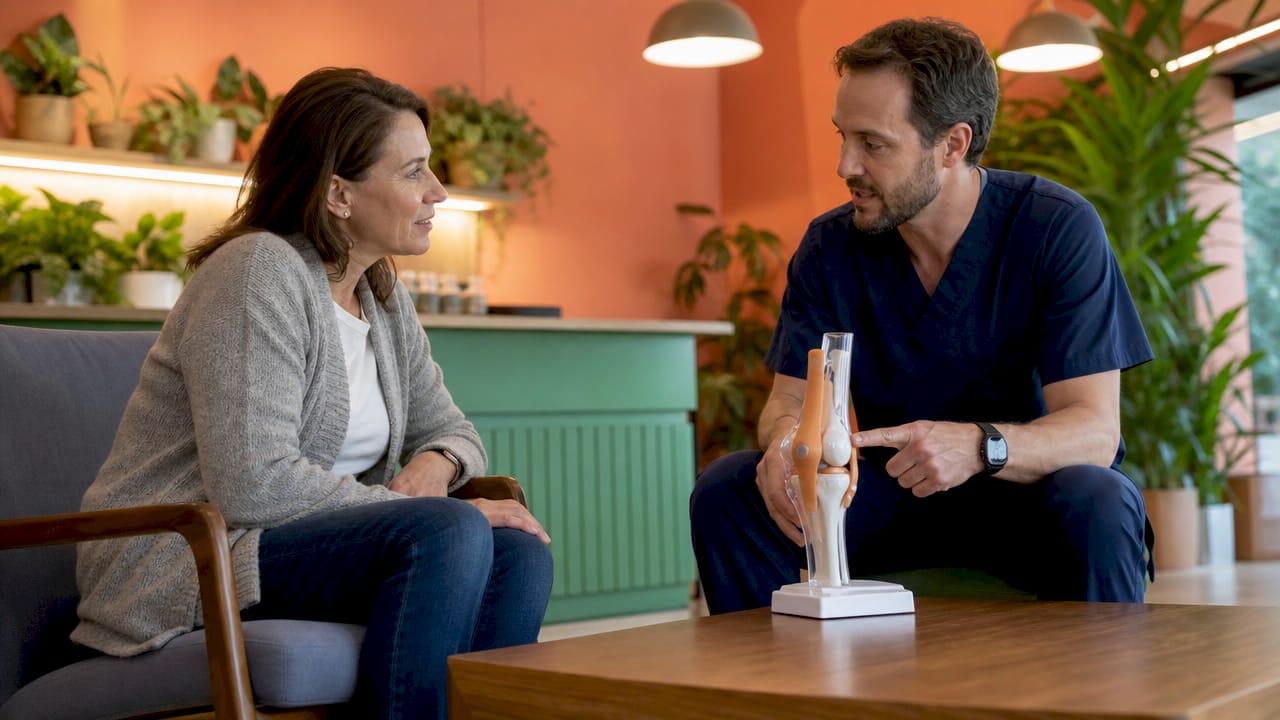
Cartilage regeneration is defined as the biological process of repairing or replacing damaged cartilage tissue to restore joint function and reduce pain. Unlike bone, adult articular cartilage lacks blood vessels and nerves, which means it cannot heal itself the way a broken bone can. When cartilage wears down from injury, arthritis, or repetitive stress, the body produces inferior fibrocartilage as a patch. That patch does not hold up under the daily demands of a weight-bearing joint. Advanced therapies, including platelet-rich plasma (PRP) and mesenchymal stem cell (MSC) treatments, now offer a path toward genuine tissue repair without surgery.
What is cartilage regeneration, biologically speaking?
Cartilage regeneration, in clinical terms, refers to stimulating chondrocytes (the cells that build and maintain cartilage) to produce new extracellular matrix. That matrix is the structural web of collagen and proteoglycans that gives cartilage its ability to absorb shock and resist compression. When chondrocytes are activated by biologic signals, they begin synthesizing collagen type II and aggrecan, the two key components of healthy hyaline cartilage.
The challenge is that cartilage has a zonal architecture. It is organized in layers, each with a different collagen orientation and cell density, designed to handle different mechanical forces. Replicating that structure is difficult. Cartilage zones have specific roles, and poorly replicated tissue fails under shear and compression stresses over time.
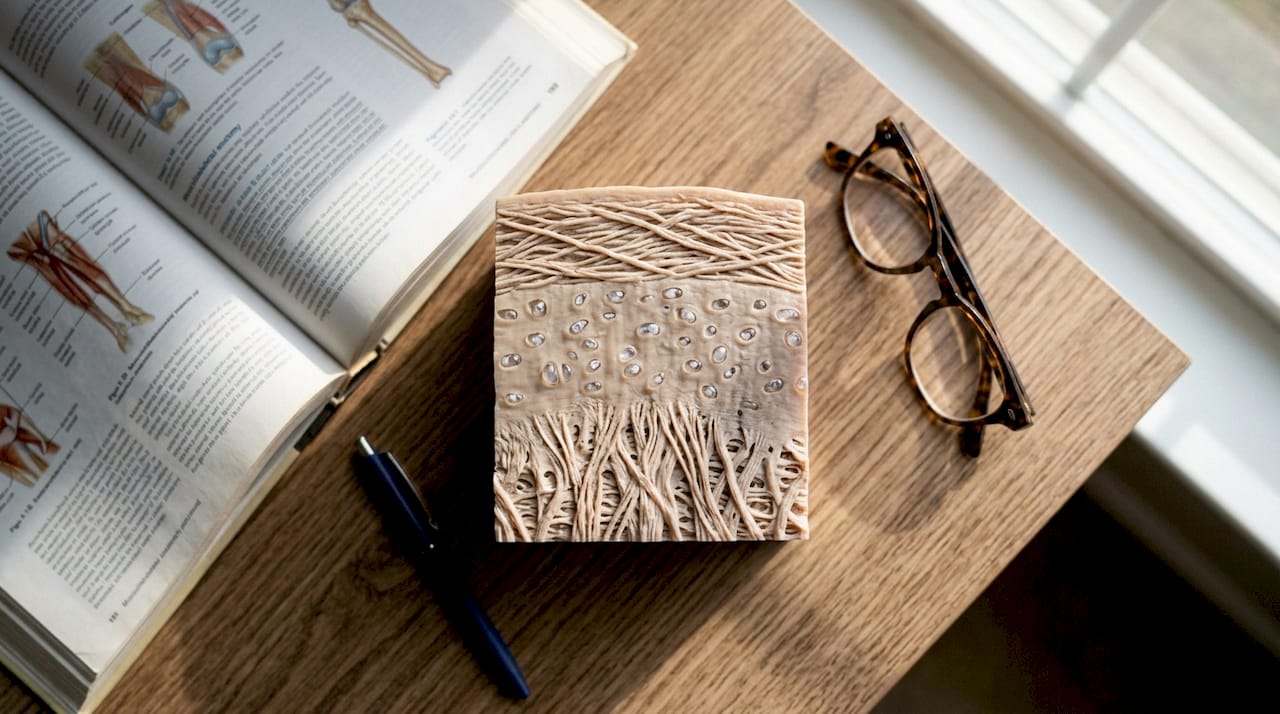
Scaffolds have become a central tool in addressing this problem. Researchers have developed scaffolds made from protein fragments and hyaluronic acid that mimic the natural cartilage matrix. In preclinical models, these scaffolds promoted hyaline-like cartilage growth rich in collagen II and proteoglycans, with results lasting over six months in animal trials. That is a meaningful step forward.
Key biological factors in the cartilage regeneration process:
- Chondrocyte activation: Biologic signals prompt dormant cells to produce new matrix material.
- Signaling pathways: Therapies like PRP modulate pathways including TGF-β/Smad and PI3K/AKT/mTOR to support cell survival and matrix synthesis.
- Scaffold support: Structural frameworks guide cell growth and help replicate the zonal architecture of native cartilage.
- Avascularity: The absence of blood supply limits nutrient delivery and slows the entire repair process.
Pro Tip: Ask your provider whether a proposed therapy targets hyaline-like cartilage or fibrocartilage. The distinction matters more than most patients realize.
What are the current non-surgical cartilage regeneration options?
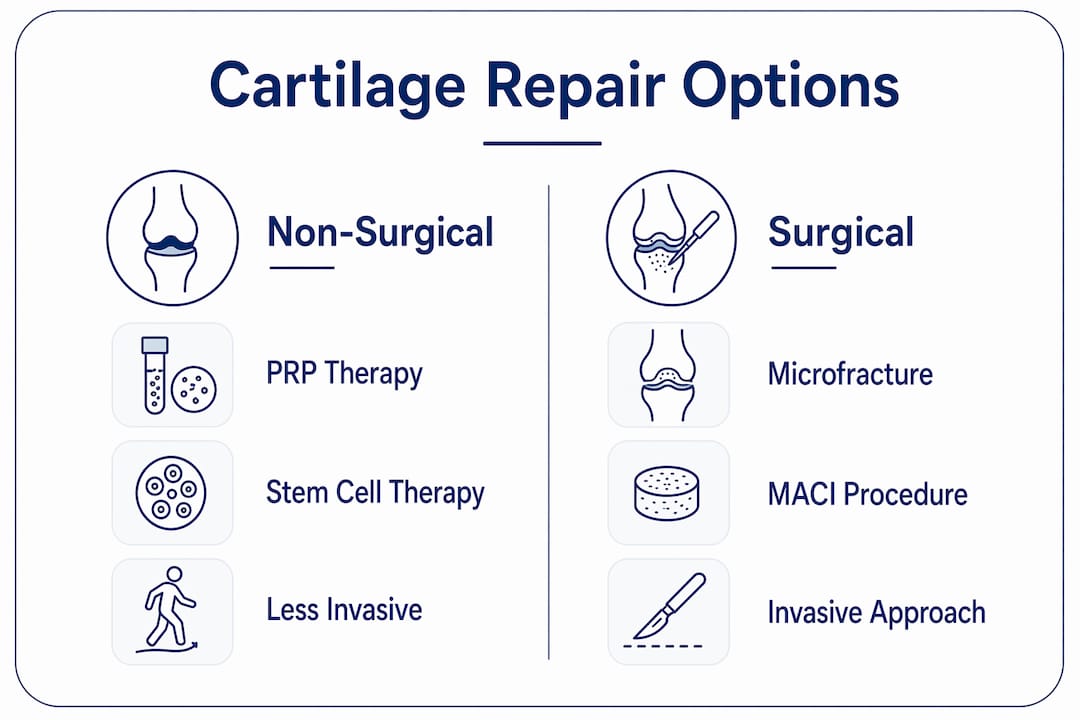
PRP therapy is the most widely used non-surgical approach to cartilage repair today. It works by concentrating platelets from your own blood and injecting them into the damaged joint. Those platelets release growth factors that modulate inflammation and signaling pathways like TGF-β/Smad, which directly support cartilage cell survival and extracellular matrix synthesis. PRP does not rebuild cartilage overnight, but it creates a biological environment where repair is more likely to occur.
Mesenchymal stem cell (MSC) therapy takes a different approach. MSCs are multipotent cells that can differentiate into chondrocytes under the right conditions. Delivery methods have expanded significantly, and researchers now use extracellular vesicles and hydrogel carriers to improve how MSCs integrate into damaged tissue. We often see patients who come in after years of managing pain with anti-inflammatories, and MSC therapy offers them a path that addresses the underlying tissue rather than just the symptoms.
Current limitations are worth stating plainly. Long-term clinical evidence for both PRP and MSC therapies is still developing. Most studies show meaningful short-to-medium-term improvements in pain and function, but multi-year outcome data remains limited. That does not make these therapies ineffective. It means patients should enter treatment with realistic expectations and a clear plan for monitoring progress.
Key non-surgical cartilage repair methods available in 2026:
- PRP therapy: Uses concentrated platelets to deliver growth factors directly to damaged cartilage.
- MSC therapy: Introduces stem cells capable of differentiating into cartilage-producing cells.
- Extracellular vesicle delivery: A newer method that uses cell-derived particles to carry regenerative signals without transplanting whole cells.
- Hydrogel-based delivery: Keeps biologic agents in place within the joint, improving integration.
Pro Tip: PRP and stem cell therapy are not interchangeable. Comparing both options with a specialist before committing to a protocol helps you choose the right fit for your specific injury and joint condition.
How does non-surgical regeneration compare to surgical cartilage repair?
Surgical cartilage repair has been the standard for decades. Microfracture, one of the most common procedures, creates small holes in the bone beneath damaged cartilage to stimulate bleeding and clot formation. That clot eventually becomes fibrocartilage. The problem is that fibrocartilage is mechanically inferior to native hyaline cartilage. It wears down faster and does not handle repetitive loading as well, which is why many patients see symptom return within a few years.
Matrix-induced autologous chondrocyte implantation (MACI) is a more advanced surgical option. It involves harvesting a patient’s own chondrocytes, growing them in a lab, and reimplanting them on a collagen scaffold. MACI achieves 80–90% long-term success in repairing knee cartilage, making it one of the most effective surgical techniques available. The trade-off is that it requires two procedures, significant recovery time, and carries surgical risks.
| Feature | Non-surgical (PRP/MSC) | Microfracture | MACI |
|---|---|---|---|
| Tissue type produced | Hyaline-like (goal) | Fibrocartilage | Hyaline-like |
| Recovery time | Days to weeks | 6–12 weeks | 12–18 months |
| Surgical risk | None | Moderate | Moderate to high |
| Long-term evidence | Developing | Established | Strong |
| Repeat treatment possible | Yes | Limited | Limited |
Non-surgical approaches preserve the joint’s native anatomy. They avoid the risks of anesthesia, infection, and prolonged immobilization. For patients with focal cartilage damage who are not yet candidates for joint replacement, biologic therapies offer a meaningful middle path. We often find that patients who pursue non-surgical options earlier in the disease process tend to have better outcomes than those who wait until damage is severe.
What practical steps support effective cartilage healing?
Cartilage regeneration does not happen in isolation. The biological process depends heavily on the mechanical environment surrounding the joint. Joint stability and proper alignment are prerequisites for any regenerative therapy to succeed. If ligament laxity or bone malalignment places abnormal stress on the repair site, even the best biologic treatment will fail.
Rehabilitation adherence is equally critical. Premature joint loading can displace cells or disrupt the integration of scaffolds and biologics before they have time to take hold. Controlled weight-bearing, guided by your care team, protects the repair during the most vulnerable phase of healing.
Practical steps to support your cartilage healing:
- Address alignment first. Confirm with your provider that ligament integrity and bone alignment are adequate before starting regenerative treatment.
- Follow weight-bearing protocols exactly. Partial loading schedules exist for a reason. Skipping steps costs you weeks of progress.
- Prioritize anti-inflammatory nutrition. Omega-3 fatty acids, vitamin D, and adequate protein support the cellular environment needed for matrix synthesis.
- Avoid high-impact activity during early healing. Running, jumping, and heavy lifting place shear forces on repair tissue before it has matured.
- Stay consistent with physical therapy. Muscle strength around the joint reduces mechanical stress on the cartilage repair site.
Pro Tip: Aging proteins called gerozymes actively degrade cartilage repair molecules. Addressing systemic inflammation through diet and lifestyle gives biologic therapies a better environment to work in.
Key Takeaways
Cartilage regeneration succeeds when biologic therapies, mechanical stability, and patient adherence work together, and non-surgical options like PRP and MSC therapy offer a viable path before surgery becomes necessary.
| Point | Details |
|---|---|
| Cartilage cannot self-repair | Adult cartilage lacks blood supply, so damage rarely heals without intervention. |
| PRP targets signaling pathways | PRP modulates TGF-β/Smad to support cell survival and matrix synthesis in damaged joints. |
| Tissue type determines durability | Hyaline-like cartilage outperforms fibrocartilage under repetitive joint loading. |
| Mechanical environment matters | Joint alignment and stability must be addressed for any regenerative therapy to hold. |
| Rehabilitation adherence is non-negotiable | Premature loading displaces biologics and disrupts scaffold integration during early healing. |
What I’ve learned watching patients pursue cartilage regeneration
Patients often arrive with a mix of hope and skepticism, and both are reasonable. What I’ve observed over time is that the patients who do best are not necessarily the ones with the least damage. They are the ones who follow through. They show up to physical therapy. They respect the loading restrictions. They give the treatment time.
The biology of cartilage repair is slow by nature. Expecting significant pain reduction within two weeks sets patients up for disappointment. A more realistic frame is three to six months for meaningful functional improvement, with continued maturation of repair tissue beyond that. Outcomes also vary depending on the size and location of the defect, the patient’s age, and how well the mechanical environment is managed.
What I find genuinely encouraging about 2026 research is the focus on the mechanical side of regeneration. For years, the conversation centered almost entirely on which biologic to inject. Now, researchers and clinicians are giving equal weight to joint mechanics, rehabilitation timing, and the zonal architecture of repair tissue. That shift reflects a more complete understanding of what cartilage actually needs to heal.
My honest recommendation: treat regenerative medicine as a serious medical intervention, not a shortcut. Consult with a specialist who will evaluate your alignment, your defect size, and your lifestyle before recommending a protocol. The types of regenerative approaches available today are genuinely promising. They work best when matched carefully to the right patient.
— Felix
Non-surgical cartilage therapies at Nortextissueregeneration
Nortextissueregeneration offers personalized, non-surgical treatment plans for patients dealing with cartilage damage, joint pain, and degenerative conditions. The clinic’s PRP therapy program uses evidence-based protocols to deliver concentrated growth factors directly to damaged joints, supporting the biological environment needed for repair. For patients who may benefit from a more intensive approach, stem cell therapy is also available, using mesenchymal stem cells to target cartilage tissue at the cellular level. Every treatment plan is built around your specific injury, joint condition, and recovery goals. Contact Nortextissueregeneration to schedule a consultation and find out which approach fits your situation.
FAQ
Can cartilage actually regenerate on its own?
Adult cartilage has very limited natural healing capacity because it lacks blood vessels. Without intervention, damaged cartilage typically heals with inferior fibrocartilage rather than functional hyaline tissue.
How long does cartilage regeneration take?
Meaningful functional improvement from biologic therapies typically takes three to six months. Full maturation of repair tissue can continue beyond that, depending on defect size and rehabilitation adherence.
Is PRP effective for cartilage repair?
PRP modulates inflammatory and signaling pathways, including TGF-β/Smad, to support cartilage cell survival and matrix synthesis. Clinical evidence shows short-to-medium-term improvements in pain and function, with long-term data still developing.
What is the difference between fibrocartilage and hyaline cartilage?
Hyaline cartilage is the native tissue found in weight-bearing joints and handles compression and shear forces effectively. Fibrocartilage, produced by procedures like microfracture, is mechanically weaker and wears down faster under repetitive joint use.
Who is a good candidate for non-surgical cartilage regeneration?
Patients with focal cartilage defects, adequate joint alignment, and intact ligament stability tend to respond best to biologic therapies. Those with severe, widespread degeneration or significant mechanical instability may need surgical evaluation first.