

Navigating the world of regenerative therapies for joint pain can feel overwhelming, especially when you’re dealing with real discomfort and a genuine need for lasting relief. PRP (platelet-rich plasma) and stem cell treatments offer exciting possibilities for active adults in North Texas, but outcomes vary widely depending on diagnosis, preparation protocols, and follow-up care. Without a clear framework for evaluating your options, it’s easy to make choices based on marketing rather than medicine. This article gives you a structured, evidence-based checklist to work through so you can approach these therapies with clarity and confidence.
Table of Contents
- How to know if you’re a candidate: The essential screening checklist
- Understanding PRP: Protocols, preparation, and outcomes
- Stem cell therapies: What to ask about safety and expectations
- Don’t skip rehab: Why follow-up matters for recovery
- Regenerative therapy options at a glance: Comparison table
- Our perspective: Why a checklist mindset is essential for regenerative therapy
- Explore regenerative therapies with expert guidance
- Frequently asked questions
Key Takeaways
| Point | Details |
|---|---|
| Stage-matching is crucial | Best regenerative therapy outcomes require careful diagnosis and selecting the right OA stage. |
| PRP protocols affect results | Outcome quality depends on precise PRP preparation, dosing, and rehab—not all methods are equal. |
| Stem cell therapy remains uncertain | Stem cell-based options have higher uncertainty and need clear safety and evidence discussion. |
| Rehabilitation makes therapy work | Ongoing rehab and functional milestones after injections are essential for full recovery. |
| Checklist prevents disappointment | A systematic, evidence-based checklist helps avoid overpromising and improves satisfaction and safety. |
How to know if you’re a candidate: The essential screening checklist
With the selection framework established, let’s examine the essential pre-treatment criteria for making safe, informed choices.
Before you even begin comparing PRP to stem cell therapy, you need to know whether you’re a good candidate at all. The screening process isn’t a formality. It’s the foundation of whether these therapies will actually work for you.
Step 1: Confirm your diagnosis and osteoarthritis staging
Not all joint damage responds equally to regenerative injections. For knee osteoarthritis specifically, PRP best outcomes are reported in patients with mild-to-moderate disease, typically classified at Kellgren-Lawrence (KL) grade 3 or below. KL grading is a standardized X-ray based scale from 0 to 4 that measures cartilage loss and bone changes. Grade 4, which represents severe joint degeneration with bone-on-bone contact, is less likely to benefit significantly from biologics alone. Your imaging results should guide this conversation with your provider, not your symptom severity alone.
Understanding how regenerative treatments and joint mobility interact at different stages of degeneration helps you set realistic goals from the start.
Step 2: Screen for contraindications
Certain medical conditions make regenerative injections unsafe or ineffective. These include:
- Active local or systemic infections, which can be worsened by injection
- Known cancer or active malignancy, where growth factors in PRP could be harmful
- Blood disorders such as thrombocytopenia or coagulopathies that affect platelet function
- Immunosuppressive medications that interfere with healing response
- Systemic inflammatory diseases that are not currently managed or stable
Being transparent with your provider about your full medical history isn’t optional. It directly determines whether treatment is appropriate and safe.
Step 3: Set honest expectations
Even in ideal candidates, outcomes are not guaranteed. Factors like age, body weight, overall joint health, and adherence to post-treatment protocols all influence results. Advanced cases may see modest functional improvements rather than dramatic pain elimination. Pairing joint support supplements with your treatment plan may support the healing environment, but supplements do not replace a structured protocol.
Pro Tip: Ask your clinic directly whether they use objective grading tools like the Kellgren-Lawrence score to identify best candidates. Clinics that use standardized tools are more likely to match you with the right therapy at the right stage.
Understanding PRP: Protocols, preparation, and outcomes
Once eligibility is established, it’s time to break down how PRP treatments are formulated and what this means for real-world results.
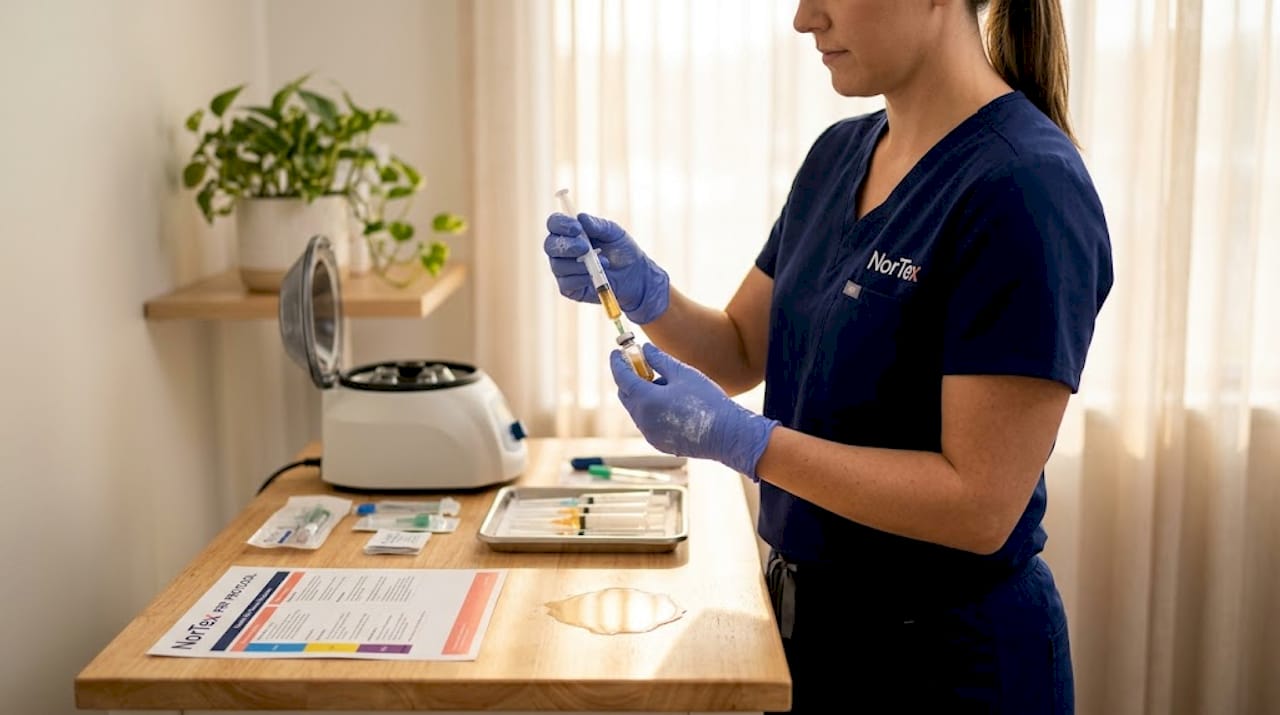
PRP therapy works by concentrating platelets from your own blood and injecting them into the damaged joint. Those platelets release growth factors that signal the body to reduce inflammation and accelerate tissue repair. But the process isn’t as simple as a single injection. PRP preparation involves spinning blood in a centrifuge, separating the plasma layer, and preparing it to specific concentration standards.
What the evidence actually shows
Research consistently demonstrates that PRP comparable to hyaluronic acid for pain relief, with some comparisons showing superior functional improvement in favor of PRP. Hyaluronic acid (HA) injections have been a standard treatment for knee osteoarthritis for years, so matching or outperforming HA is a meaningful benchmark. This is especially important for active adults who need to return to activity, not just manage pain at rest.
The same research identifies PRP concentration and injection frequency as critical variables, with a platelet concentration range of 600 to 900 x10^9/L and a protocol of 3 to 5 injections spaced 7 to 14 days apart associated with the best outcomes. These are specific, measurable benchmarks. If a clinic can’t tell you their concentration range or injection schedule, that’s a significant red flag.
“Each step of the PRP method matters. Preparation technique, platelet concentration, injection frequency, and activation method all contribute to clinical outcomes. No two PRP treatments are identical unless they follow a standardized protocol.” This expert consensus from the field underscores why preparation variability is one of the biggest factors in why some patients see strong results and others see limited benefit.
What changes between protocols
Not all PRP is created equal. Two major preparation categories exist:
- Leukocyte-rich PRP (LR-PRP): Contains white blood cells alongside platelets. May increase inflammatory response, which has both pros and cons depending on tissue type.
- Leukocyte-poor PRP (LP-PRP): Fewer white blood cells, generally considered more appropriate for joint injections where reducing inflammation is the goal.
Understanding why PRP treatments differ in outcomes often comes down to this preparation distinction, plus activation methods, centrifuge speeds, and volume of injection. Ask your provider which preparation method they use and why. If they don’t have a clear answer, that matters.
For patients curious about how PRP compares to other options, exploring PRP vs prolotherapy offers helpful context on the range of biologic approaches available.
Additionally, combining PRP and physical therapy is an approach that consistently shows stronger outcomes than either treatment alone, which connects directly to the rehab discussion below.
Stem cell therapies: What to ask about safety and expectations
PRP’s protocols are becoming clearer, but stem cell therapies present a different set of questions you should ask.
Stem cell therapy is often positioned as the next level of regenerative medicine, and for good reason. The potential for cells to differentiate and contribute to tissue regeneration is genuinely compelling. However, stem cell therapy challenges remain significant, including safety concerns, immunocompatibility issues, and inconsistency between treatment batches.
Before pursuing stem cell therapy, work through these questions with your provider:
- What is the source of the stem cells being used (your own bone marrow, adipose tissue, or donor source)?
- How does the clinic ensure quality control and batch consistency in the preparation?
- What clinical safety data supports the specific product or protocol being recommended?
- Is the treatment using FDA-cleared methods and materials, or is it part of an investigational protocol?
- What are the documented risks specific to your joint condition and health history?
The standardization gap
Unlike PRP, where we have increasingly clear benchmarks for concentration and frequency, stem cell therapy lacks widely agreed-upon standards for routine clinical use. Long-term randomized controlled trials (RCTs) are limited. This doesn’t mean stem cell therapy is without merit, but it does mean you should approach it with more scrutiny, not less enthusiasm.
Statistical note: Most stem cell therapy studies are short-term, with follow-up periods of 12 months or less. Data on outcomes beyond two years remains limited, making it difficult to assess durability compared to PRP.
Learning more about stem cell therapy from a clinically grounded source helps you ask better questions and avoid treatments that are more experimental than evidence-based.
Don’t skip rehab: Why follow-up matters for recovery
After the intervention, what you do next makes all the difference. Rehabilitation is a missing but crucial checklist item.
Many patients invest significantly in regenerative injections and then treat post-injection care as optional. This is one of the most common and costly mistakes in the recovery process. Biologics create a healing environment inside the joint, but the body still needs the right mechanical signals to build strength, restore range of motion, and return to full function.
Rehab loading and neuromuscular retraining are rarely protocolized across clinics but are critical for achieving functional gains after regenerative therapy. In other words, most clinics leave rehab entirely up to the patient or their primary care provider, with no structured plan. That gap directly limits how much benefit you get from the injection itself.
Your follow-up checklist should include:
- Gradual loading: Progressively increasing joint stress through guided exercises in the weeks after injection, allowing new tissue repair to be reinforced
- Neuromuscular retraining: Exercises that rebuild coordination and joint stability, not just strength, to protect the joint long-term
- Objective function goals: Measurable targets like pain scores, range-of-motion degrees, or return-to-activity benchmarks that track real progress
- Return-to-activity timelines: Clear milestones for when you can resume running, sports, or other high-demand activities safely
- Follow-up appointments: Scheduled reassessments at 4 to 6 weeks and 3 months to evaluate whether the therapy is working and whether the plan needs adjustment
The integration of combining PRP and physical therapy into a coordinated care plan is one of the most evidence-supported approaches for joint recovery available today.
Pro Tip: When consulting with a regenerative therapy clinic, ask specifically: “What is your structured rehab protocol after injection?” A provider who offers a defined plan, not just a referral, demonstrates a commitment to outcomes rather than procedures.
Regenerative therapy options at a glance: Comparison table
To pull it all together, here’s a head-to-head reference table for your decision process.
The following comparison draws on PRP protocol variability and ongoing stem cell uncertainties to give you a clear reference for evaluating each option across the key checklist domains. For a deeper look at which joints respond best to biologic therapy, see PRP for different joints.
| Checklist factor | PRP therapy | Stem cell therapy |
|---|---|---|
| Best candidacy | KL grade ≤3 OA, active adults | Varies; less defined criteria |
| Protocol evidence | Moderate-to-strong; 3-5 injections, specific concentration ranges | Limited; no widely agreed standard |
| Preparation variability | High; LR vs LP-PRP, activation method, centrifuge speed | Very high; source, batch, processing differ significantly |
| Safety profile | Well-documented; autologous (from your own blood) | Less characterized; more variables depending on source |
| Pain outcome data | Comparable or superior to hyaluronic acid | Early-stage; inconsistent across studies |
| Long-term data | Up to 12 months in most RCTs | Mostly short-term; durability unclear |
| Rehab requirement | Essential for functional recovery | Essential; even more so due to longer healing window |
| Regulatory status | Generally within standard of care | Varies; some protocols investigational |
Use this table as a discussion tool with your provider, not as a final decision-maker. Your specific joint, diagnosis stage, and health history will always be the most important factors.
Our perspective: Why a checklist mindset is essential for regenerative therapy
We’ve worked with many active adults in North Texas who came to us after disappointing experiences elsewhere. In nearly every case, the issue wasn’t that regenerative therapy doesn’t work. It’s that the process wasn’t followed carefully enough.
The uncomfortable truth is that regenerative medicine marketing has outpaced the evidence in many settings. Clinics promote outcomes that aren’t realistic for every patient, and patients arrive with expectations shaped by best-case stories rather than average results. Standardized protocols and long-term effectiveness remain under ongoing debate, which means the checklist approach isn’t just helpful, it’s protective.
What we’ve seen consistently is this: patients who follow a methodical approach, who confirm their OA grade, ask about preparation methods, understand the protocol, and commit to rehab, get better results. Not because the therapy is magically more powerful for them, but because they’re giving the therapy the best possible conditions to succeed.
The patients who skip steps, who choose a provider based on price or convenience rather than protocol rigor, or who stop rehab too early, often report disappointing outcomes and conclude that regenerative therapy doesn’t work. In many cases, the therapy was never given a fair chance. Understanding factors affecting PRP success is part of making any treatment decision responsibly.
We also want to be honest with you: not every joint and not every patient will see dramatic improvement. If your joint degeneration is advanced, your goals may need to center on function and stability rather than full pain elimination. Setting the right expectations from the first consultation protects you from frustration and helps you measure progress accurately.
Explore regenerative therapies with expert guidance
Ready to move from checklist to personalized solution? Here’s how to get expert help in North Texas.
At Nortex Tissue Regeneration, we built our evaluation process around the exact checklist steps covered in this article. We use objective diagnostic grading, follow evidence-based PRP therapy options with documented concentration protocols, and we provide a structured rehab roadmap after every injection. For patients exploring biologics, our stem cell therapy options are explained transparently, including safety data and realistic expectations. We also offer bone marrow treatments as part of a broader regenerative approach for appropriate candidates. Schedule a consultation with our team to review your candidacy, discuss the right protocol for your joint condition, and build a recovery plan that actually supports your return to activity.
Frequently asked questions
Who should not get regenerative injections like PRP or stem cells?
People with active infections, cancer, or certain blood disorders are not candidates for regenerative therapies; proper contraindication screening is an essential first step before any injection.
How do PRP and hyaluronic acid injections compare for joint pain?
PRP commonly matches or slightly outperforms hyaluronic acid for pain relief, and PRP functional improvement is superior to HA in several clinical comparisons.
What makes one PRP protocol better than another?
Outcomes are best when clinics follow optimal injection frequency of 3 to 5 treatments at the correct platelet concentration range, since deviations from these benchmarks consistently reduce results.
Is rehab necessary after regenerative therapies?
Yes. Neuromuscular retraining after injection is essential for translating biologic treatments into real functional recovery rather than temporary symptom relief.
Are stem cell therapies safe and proven?
Stem cell therapies show genuine promise, but stem cell safety challenges including immunocompatibility and batch consistency issues mean long-term safety and efficacy data is still limited compared to PRP.