
When you’re dealing with a painful knee, a torn ligament, or a chronically aching shoulder, the phrase “your body will heal itself” can feel frustratingly vague. Explaining tissue regeneration properly means going beyond that reassurance. It means understanding why some tissue heals with full function restored and why some heals with a scar that never quite works the same way. Recent science is reshaping that understanding in ways that matter directly to anyone exploring non-surgical recovery for joint pain.
Table of Contents
- Key takeaways
- Explaining tissue regeneration vs. simple tissue repair
- New science behind hidden regenerative potential
- Non-surgical methods for joint tissue regeneration
- Factors that affect tissue regeneration outcomes
- My perspective on what patients often get wrong
- How Nortex Tissue Regeneration supports your recovery
- FAQ
Key takeaways
| Point | Details |
|---|---|
| Healing is not always regeneration | Scar tissue from standard wound healing reaches only ~80% of original strength, not full functional restoration. |
| Regeneration requires specific signals | Two-step growth factor treatments like FGF2 and BMP2 can trigger true regenerative pathways in mammalian tissue. |
| Non-surgical options exist | PRP, stem cell therapy, and hydrogel-based delivery are available methods that support the tissue repair process without surgery. |
| Results take time | Maturation and remodeling phases typically require weeks to months, not days, for meaningful functional improvement. |
| Microenvironment matters greatly | Cell survival and differentiation depend heavily on the biological conditions surrounding the injury site. |
Explaining tissue regeneration vs. simple tissue repair
Most people assume that healing and regeneration are the same thing. They are not, and the difference matters a great deal if you are hoping to recover full function after a joint injury.
The standard wound healing process moves through four overlapping phases:
- Hemostasis — Blood vessels constrict and clotting begins within minutes of injury to stop bleeding.
- Inflammation — Immune cells arrive to clear debris and pathogens. This phase is necessary but, when prolonged, interferes with regeneration.
- Proliferation — Fibroblasts produce collagen and new blood vessels form. Scar tissue starts to take shape.
- Remodeling — Collagen fibers reorganize over weeks or months. The tissue stiffens and stabilizes.
This process is efficient. It closes wounds and prevents infection quickly. The trade-off is that the resulting scar tissue typically achieves only about 80% of the original tissue’s tensile strength, and its fiber orientation is often disorganized compared to native tissue.
True tissue regeneration is a different goal. Rather than producing a scar to patch the defect, regeneration aims to restore the original architecture and function of the tissue. That means recruiting the right cell types, including stem-like progenitor cells and fibroblasts, and guiding them to produce organized extracellular matrix rather than reactive scar collagen.
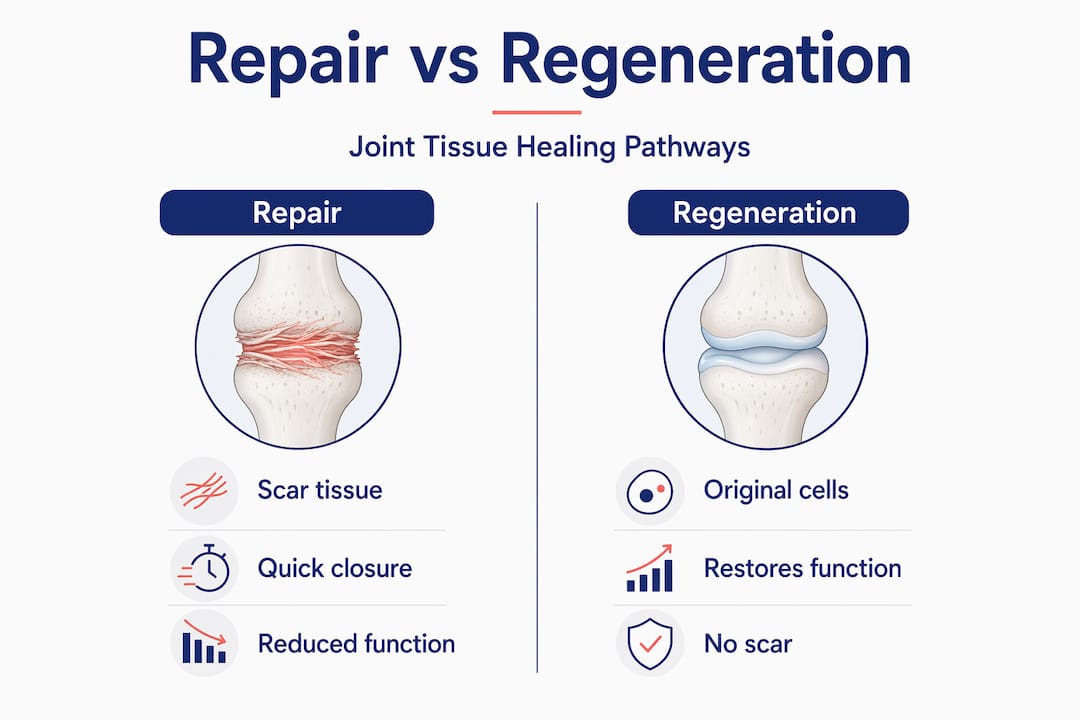
Understanding tissue regeneration at this level helps clarify why some injuries heal with good outcomes and others leave lasting stiffness or weakness. The cellular actors involved in cellular regeneration in tissues are responding to biological signals in the wound environment. Change those signals, and you can change the outcome.
Pro Tip: If you had a joint injury that healed but still feels restricted or weaker than before, that is often a sign that scar-based repair occurred rather than true regenerative healing. This distinction is worth discussing with a regenerative medicine provider.
New science behind hidden regenerative potential
One of the most significant discoveries in recent years involves the idea that mammals, including humans, may carry dormant regenerative capacity that evolution has largely suppressed. A 2026 study published in Nature Communications showed that sequential FGF2 and BMP2 treatment stimulated blastema-like structures in animal models, leading to measurable regrowth of bone, joint cartilage, and ligament tissue. A blastema is the cluster of undifferentiated cells that allows species like salamanders to regrow entire limbs.
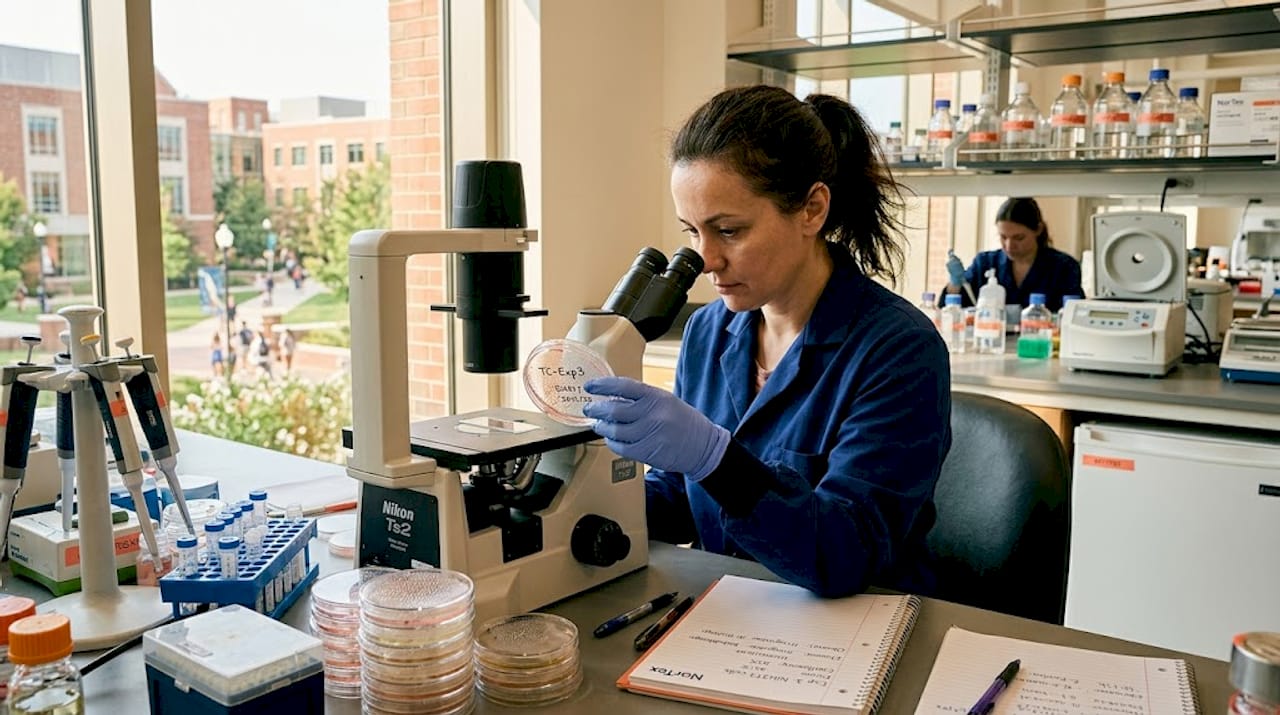
Separately, a 2026 study in Science reported that activating the Aldh1a2 enzyme promotes retinoic acid synthesis, which in turn rescues a regeneration pathway that mammals appear to have retained but rarely use.
What does this tell us about how tissue regenerates in practice?
- The human body has the molecular machinery for more complete tissue healing, but it is often overridden by the scar-forming emergency response.
- Researchers at Texas A&M have explained that scar formation is evolutionary, prioritizing rapid closure over quality restoration to prevent infection and blood loss.
- Regeneration depends on multiple coordinated biological pathways, not a single gene or growth factor switch. That complexity is why there is no single pill or injection that immediately restores tissue.
- Comparative biology from species with strong regenerative ability points to the importance of suppressing premature scar formation while creating space for organized tissue rebuilding.
“The shift from repair to regeneration relies on carefully timed biological signals. When the inflammatory phase is controlled and the right growth factors are introduced in sequence, the body’s own progenitor cells can begin rebuilding tissue with more structural integrity than scar alone.”
This is not theoretical science that sits years away from clinical relevance. It is actively shaping how non-surgical regenerative therapies are being designed and applied today.
Non-surgical methods for joint tissue regeneration
Many patients we work with come in after months of physical therapy, anti-inflammatory medications, and rest that produced only partial recovery. What they often have not yet tried are treatments that work directly on the mechanisms of tissue healing rather than simply managing symptoms.
Here is a practical overview of the main non-surgical options:
| Treatment | How it works | Best suited for |
|---|---|---|
| Platelet-Rich Plasma (PRP) | Concentrated platelets deliver growth factors directly to the injury site, stimulating the repair process | Tendon injuries, osteoarthritis, ligament sprains |
| Stem cell therapy | Progenitor cells introduced to the joint modulate inflammation and support new tissue formation | Cartilage degeneration, chronic joint damage |
| Hydrogel scaffolds | Biomaterial matrices mimic the extracellular matrix and support cell adhesion and differentiation | Complex soft tissue defects, cartilage repair |
| Growth factor injections | Targeted delivery of signaling proteins guides cell behavior toward regenerative outcomes | Early-stage degeneration, post-surgical augmentation |
A consistent challenge with these therapies is delivery. Off-target accumulation of regenerative agents can reduce efficacy and raise the risk of unwanted effects elsewhere in the body. This is why localized delivery methods, including hydrogels and direct injection under imaging guidance, have become a priority in treatment design.
- PRP therapy draws on your own blood, concentrates the platelets, and reintroduces them to the injury site. It is one of the more accessible and lower-risk options available.
- Stem cell treatments can come from your own tissue (autologous) or donor sources and are typically introduced by injection rather than surgery.
- Hydrogel carriers improve outcomes by supporting cell differentiation and providing structural support during the early healing phase.
You can explore a detailed comparison of these options in our overview of regenerative therapies for joint pain.
Pro Tip: Ask your provider whether the treatment will be delivered under ultrasound or fluoroscopic guidance. Precision in placement significantly affects outcomes, particularly for small joint structures like the meniscus or rotator cuff tendons.
Factors that affect tissue regeneration outcomes
Understanding the importance of tissue regeneration is one thing. Getting the outcome you want from treatment requires understanding what can either support or limit the process.
The microenvironment at the injury site is probably the most underappreciated factor. Cells need the right chemical signals, adequate blood supply, and a physical scaffold to attach to and organize around. Without those conditions, even well-selected regenerative cells will not perform as intended.
Several common barriers limit regeneration in joint tissue:
- Chronic inflammation — Persistent low-grade inflammation keeps the tissue locked in a repair state rather than allowing the shift to organized regeneration.
- Premature scar formation — Rapid collagen deposition, before progenitor cells can establish proper architecture, results in fibrous tissue that restricts movement.
- Poor delivery localization — Regenerative agents that disperse beyond the target site lose their effectiveness and may require repeat treatment.
- Patient biological factors — Age, metabolic health, smoking status, and circulation all affect how well cells survive and differentiate after treatment.
Realistic expectations are also part of the equation. A 2026 review in Frontiers in Physiology noted that maturation and remodeling phases after regenerative interventions typically last one to three weeks at minimum, with meaningful functional restoration occurring over several months. That timeline does not mean nothing is happening earlier. It means the biological process requires patience to complete.
Advances in biomaterials, particularly hydrogel formulations and localized delivery systems such as machine perfusion techniques, are reducing some of these barriers by creating a more controlled environment for healing.
Pro Tip: Committing to the post-treatment period is as important as the treatment itself. Light movement, proper nutrition, and following your provider’s guidance during the remodeling phase meaningfully affects final outcomes.
My perspective on what patients often get wrong
I’ve seen a clear pattern over years of working with patients pursuing regenerative care for joint pain. They arrive with real hope, which is appropriate, but often with one expectation that creates unnecessary frustration: they believe that if the treatment is working, they should feel significantly better within a week or two.
What I’ve found is that the most successful outcomes come from patients who understand from the start that regeneration is a staged process. The first phase is about calming the inflammatory environment. The second is about supporting new tissue formation. The third, which is the one that finally produces the functional improvement they came for, is the remodeling phase. That last phase cannot be rushed, and trying to push through it too aggressively often sets patients back.
My honest take is that regenerative therapies are not a shortcut around healing. They are a way to redirect healing toward a better outcome. The science, particularly the recent work on growth factor sequencing and pathway activation, gives real reason for optimism. But the biology still takes time. Patients who see the best results are those who stay engaged with their care, communicate changes to their provider, and treat the recovery period as part of the treatment, not a waiting room.
If you are evaluating whether regenerative treatment makes sense for your situation, I’d encourage you to read about signs indicating regenerative therapy before making any decisions.
— Felix
How Nortex Tissue Regeneration supports your recovery
At Nortex Tissue Regeneration, we work with patients across North Texas who are dealing with joint pain, sports injuries, arthritis, and degenerative conditions. Our approach centers on the same principles covered in this article: creating the right biological environment for genuine tissue repair, not just symptom management.
Our stem cell therapy program uses evidence-based protocols to introduce progenitor cells directly to damaged joint tissue, supporting the regenerative pathways that standard healing often bypasses. Our PRP therapy concentrates your body’s own growth factors and delivers them precisely to the injury site, modulating inflammation and accelerating the tissue repair process.
Every treatment plan is personalized. We review your imaging, your history, and your specific goals before recommending a path forward. If you want to understand whether one of these options fits your situation, we are glad to walk through it with you.
FAQ
What is the difference between tissue repair and tissue regeneration?
Tissue repair fills a wound with scar tissue that restores structural continuity but not full original function. Tissue regeneration rebuilds the original tissue architecture, including cell type, organization, and mechanical properties, producing a more complete functional recovery.
How long does tissue regeneration take after a joint treatment?
Meaningful functional improvement from regenerative therapies typically develops over several months. The remodeling phase alone, which is when organized tissue replaces early scar, commonly lasts one to three weeks post-treatment and continues beyond that.
Can PRP or stem cell therapy truly regenerate joint cartilage?
Both therapies support the conditions needed for cartilage repair and partial regeneration by modulating inflammation and introducing growth signals. Full cartilage regeneration remains difficult to achieve, but patients often experience significant pain reduction and improved function from these treatments.
What factors affect whether tissue regeneration will work?
Age, metabolic health, blood supply to the injury site, chronic inflammation, and the precision of treatment delivery all affect outcomes. A supportive microenvironment with proper localization of regenerative agents produces better results than systemic or imprecise delivery.
Is tissue regeneration possible without surgery?
Yes. PRP injections, stem cell therapy, and hydrogel-based treatments are non-surgical options that work by influencing the biological signals driving the tissue repair process. They are most effective for appropriate candidates identified through proper clinical evaluation.