
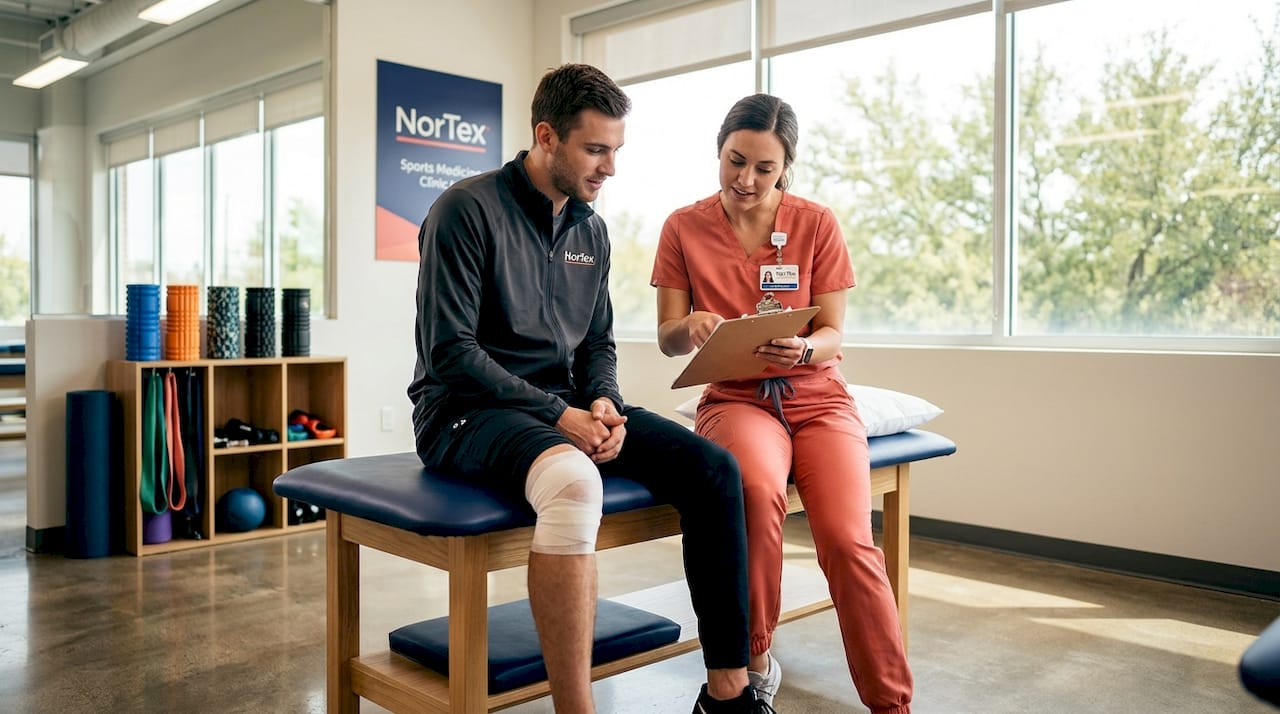
If you’re an athlete researching regenerative medicine, you’ve likely heard two very different things. Some people say it changed their recovery entirely. Others say it’s overhyped and expensive. The truth, as with most things in medicine, sits somewhere more nuanced. Understanding why regenerative medicine for athletes has grown in credibility requires looking past the marketing and at what the actual evidence shows, what these therapies can and cannot do, and how to decide whether they belong in your recovery plan.
Table of Contents
- Key takeaways
- Why regenerative medicine matters for athletes
- What the evidence actually shows
- Not all PRP is the same
- Realistic expectations and practical limits
- How to decide if this is right for you
- My honest perspective on regenerative medicine for athletes
- How Nortex Tissue Regeneration supports athletes
- FAQ
Key takeaways
| Point | Details |
|---|---|
| PRP speeds hamstring recovery | Return-to-play time shortened by about 8.6 days on average for acute hamstring injuries. |
| Not all PRP is equal | Formulation, leukocyte content, and dosing protocol significantly affect biological outcomes and clinical results. |
| Anti-doping rules apply | PRP injected into muscle is prohibited under WADA rules, and athletes must coordinate with anti-doping staff before treatment. |
| Evidence is injury-specific | Benefits are clearest for tendinopathy and acute muscle injuries; evidence for cartilage and post-surgical cases is less consistent. |
| Rehab remains essential | Regenerative therapy works best as part of a supervised rehabilitation plan, not as a standalone fix. |
Why regenerative medicine matters for athletes
Athletes operate under a different set of pressures than the average patient. Downtime is not just uncomfortable. It can mean missed seasons, contract implications, and months of lost conditioning. This urgency drives many athletes toward regenerative therapies, and the role of regenerative medicine in active lifestyles has expanded significantly over the last decade.
At its core, regenerative medicine works by recruiting or delivering biological materials that amplify the body’s own repair processes. The two most common approaches used in sports medicine are:
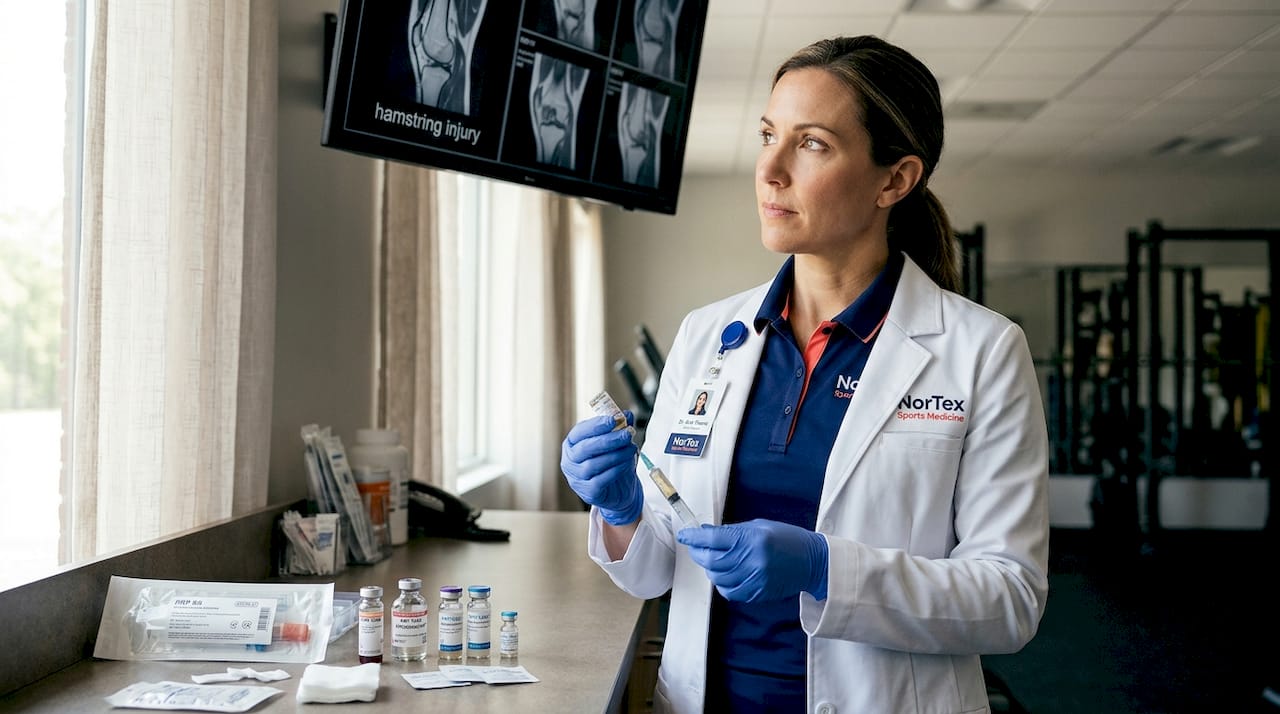
- Platelet-Rich Plasma (PRP): Blood is drawn, spun in a centrifuge to concentrate platelets and growth factors, then injected at the injury site to stimulate tissue repair and reduce inflammation.
- Stem cell and bone marrow cell therapies: Cells capable of differentiating into specialized tissue types are harvested from the patient’s own body and introduced to injured areas, aiming to support structural regeneration.
- Platelet-Rich Fibrin (PRF): A variation of PRP that uses a fibrin matrix to slow-release growth factors over time, sometimes preferred for certain tendon conditions.
What makes these therapies appealing to athletes is not just the biological rationale. It is the potential to speed recovery after injury without surgery, avoid the side effects of repeated corticosteroid use, and address the tissue-level cause of pain rather than just masking it.
Many patients we see at Nortex Tissue Regeneration come in after trying physical therapy, anti-inflammatories, and cortisone shots, looking for something that might finally move the needle. That pattern tells us a great deal about why active lifestyles need regenerative care as a serious option in the treatment ladder.
Pro Tip: Before your first consultation, write down not just your diagnosis but your specific goals. Return-to-sport timelines, acceptable downtime, and prior treatments all affect which regenerative approach makes sense for you.
What the evidence actually shows
This is where athletes need to slow down and read carefully. The research on regenerative medicine for sports injuries is genuinely promising in some areas and genuinely limited in others.
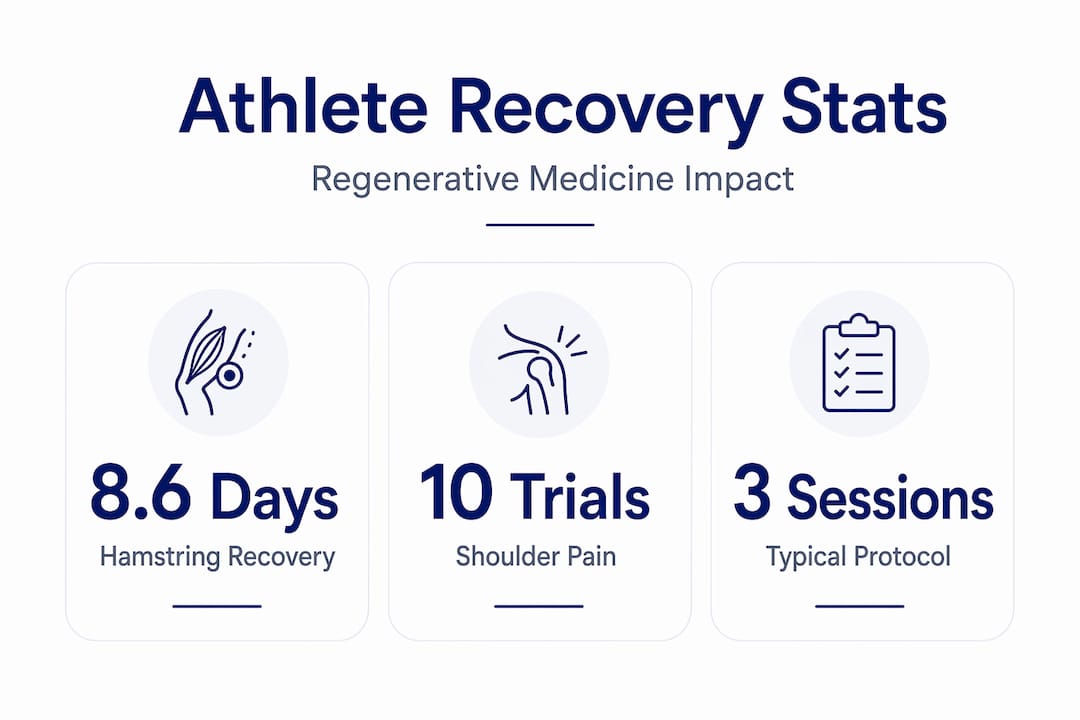
For acute hamstring injuries, the data is the most compelling. A meta-analysis of six randomized controlled trials found that PRP reduced return-to-play time by an average of 8.6 days without increasing reinjury or adverse event rates. That is a meaningful margin for a competitive athlete.
For shoulder tendinopathy, the picture is more modest. A systematic review of 10 randomized trials found that PRP improved function and reduced pain at six months compared to corticosteroid, with improved functional scores and reduced pain scores, though the clinical magnitude was described as modest rather than dramatic.
The following table summarizes what the current evidence looks like across common athletic injury types:
| Injury type | PRP evidence level | Key finding |
|---|---|---|
| Acute hamstring strain | Moderate | Reduces return-to-play by ~8.6 days |
| Rotator cuff tendinopathy | Moderate | Modest but durable functional improvement over corticosteroid |
| Knee osteoarthritis | Moderate | Recommended when conservative care fails, per AAPM&R 2026 guidance |
| ACL reconstruction (adjunct) | Low to moderate | Statistically significant but clinically minimal improvements |
| Cartilage damage | Low | Inconclusive; structural regeneration not clearly demonstrated |
“PRP and mesenchymal stem cell therapies show improvements in pain and function in musculoskeletal rehabilitation, but significant heterogeneity in preparation and dosing limits generalizability.” — Orthopedic Reviews, 2024
That last point about heterogeneity matters more than most athletes realize. It is not just an academic footnote. It is the reason two athletes can receive “PRP” at different clinics and have completely different outcomes.
Not all PRP is the same
This is the conversation that most athletes never have with their providers, and it affects outcomes more than almost anything else.
PRP is not a single product. It is a category. The specific preparation your provider uses determines the biological signal it sends to injured tissue. Here are the key variables:
- Leukocyte content. Leukocyte-rich PRP contains white blood cells and delivers a stronger inflammatory signal, which may help in chronic tendinopathy but can be counterproductive in joints or certain acute injuries. Pure PRP has lower leukocyte concentration and is generally preferred for intra-articular applications like knee or shoulder joint injections.
- Platelet concentration. Higher platelet counts mean more growth factors. But the relationship between concentration and clinical outcome is not linear. There appears to be a therapeutic window, and more is not always better.
- Activation method. Some preparations use thrombin or calcium to pre-activate platelets before injection. Others rely on natural activation triggered by the tissue environment. Each affects when and how growth factors are released.
- Volume and dosing protocol. A single injection versus a series of three over six weeks produces meaningfully different biological effects. Inconsistent protocols across clinics are one reason study results are so difficult to compare.
What this means practically is that the provider’s protocol matters as much as the therapy itself. A clinic that uses the same PRP formulation for every patient, regardless of injury type or anatomy, is not practicing individualized regenerative care.
Pro Tip: Ask your provider specifically: “What leukocyte concentration do you use for this injury, and why?” A clinician who can answer that question clearly and references the treatment protocol differences is likely practicing at a higher standard.
Realistic expectations and practical limits
One of the most important services we can provide as clinicians is honest framing. Regenerative therapy does not regenerate tissue in the way the name might suggest for every patient or every condition. For many athletes, what it produces is a meaningful reduction in pain, improved function, and a faster path back to training. Structural regeneration at the imaging level is less consistently demonstrated, particularly for cartilage damage.
There are several practical realities athletes should understand before committing to treatment:
- Safety profile is generally favorable. Adverse events in well-controlled studies are rare. For PRP specifically, side effects tend to be localized, temporary, and far less serious than surgical complications. Temporary soreness at the injection site in the days following treatment is common and expected.
- Anti-doping compliance is non-negotiable for competitive athletes. PRP is prohibited under WADA rules when injected intramuscularly, though it is permitted when injected into tendons, joints, or other sites. Rules differ by governing body and by therapy type. Anti-doping coordination with your sport’s regulatory authority before treatment is not optional. It is a requirement.
- Regenerative therapy is not a replacement for rehabilitation. Athletes who receive PRP or stem cell therapy and skip structured rehab consistently underperform compared to those who integrate both. The therapy creates a biological environment more receptive to healing. Physical rehabilitation is what translates that into functional recovery.
- Cost and timing affect decisions. These therapies are generally not covered by insurance, and costs can range from a few hundred to several thousand dollars depending on the treatment type and protocol. Timing relative to competition and training load matters too. Planning treatment during a low-demand training phase improves outcomes.
- Marketing often outpaces evidence. Critical analysis of the field has noted that stem cell therapy claims frequently exceed what the science currently supports. This does not mean the therapies lack value. It means athletes should seek providers who speak in terms of probability and evidence, not guaranteed results.
How to decide if this is right for you
If you’ve read this far, you’re likely weighing whether to pursue regenerative treatment for a specific injury or ongoing issue. Here is a practical framework for that decision.
Start with these questions:
- What is the injury, and what phase of healing is it in? Acute injuries within the first few weeks respond differently than chronic degenerative conditions.
- What have you already tried, and for how long? Evidence-based care often recommends exhausting conservative options before escalating to biologics.
- What is your realistic timeline? If you need to compete in three weeks, expectations need to match biology, not hope.
- Is your provider familiar with sports-specific protocols and anti-doping rules? This is a qualifying question, not a preference.
Pro Tip: Ask your provider what peer-reviewed evidence they are basing the specific protocol on for your injury. You should receive a clear answer, not a general claim about “the power of the body to heal itself.”
Improving athletic performance and recovery through regenerative medicine is genuinely possible for the right patient, with the right injury, at the right time, treated with the right protocol. What we consistently find is that athletes who approach this as one well-considered tool in a broader recovery and maintenance plan tend to get more from it than those seeking a single solution to a complex problem.
My honest perspective on regenerative medicine for athletes
I’ve seen patients arrive at our clinic with unrealistic expectations shaped by social media testimonials, and I’ve also seen athletes with genuine hesitation who turned out to be excellent candidates. Both situations taught me something important: the outcome depends less on the therapy itself and more on how carefully the indication is matched to the intervention.
What concerns me most in this space is not the therapies. It is the gap between what clinics promise and what the science supports. Regenerative medicine marketing often moves faster than peer-reviewed evidence, and athletes under competitive pressure are particularly vulnerable to claims that feel urgent and hopeful.
In my experience, the athletes who do best are the ones who come in asking specific questions about protocol, preparation type, and what outcomes they can realistically expect. They treat regenerative therapy as a complement to rehabilitation, not a replacement for it. And they understand that “biologic” does not mean “infallible.”
The evidence for PRP in hamstring injuries and tendinopathy is meaningful. The evidence for structural cartilage regeneration in most athletes is not yet there. Sitting with that nuance, rather than collapsing it into either dismissal or enthusiasm, is what good clinical decision-making looks like.
My advice to any athlete considering this path: find a provider who is honest about the limits of the evidence and specific about their protocols. That combination of candor and precision is the clearest sign you’re in capable hands.
— Felix
How Nortex Tissue Regeneration supports athletes
At Nortex Tissue Regeneration, we work with athletes and active individuals across North Texas who are looking for non-surgical paths to recovery and long-term tissue health. Our approach to PRP therapy is protocol-specific and individualized, meaning we don’t apply the same formulation to every injury. We also offer stem cell therapy and bone marrow cell therapy for athletes whose conditions may benefit from a broader regenerative approach. Every treatment plan is built around evidence, your injury type, your sport, your timeline, and your goals. If you’re ready to have a clear, honest conversation about what regenerative medicine can realistically do for you, we’d welcome that conversation.
FAQ
What does PRP actually do for sports injuries?
PRP delivers concentrated growth factors to an injury site to reduce inflammation and support tissue repair. Evidence is strongest for acute hamstring injuries and tendinopathies, where return-to-play time and functional outcomes show meaningful improvement.
Is PRP banned in competitive sports?
PRP is prohibited under WADA rules when injected intramuscularly, but permitted in other injection sites such as tendons and joints. Athletes should confirm the rules of their specific governing body and coordinate with anti-doping officials before any treatment.
How many PRP sessions does an athlete typically need?
Most protocols involve one to three injections spaced several weeks apart, depending on injury type and severity. There is no universal standard, and the number of sessions should be determined by your provider based on your specific condition and response to initial treatment.
Can regenerative medicine replace surgery for athletes?
For many tendon and muscle injuries, regenerative therapy can be a viable non-surgical alternative. For more severe structural damage, such as complete ligament tears or advanced cartilage loss, it is more commonly used as an adjunct to or preparation for surgery rather than a direct replacement.
How long before an athlete sees results from regenerative treatment?
Most athletes notice changes in pain and function between four and twelve weeks following treatment, though this varies considerably by injury type, protocol, and individual biology. Faster return-to-play benefits are most consistent in acute hamstring injuries rather than chronic or post-surgical cases.