

Degenerative condition recovery steps are defined as a structured, non-invasive sequence of lifestyle changes, physical therapy, and regular reassessment designed to restore function and reduce pain without surgery. Conditions like degenerative disc disease, osteoarthritis, and spinal stenosis respond well to this coordinated approach when patients follow it consistently. The process draws on tools like the Oswestry Disability Index to track progress, exercises like bird-dog and pelvic tilts to rebuild stability, and therapies like chiropractic care and manual therapy to reduce mechanical stress. Recovery rarely follows a straight line, but with the right steps in the right order, meaningful improvement is achievable.
What are the essential lifestyle changes for managing degenerative conditions?
The foundation of chronic illness recovery is not a single treatment. It is a set of daily habits that reduce inflammation, protect damaged tissue, and support the body’s ability to repair itself.
Nutrition that reduces inflammation
Anti-inflammatory nutrition is one of the most direct tools you have. Foods rich in omega-3 fatty acids, including salmon, walnuts, and flaxseed, support disc matrix synthesis and lower systemic inflammation. Leafy greens, vitamin C-rich berries, and consistent hydration round out a diet that actively supports tissue health. What you eat does not just affect your weight. It affects the chemical environment inside your joints and discs.

Weight management and mechanical load
Modest 5–10% weight loss significantly reduces mechanical stress on degenerated discs and improves recovery outcomes. That means a 200-pound person losing 10–20 pounds can meaningfully change the load their spine carries every day. This is one of the highest-return steps you can take, and it does not require extreme dieting.
Low-impact movement as medicine
Low-impact movement promotes diffusion and tissue nourishment, while high-impact activities can worsen degeneration. Walking, swimming, and cycling 3–5 times weekly keep fluid moving through disc tissue, which has no direct blood supply and depends entirely on movement for nutrition. High-impact running or heavy lifting, by contrast, compresses already compromised structures.
- Core strengthening exercises: Bird-dog, pelvic tilts, and bridges build the muscular support around the spine, reducing load on discs and joints.
- Ergonomic adjustments: A lumbar-supported chair, a monitor at eye level, and regular standing breaks reduce cumulative disc stress during work hours.
- Sleep positioning: Sleeping on your side with a pillow between your knees keeps the spine in a neutral position and reduces overnight compression.
Pro Tip: Start with just 10 minutes of walking daily if pain is high. Consistency over the first two weeks matters more than duration. Build from there.
How can physical therapy and non-invasive treatments promote recovery?
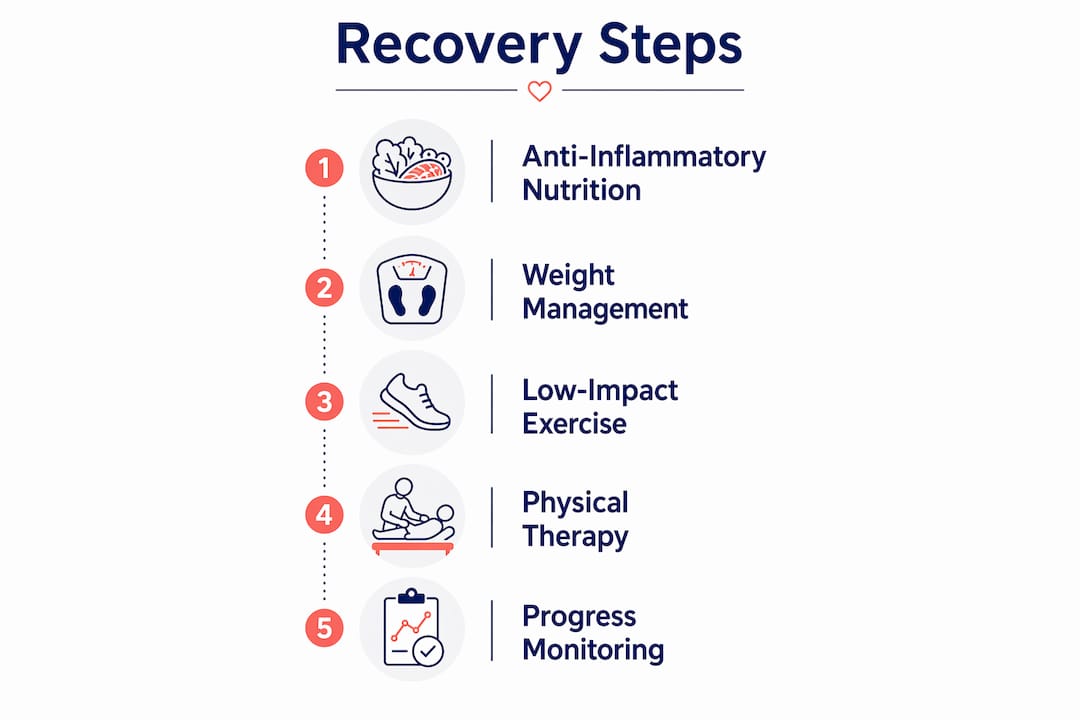
Physical therapy is the clinical backbone of steps to heal degeneration. A physiatrist or licensed physical therapist does more than assign exercises. They assess movement patterns, identify compensations, and build a progression that matches your current capacity without pushing into tissue damage.
The first 6 months after symptom onset represent a critical window for optimized function. Non-invasive rehabilitation protocols that incorporate core strengthening, chiropractic care, and ergonomic changes are most effective when started early. Waiting too long allows compensatory movement patterns to become ingrained, which makes recovery harder.
A structured physical therapy plan typically follows this sequence:
- Pain and inflammation control: Manual therapy, therapeutic ultrasound, or laser therapy to calm acute irritation before loading the tissue.
- Stability work: Core activation exercises like bird-dog and dead bugs to restore the muscular foundation around the spine or affected joint.
- Functional movement retraining: Squatting, bending, and lifting mechanics corrected under supervision to prevent re-injury.
- Strength and endurance building: Progressive resistance work once stability is established, typically starting around weeks 6–8.
- Return to activity: Sport-specific or work-specific movement patterns reintroduced with monitoring.
Chiropractic adjustments and manual therapy complement this sequence by improving joint mobility and reducing protective muscle guarding. Therapeutic ultrasound and low-level laser therapy add another layer of tissue support, particularly for patients who cannot tolerate exercise in the early phase.
Reassessment every 4–6 weeks is not optional. It is how you know whether the plan is working or needs adjustment. A therapist who does not reassess regularly is guessing.
Pro Tip: Ask your physical therapist to explain the “why” behind each exercise. Patients who understand the purpose of their program show better adherence and faster progress.
What role do mental wellness and stress reduction play in recovery?
Mental wellness is not a soft add-on to physical rehabilitation. It is a biological necessity. The nervous system’s protection mode physically impedes healing. When the body perceives ongoing threat, whether from pain, stress, or fear of movement, it prioritizes defense over repair. Calming the nervous system is often the first real phase of recovery, not an afterthought.
Mindfulness, diaphragmatic breathing, and guided meditation lower cortisol levels and reduce muscle tension around injured structures. Chronic stress keeps the paraspinal muscles in a state of low-grade contraction, which increases disc compression and slows tissue recovery. Addressing this directly produces measurable physical results.
- Mindfulness-based stress reduction (MBSR): An 8-week structured program with strong evidence for reducing pain catastrophizing and improving function in chronic musculoskeletal conditions.
- Diaphragmatic breathing: Five minutes of slow, deep breathing activates the parasympathetic nervous system and reduces the pain amplification that comes with sympathetic overdrive.
- Pacing strategies: Alternating activity with rest periods prevents the boom-and-bust cycle that many patients fall into, where a good day leads to overexertion and a painful setback.
- Cognitive reframing: Working with a psychologist or counselor to shift from “my back is broken” to “my tissue is healing and I can support that process” changes pain perception at a neurological level.
Recovery is non-linear. Flare-ups and temporary setbacks are normal neurological recalibration phases, not signs of failure. The patients who make the most progress are the ones who expect the dips and keep moving forward anyway.
Neuroplasticity research confirms that recovery involves cycles of setbacks. These are not regressions. They are the nervous system reorganizing itself. Understanding this is not just reassuring. It changes how you respond to hard days.
How to monitor progress and know when to seek advanced interventions
Tracking your recovery with objective tools separates real progress from wishful thinking. The Oswestry Disability Index and visual analog pain scales give you and your care team a consistent language for measuring change. Without them, it is easy to either overestimate improvement or miss a plateau that warrants a change in approach.
Reassessment every 4–6 weeks is the standard interval for adapting treatment plans in managing degenerative diseases. At each checkpoint, you should be able to answer: Has my pain score changed? Can I do more than I could last month? Am I sleeping better? These functional markers matter as much as pain reduction.
| Milestone | What to Measure | Action if Stalled |
|---|---|---|
| Weeks 1–4 | Pain scale score, sleep quality | Adjust activity level, add manual therapy |
| Weeks 5–8 | Core exercise tolerance, daily step count | Progress exercise difficulty, review nutrition |
| Weeks 9–16 | Oswestry Disability Index score | Consider adding chiropractic or ultrasound therapy |
| Months 4–6 | Return to work or activity goals | Evaluate for minimally invasive options if no change |
| Months 13–14 | Functional restoration milestones | Reassess systemic factors: gut health, metabolic balance |
When progress stalls despite consistent effort, the issue is often systemic rather than structural. Systemic root causes such as gut health, metabolic imbalance, and unresolved inflammation must be addressed alongside localized treatment to avoid plateaus. A multidisciplinary team that includes a physiatrist, physical therapist, nutritionist, and regenerative medicine specialist gives you the broadest view of what is holding recovery back.
Minimally invasive procedures, including platelet-rich plasma injections and regenerative cell therapies, become relevant when conservative care has been applied consistently for 4–6 months without adequate progress. They are not a first step. They are a well-timed next step when the foundation is already in place.
Key takeaways
Effective recovery from degenerative conditions requires a sequenced, non-invasive plan that combines lifestyle changes, physical therapy, mental wellness, and regular objective monitoring.
| Point | Details |
|---|---|
| Start with lifestyle fundamentals | Anti-inflammatory nutrition, modest weight loss, and low-impact movement form the non-negotiable base of recovery. |
| Physical therapy has a critical window | The first 6 months post-symptom onset offer the best opportunity for functional improvement through structured rehabilitation. |
| Mental wellness is biological | Nervous system regulation directly affects tissue healing; mindfulness and pacing are clinical tools, not optional extras. |
| Track progress with objective tools | Use the Oswestry Disability Index and pain scales every 4–6 weeks to guide treatment adjustments and catch plateaus early. |
| Advanced therapies have a place | Regenerative options like PRP and stem cell therapy are most effective when layered onto an established conservative care foundation. |
What i’ve learned about recovery expectations after years in this field
Patients who do well with degenerative conditions are rarely the ones who push hardest. They are the ones who pace themselves and build in the right order.
What we see consistently at Nortextissueregeneration is that sequenced, collaborative care produces better sustained outcomes than aggressive early intervention. Patients who come in after months of pushing through pain often have more compensatory patterns to unwind than those who started conservative care early. The body adapts to protect itself, and those adaptations become their own problem.
The other thing worth saying plainly: true recovery benchmarks are improved stamina, mental clarity, and restored function rather than just pain-free days. I have seen patients who still have some discomfort but are back to gardening, working, and exercising. That is a successful outcome. Chasing zero pain as the only goal leads to frustration and, often, to unnecessary procedures.
Recovery is a gradual rebuilding process. The mental and physical components are inseparable. Patients who accept that and commit to the process, even on the hard days, are the ones who get their lives back.
— Felix
Explore regenerative therapies that support your recovery plan
If you have been following a structured recovery plan and feel ready to explore what else is possible, Nortextissueregeneration offers advanced non-surgical options that work alongside the lifestyle and physical therapy steps described here. Stem cell therapy and platelet-rich plasma treatment are designed to support the body’s natural repair process at the tissue level, making them a logical complement to an established conservative care foundation. Our team builds personalized treatment plans based on where you are in your recovery, not a one-size-fits-all protocol. If you are ready to discuss your options, we welcome you to schedule a consultation with the Nortextissueregeneration team.
FAQ
What are the first steps in degenerative condition recovery?
The first steps are anti-inflammatory nutrition, modest weight loss, and low-impact aerobic activity like walking or swimming. These reduce mechanical stress and inflammation before any formal therapy begins.
How long does recovery from a degenerative condition take?
The first 6 months are the most critical for functional improvement with consistent non-invasive care. Meaningful functional restoration from more severe limitations can take 13–14 months of sustained effort.
Is physical therapy necessary for managing degenerative diseases?
Physical therapy is the most evidence-supported non-surgical approach for improving function in degenerative conditions. A licensed physical therapist or physiatrist guides safe progression and prevents compensatory movement patterns from worsening the condition.
How do i know if my recovery plan is working?
Use the Oswestry Disability Index and a visual analog pain scale every 4–6 weeks to track objective changes. Improvements in daily step count, sleep quality, and exercise tolerance are equally reliable markers of progress.
When should i consider regenerative medicine options?
Regenerative therapies like PRP or stem cell treatment are worth exploring after 4–6 months of consistent conservative care without adequate progress. They are most effective when the foundational lifestyle and therapy steps are already in place, as described in a structured recovery guide.