
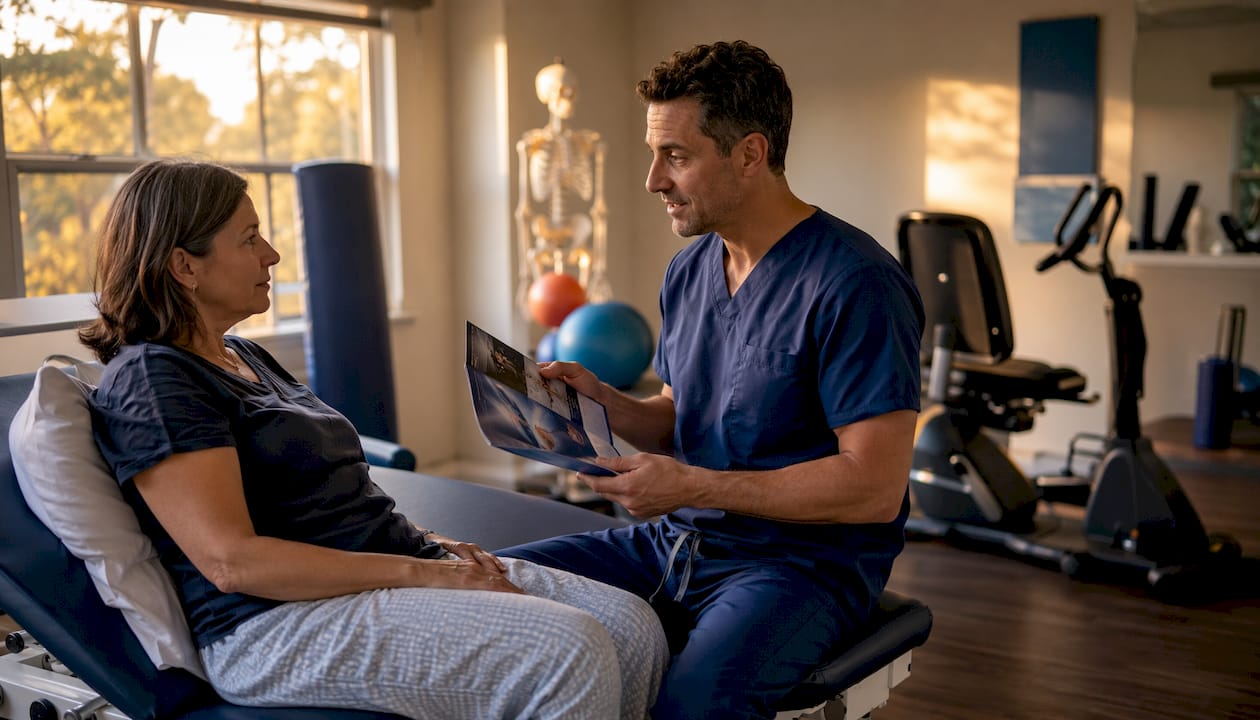
Minimally invasive therapy, in the context of musculoskeletal care, refers to needle-based or image-guided procedures designed to reduce pain and support tissue repair without open surgery. These approaches work by delivering therapeutic agents or mechanical signals precisely to damaged tissue, minimizing disruption to surrounding structures. If you’ve tried physical therapy and medications without lasting relief, and you’d prefer to avoid surgery, these options are worth understanding.
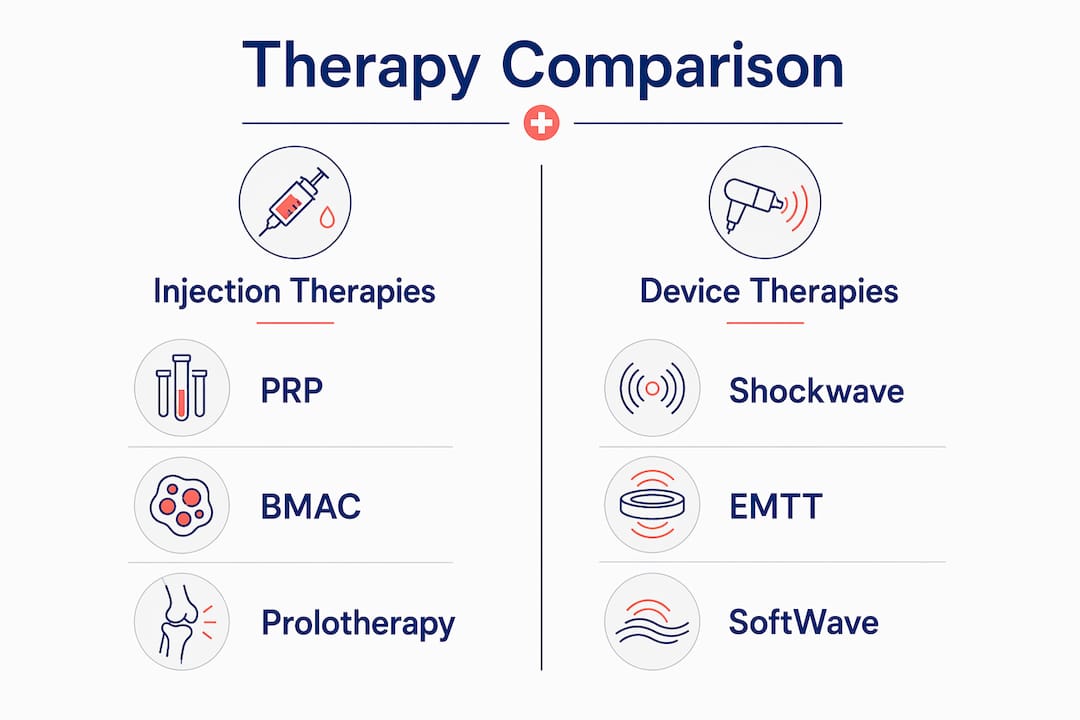
Common approaches include:
- PRP (Platelet-Rich Plasma): Concentrated growth factors from your own blood, injected into damaged tissue
- BMAC (Bone Marrow Aspirate Concentrate): Mesenchymal stem cells harvested from your bone marrow and reinjected at the injury site
- Prolotherapy: Dextrose-based injections that stimulate a controlled healing response in ligaments and tendons
- Viscosupplementation: Hyaluronic acid injected into joints to restore lubrication, with FDA clearance for knee osteoarthritis
- SoftWave / Shockwave therapy: Acoustic energy delivered through the skin to stimulate tissue repair
- EMTT (Extracorporeal Magnetotransduction Therapy): High-energy magnetic pulses that promote cellular regeneration
- MSKE (Musculoskeletal Embolization): A catheter-based procedure targeting abnormal blood vessels that drive chronic pain
Most patients we see have already tried conservative care. These therapies sit between “keep doing PT” and “schedule surgery.”
Table of Contents
- What procedures count as minimally invasive for joints and soft tissues?
- How do these procedures actually work?
- Who is a good candidate for these treatments?
- What are the benefits and risks compared to surgery?
- What should you expect during and after a procedure?
- How do you choose a clinic and what questions should you ask?
- What does the evidence actually say?
- How Nortextissueregeneration approaches regenerative care in North Texas
- Key Takeaways
- What we often see — and how we counsel patients
- Nortextissueregeneration: book a consult for North Texas patients
- FAQ
What procedures count as minimally invasive for joints and soft tissues?
The term covers a wide range of techniques, and it helps to understand how they differ from one another.
| Therapy | Delivery Method | Regulatory Status |
|---|---|---|
| PRP | Injection (image-guided) | Investigational / off-label |
| BMAC | Injection (image-guided) | Investigational / off-label |
| Prolotherapy | Injection | Investigational / off-label |
| Viscosupplementation | Injection | FDA-cleared (knee OA) |
| SoftWave / Shockwave | External device | FDA-cleared devices |
| EMTT | External device | Cleared devices available |
| MSKE | Endovascular catheter | Emerging / center-specific |
Injection-based therapies (PRP, BMAC, prolotherapy, viscosupplementation) place a substance directly into a joint, tendon, or ligament under ultrasound or fluoroscopic guidance. Device-based therapies (shockwave, EMTT) work through the skin with no needle at all. MSKE is different from both: it’s an endovascular procedure performed by an interventional radiologist, targeting the abnormal blood vessels that feed chronic pain in osteoarthritis and tendinopathy.
For a side-by-side look at types of regenerative medicine and how they compare, that resource goes deeper on each option.
How do these procedures actually work?
Each therapy targets a different part of the pain and repair cycle, which is why they’re not interchangeable.
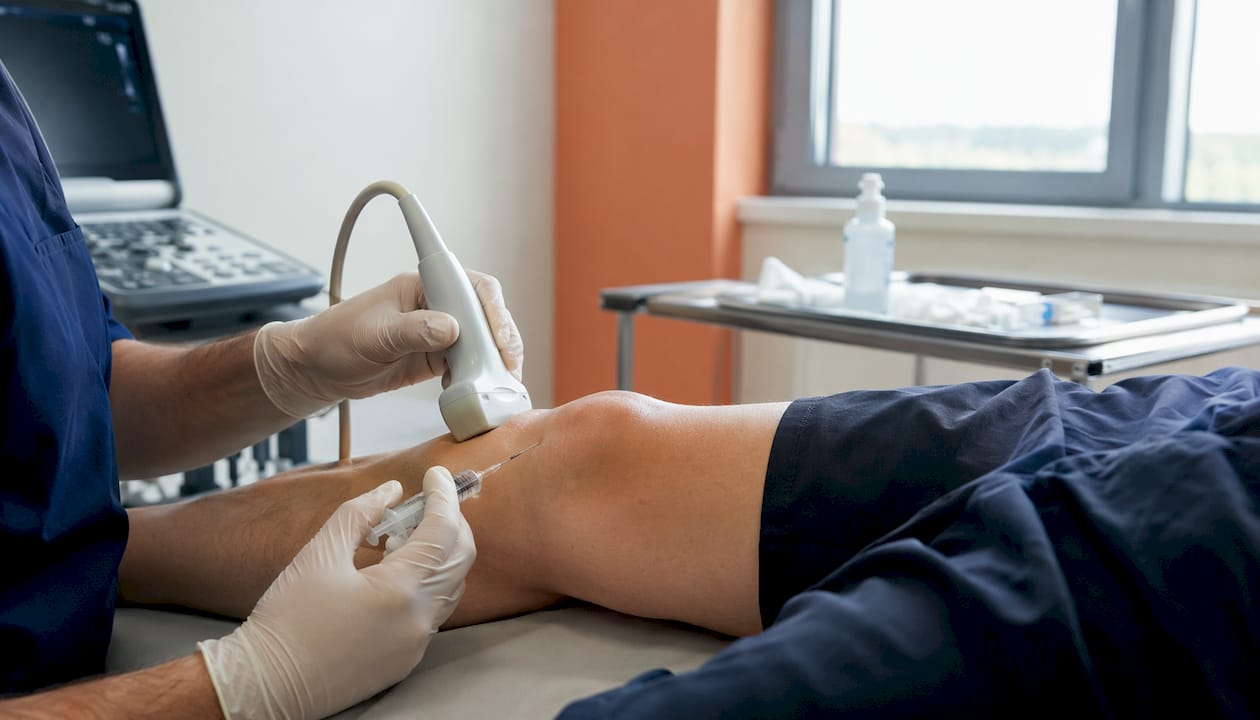
PRP and BMAC work through growth-factor signaling. When concentrated platelets or mesenchymal cells are delivered to damaged tissue, they release proteins that signal the body to begin a repair sequence, reducing local inflammation and promoting new tissue formation. The biology of tissue repair that underlies this process is well-characterized, even if clinical outcomes still vary.
Shockwave and EMTT use mechanical or magnetic energy to stimulate cells directly. SoftWave delivers unfocused acoustic waves that increase local blood flow and activate stem cells already present in the tissue. EMTT uses high-energy magnetic fields to drive cellular regeneration at a deeper level than surface devices.
MSKE works differently from all of the above. Pathological hypervascularization — the growth of abnormal blood vessels in chronically painful tissue — is a known driver of persistent pain in osteoarthritis and tendinopathy. MSKE uses tiny embolic particles delivered through a catheter to selectively occlude those vessels, reducing the pain signal at its source.
Ultrasound guidance improves injection accuracy and safety compared with landmark-guided techniques, which is why image guidance is standard practice for most injection-based procedures.
Pro Tip: Ask any clinic whether they use real-time ultrasound guidance for injections. Accuracy of placement matters significantly for outcomes, and the answer tells you a lot about the clinic’s standard of care.
Who is a good candidate for these treatments?
Most candidates share a common profile: a diagnosed musculoskeletal condition, a course of conservative care that hasn’t resolved the problem, and a preference to avoid or delay surgery.
Typical indications include:
- Knee, hip, or shoulder osteoarthritis (mild to moderate)
- Chronic tendinopathy (Achilles, patellar, rotator cuff, lateral elbow)
- Ligament sprains with incomplete healing
- Persistent post-injury joint pain after standard rehab
Common contraindications include active local or systemic infection, certain bleeding disorders, pregnancy, active malignancy, and poor tissue perfusion. These aren’t absolute in every case, but they require careful evaluation before proceeding.
Disease stage matters more than most patients expect. A patient with mild-to-moderate osteoarthritis and intact joint space is a very different candidate than someone with bone-on-bone changes and significant deformity. Shared decision-making, grounded in imaging and a thorough clinical evaluation, is what separates a well-indicated procedure from one that’s unlikely to help.
We often see patients who’ve been told they “need” a joint replacement but want to explore every option first. Sometimes regenerative therapy is genuinely appropriate. Sometimes it isn’t, and the honest answer is a surgical referral. That evaluation is the starting point.
What are the benefits and risks compared to surgery?
The case for minimally invasive options isn’t that they always outperform surgery. It’s that for many patients, they offer a reasonable chance of meaningful relief with substantially lower risk and recovery burden.
Benefits:
- Outpatient procedures with same-day discharge
- No general anesthesia required for most
- Lower risk of surgical complications (infection, blood clots, nerve injury)
- Shorter recovery: days to weeks rather than months
- Potential to delay or avoid surgery entirely
Risks and limitations:
- Procedure-related discomfort and temporary flare of symptoms
- Small infection risk with any injection
- Variable efficacy — not every patient responds
- Frequent need for repeat treatments
- Most biologic therapies are out-of-pocket costs with limited insurance coverage
A systematic review found no clinically relevant superiority for surgery over non-surgical alternatives on pain and function across many musculoskeletal conditions. That doesn’t mean surgery is never the right answer. It means the decision deserves careful thought rather than default escalation.
| Factor | Minimally Invasive | Open Surgery |
|---|---|---|
| Anesthesia | Local (most procedures) | General or regional |
| Recovery time | Days to weeks | Weeks to months |
| Complication risk | Generally lower | Higher |
| Insurance coverage | Often out-of-pocket | Usually covered |
| Repeat treatments | Sometimes needed | Rarely repeated |
What should you expect during and after a procedure?
A typical appointment at a regenerative medicine clinic follows a predictable sequence.
- Evaluation and imaging review: Your clinician reviews your history, prior imaging (X-ray, MRI), and physical exam findings to confirm the indication and placement target.
- Consent and preparation: You’ll discuss the procedure, expected outcomes, and realistic limitations before anything begins.
- Procedure: Most injections take 15–30 minutes. Local anesthetic is applied first. Ultrasound guidance is used to confirm needle placement. Device-based treatments (shockwave, EMTT) require no needles and are typically 20–30 minutes.
- Observation and discharge: Most patients leave within an hour and drive themselves home.
Recovery timelines vary by procedure. Shockwave and EMTT typically cause minimal downtime, with patients resuming normal activity within a day or two. Injection-based biologics like PRP or BMAC may cause a temporary soreness flare for several days, with meaningful improvement often appearing over 6–12 weeks. MSKE recovery is similarly brief for an endovascular procedure, with early studies reporting significant functional improvement.
Combining these therapies with rehabilitation and activity modification is consistently associated with better outcomes. Clinical evidence is clear that these procedures work best as part of a structured care plan, not as standalone fixes.
Pro Tip: Bring your most recent MRI or X-ray to your first consult. Imaging findings directly influence which procedure is appropriate and where it’s placed. Arriving without them often delays the process by a visit.
How do you choose a clinic and what questions should you ask?
The quality of care in regenerative medicine varies considerably between providers. Here’s what to look for.
Clinic checklist:
- Physician-led practice with documented training in regenerative or interventional orthopedics
- Routine use of ultrasound or fluoroscopic guidance for injections
- Written treatment protocols with clear outcome milestones
- Transparent pricing and honest discussion of insurance realities
- Structured follow-up plan, not just a single injection and goodbye
Questions worth asking your clinician:
- What is the evidence for this specific procedure for my diagnosis?
- What are the realistic alternatives, including surgery?
- How many treatments should I expect, and over what timeline?
- Who performs follow-up, and what does it include?
- What happens if I don’t respond?
Red flags: Any clinic that guarantees results, applies pressure to purchase multi-session packages before completing a medical evaluation, or can’t clearly explain the source and processing of their biologic agents deserves scrutiny. Vague answers about protocols are a meaningful warning sign.
What does the evidence actually say?
The honest picture is one of genuine promise with real limitations.
Viscosupplementation has the strongest regulatory footing, with FDA-cleared indications for knee osteoarthritis. PRP shows variable but promising results for certain tendinopathies and early-stage joint conditions, though outcomes differ significantly depending on preparation protocols and patient selection. BMAC and prolotherapy have supportive evidence in specific indications, but many trials are small and single-center. MSKE is emerging, with encouraging early data on pain reduction and function in hypervascular chronic pain syndromes.
The heterogeneity in outcomes across regenerative medicine studies often reflects differences in how the therapy was prepared and delivered, not just whether the therapy “works.” Protocol standardization is one of the most important unresolved challenges in the field.
Much of the outcome variation in PRP research traces back to differences in processing methods and cell concentration targets between clinics. This is why protocol transparency matters when you’re evaluating a provider.
For most patients, a realistic expectation is meaningful reduction in pain and improvement in function, not complete resolution. Some will need repeat treatments. Some will still need surgery eventually. The evolving research base continues to refine which patients benefit most.
How Nortextissueregeneration approaches regenerative care in North Texas
At Nortextissueregeneration, every patient pathway starts with a thorough evaluation before any treatment is recommended. That means reviewing your imaging, understanding your history with prior treatments, and being direct about what we think will and won’t help.
What the care process looks like:
- Diagnostic evaluation with imaging review and physical assessment
- Individualized treatment plan based on diagnosis, disease stage, and your goals
- Image-guided delivery of PRP, BMAC, SoftWave, or EMTT as indicated
- Structured follow-up with rehab coordination built into the plan
We don’t recommend a procedure because it’s available. We recommend it because the indication is clear, the evidence supports it for your specific condition, and the expected benefit outweighs the cost and effort for you personally.
Nortextissueregeneration operates on a fee-for-service model. We’re transparent about pricing, the number of visits you’re likely to need, and what measurable improvement should look like at each follow-up milestone. North Texas patients can schedule a consult directly through our clinic.
Key Takeaways
Minimally invasive therapy offers North Texas patients a meaningful non-surgical path for musculoskeletal pain, but outcomes depend on the right indication, the right protocol, and a structured rehabilitation plan.
| Point | Details |
|---|---|
| What it is | Needle-based or image-guided procedures that reduce pain and support repair without open surgery. |
| Who it helps | Patients with osteoarthritis, tendinopathy, or ligament injuries who haven’t resolved with conservative care. |
| Realistic timeline | Biologics like PRP and BMAC typically require several weeks before meaningful improvement becomes apparent; device therapies are faster. |
| Rehab is required | Evidence consistently shows these procedures work best combined with physical therapy and activity modification. |
| Nortextissueregeneration | Offers PRP, BMAC, SoftWave, and EMTT in North Texas with image-guided delivery and transparent, individualized protocols. |
What we often see — and how we counsel patients
Most patients who come to us have already done the right things. They’ve completed physical therapy. They’ve tried anti-inflammatories. Some have had one or two corticosteroid injections that helped briefly and then wore off. They’re not looking for a miracle. They want to know whether there’s a reasonable next step before committing to surgery.
What we’ve found is that the patients who do best are the ones who come in with realistic expectations and a willingness to engage with rehabilitation alongside their treatment. The procedure is one part of the equation. The other part is loading the tissue appropriately as it heals, which takes time and consistency.
We also refer patients to surgery when that’s the right answer. If imaging shows end-stage joint destruction or a complete structural failure that no injection will address, we say so. That honesty is part of the care, not a failure of it.
Nortextissueregeneration: book a consult for North Texas patients
For patients in North Texas who want to understand whether regenerative therapy is appropriate for their condition, Nortextissueregeneration offers an initial consultation focused on evaluation first, treatment second. Before your appointment, gather your most recent imaging (MRI or X-ray), a list of prior treatments and their outcomes, and any questions about specific procedures.
PRP therapy and stem cell/BMAC treatments are among the most requested options we discuss in consult. Both are fee-for-service, and we walk through pricing and expected visit frequency before any treatment begins. To learn more about what we offer or to schedule your evaluation, visit Nortextissueregeneration.
FAQ
What is minimally invasive therapy for musculoskeletal pain?
Minimally invasive therapy refers to needle-based or image-guided procedures that reduce pain and promote tissue repair without open surgery, including options like PRP, BMAC, prolotherapy, shockwave therapy, EMTT, and musculoskeletal embolization.
Is minimally invasive therapy covered by insurance?
Most biologic therapies such as PRP and BMAC are considered investigational and are typically paid out-of-pocket; viscosupplementation has FDA clearance for knee osteoarthritis and may have broader coverage depending on your plan.
How long does it take to see results from these procedures?
Device-based therapies like shockwave and EMTT often show improvement relatively quickly, within days to weeks; biologic injections like PRP and BMAC typically require 6–12 weeks before meaningful improvement becomes apparent.
Are these procedures safe?
Minimally invasive procedures generally carry lower complication rates than open surgery, though risks include temporary pain flares, small infection risk, and variable efficacy; a thorough clinical evaluation is needed to confirm you’re an appropriate candidate.
Do I still need physical therapy after a regenerative procedure?
Yes. Clinical evidence consistently shows that combining regenerative procedures with structured physical therapy and activity modification produces more durable outcomes than the procedure alone.