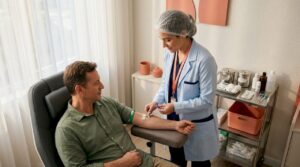
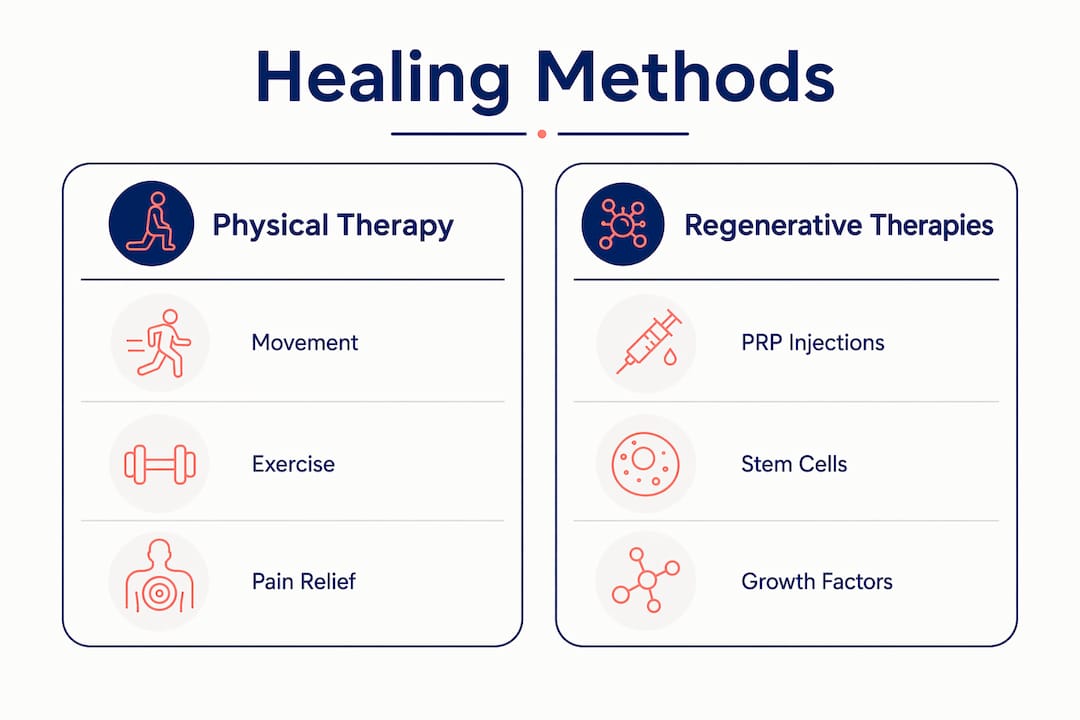
Non-surgical healing is defined as the use of non-invasive and minimally invasive therapies to restore tissue function, reduce pain, and support recovery without operative intervention. For active individuals and athletes dealing with joint injuries, chronic pain, or degenerative conditions, this guide to non-surgical healing covers the full spectrum of options, from foundational lifestyle changes to advanced regenerative medicine. Physical therapy, platelet-rich plasma (PRP), and stem cell treatments represent the core pillars of modern non-surgical care. The preference for these approaches has grown steadily as evidence accumulates and patients seek faster, lower-risk paths back to the activities they love.
What are the foundational non-surgical healing methods?
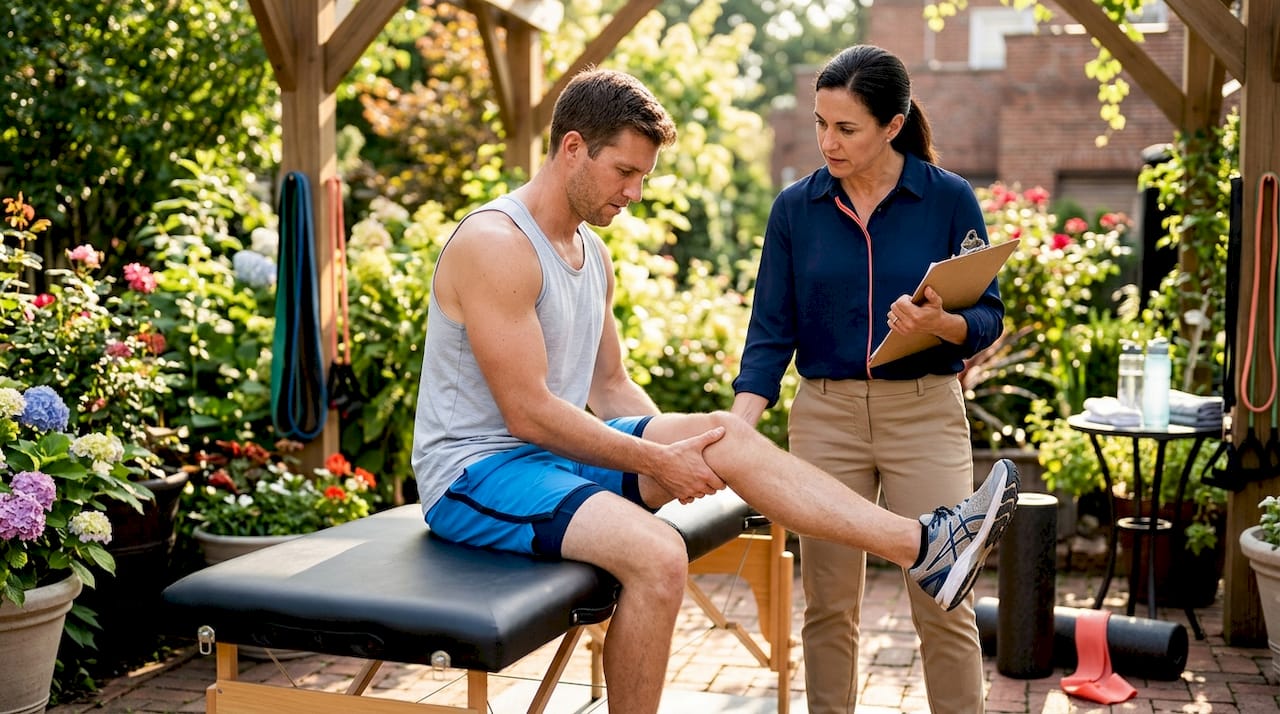
Physical therapy is the single most effective foundational non-surgical treatment for joint pain before advancing to injections or surgery. A stepwise treatment ladder recommends starting with 3–6 months of physical therapy and lifestyle changes as the first line of care. That timeline reflects how long tissue adaptation and neuromuscular retraining actually take. Skipping this phase and jumping to injections often produces weaker, shorter-lived results.
Weight management sits alongside physical therapy as a core foundation. Reducing joint load through weight loss decreases inflammation and improves the effectiveness of every downstream treatment. For a runner carrying extra body weight, even a modest reduction can meaningfully lower the compressive force on the knee with each stride. This is not a minor detail. It is the variable that most directly determines how well other therapies perform.
The other foundational elements include:
- Structured exercise programming: Strength training around the affected joint stabilizes it and reduces pain signals. Quadriceps strengthening for knee osteoarthritis is one of the most well-documented examples.
- Joint protection strategies: Modifying movement patterns, using supportive footwear, and avoiding high-impact loading during acute flares all reduce tissue stress.
- Anti-inflammatory nutrition: Diets rich in omega-3 fatty acids, antioxidants, and lean protein support tissue repair and reduce systemic inflammation.
- Sleep and recovery habits: Tissue regeneration occurs primarily during sleep. Poor sleep quality directly impairs healing at the cellular level.
Pro Tip: Before adding any injection or regenerative therapy, confirm that you have completed at least 8–12 weeks of consistent physical therapy. Regenerative treatments work best when the surrounding tissue is already conditioned and blood flow to the area is optimized.
How do PRP and stem cell therapies support healing?
Regenerative medicine therapies work by delivering concentrated biological signals directly to damaged tissue, triggering the body’s own repair processes. Platelet-rich plasma (PRP) is prepared by drawing a small volume of the patient’s blood, spinning it in a centrifuge to concentrate the platelets, and injecting the resulting plasma into the injured area. Platelets carry growth factors, including PDGF, TGF-beta, and VEGF, that stimulate collagen production, reduce inflammation, and attract repair cells to the site.
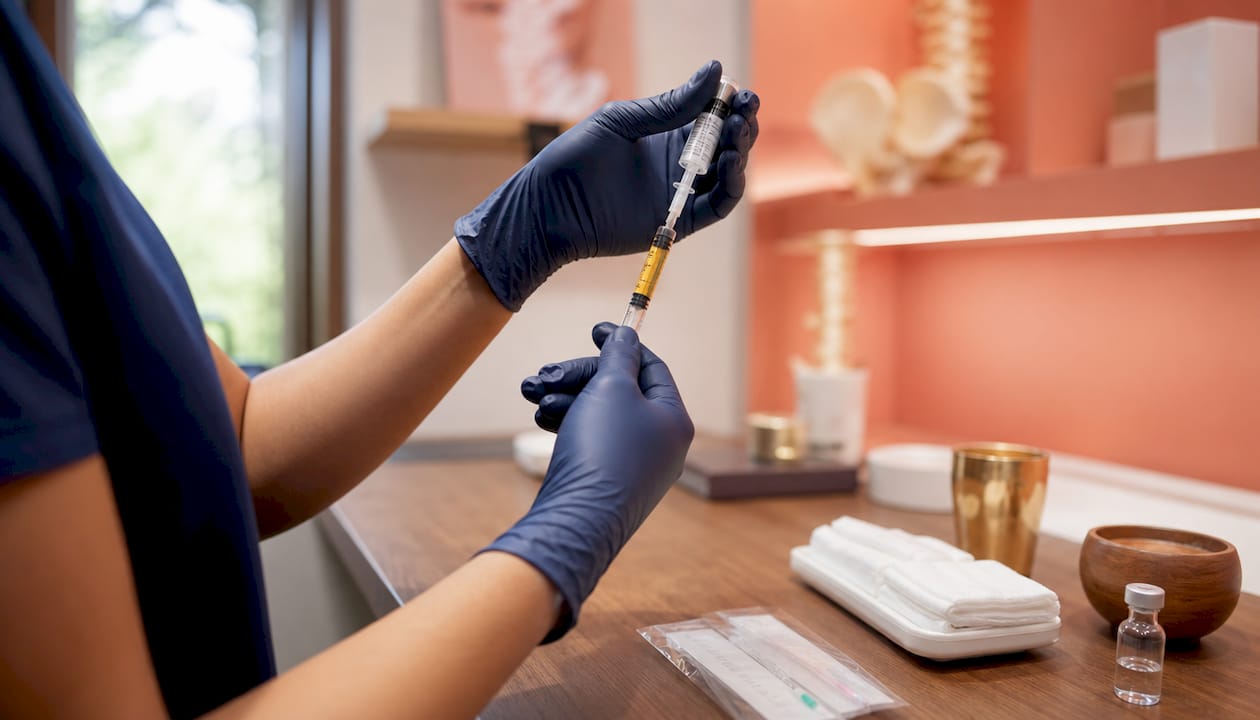
Mesenchymal stem cells (MSCs) operate through a related but distinct mechanism. They can differentiate into cartilage, bone, or tendon cells, and they also release anti-inflammatory signals that calm the local tissue environment. Both therapies are autologous, meaning they use material from the patient’s own body, which keeps the risk of immune reaction low.
The clinical evidence supporting these approaches has strengthened considerably. A 2026 systematic review of 23 randomized controlled trials confirmed that combining PRP and stem cell therapies produces clinically meaningful improvements in pain reduction and joint function compared to conventional treatments. That finding matters because it is not based on a single study. It reflects a pattern across multiple high-quality trials.
For athletes specifically, PRP has a well-documented role in acute muscle injuries. A meta-analysis of 9 randomized controlled trials found that PRP reduces time to return to sport by approximately 7.5 days compared to rehabilitation alone, with a favorable safety profile. Seven and a half days may sound modest, but for a competitive athlete mid-season, it is the difference between missing one game and missing several.
| Therapy | Mechanism | Best evidence for | Typical timeline |
|---|---|---|---|
| PRP | Growth factor delivery, inflammation reduction | Tendon injuries, acute muscle tears, knee osteoarthritis | 4–12 weeks for initial improvement |
| Stem cell therapy | Tissue differentiation, anti-inflammatory signaling | Cartilage defects, degenerative joint disease | 8–16 weeks for measurable change |
| Physical therapy | Neuromuscular retraining, load management | All musculoskeletal conditions | Ongoing throughout recovery |
One honest caveat: wide protocol variation across studies makes it difficult to declare a single “best” protocol for PRP or stem cell therapy. Concentration methods, injection volumes, and timing all vary between clinics. Choosing a provider with a standardized, evidence-informed protocol matters as much as choosing the therapy itself.
Pro Tip: Ask your provider specifically about their PRP preparation method and platelet concentration targets. Leukocyte-rich versus leukocyte-poor PRP produces different outcomes depending on the tissue type being treated. A knowledgeable provider will have a clear answer.
What does a practical non-surgical healing plan look like?
A well-structured plan follows a logical progression from low-risk to more advanced options, reserving surgery as a true last resort. The non-surgical treatment ladder provides a reliable framework for this progression.
-
Start with lifestyle and physical therapy (weeks 1–12). Address weight, nutrition, sleep, and movement quality first. Begin a supervised physical therapy program targeting the specific joint or tissue involved. Document your pain levels and functional capacity at baseline so you can measure progress objectively.
-
Add supportive interventions if needed (weeks 6–16). Assistive devices such as knee braces, orthotics, or compression sleeves can reduce load and improve joint mechanics during this phase. Topical anti-inflammatory agents and oral supplements like glucosamine and chondroitin are low-risk additions worth discussing with your provider.
-
Consider injection-based therapies when foundational care plateaus (months 3–6). Corticosteroid injections provide short-term pain relief and can create a window for more productive physical therapy. Hyaluronic acid injections improve joint lubrication in osteoarthritis. These are reasonable intermediate steps before moving to regenerative options.
-
Introduce PRP or stem cell therapy for persistent or structural issues. When pain persists despite physical therapy and conventional injections, or when imaging shows cartilage loss or tendon degeneration, regenerative therapies become the most logical next step. You can review the differences between these two options in detail by reading about PRP vs. stem cell therapy to understand which fits your situation.
-
Monitor, reassess, and adjust every 4–6 weeks. Recovery from regenerative orthopedic therapies typically unfolds gradually. A commonly observed recovery timeline includes mild soreness in the first 1–2 weeks, followed by progressive functional improvement over 3 months. Tracking symptoms at regular intervals helps you and your provider decide whether to continue, modify, or escalate the plan.
-
Set realistic outcome expectations from the start. Non-surgical healing is not a quick fix. Most patients see meaningful improvement within 3–6 months of consistent, well-structured care. Patients who understand this timeline tend to stay more committed and ultimately achieve better results.
What are common challenges in non-surgical healing?
The most frequent reason non-surgical plans fail is not the therapy itself. It is adherence. Patient adherence and realistic expectations significantly influence outcomes in musculoskeletal recovery. Premature return to activity, missed physical therapy sessions, and poor follow-up care are the most common barriers we see.
“Many patients come to us after months of inconsistent treatment elsewhere. The pattern is almost always the same: they felt better after two or three weeks and assumed the problem was resolved. They returned to full training, the pain came back, and they lost confidence in non-surgical options entirely. The issue was not the treatment. It was the timeline.”
Other common challenges include:
- Slow early progress: Regenerative therapies require time for biological processes to unfold. Expecting dramatic improvement in the first two weeks leads to premature abandonment of an otherwise effective plan.
- Inadequate diagnosis: Treating a labral tear with the same protocol as mild tendinopathy produces poor results. Imaging and specialist assessment before starting any plan prevents wasted time and money.
- Overloading during recovery: Athletes in particular struggle to reduce training volume. Continuing high-impact activity during the early healing phase directly counteracts tissue repair.
- Ignoring complementary care: Sleep, nutrition, and stress management are not optional additions. They are active components of the healing process.
When progress genuinely stalls after 8–12 weeks of consistent effort, seek reassessment rather than simply repeating the same approach. A specialist consultation may reveal a structural issue that requires a different intervention or a modified protocol.
Key takeaways
Non-surgical healing works best as a structured, progressive plan that combines physical therapy, lifestyle changes, and regenerative therapies in the right sequence and at the right time.
| Point | Details |
|---|---|
| Start with foundations | Physical therapy and weight management form the base of every effective non-surgical plan. |
| PRP accelerates recovery | PRP reduces return-to-sport time by approximately 7.5 days in acute muscle injuries, per meta-analysis data. |
| Regenerative therapies need time | Meaningful improvement from PRP or stem cell therapy typically emerges over 3 months, not days. |
| Adherence drives outcomes | Premature return to activity and poor follow-up are the leading causes of non-surgical plan failure. |
| Protocols matter | Wide variation in regenerative therapy protocols means provider selection is as important as therapy selection. |
What I’ve learned from watching patients choose the non-surgical path
The patients who do best with non-surgical care share one trait: they treat recovery as a process, not a procedure. They show up to physical therapy consistently, they ask specific questions about their protocol, and they resist the urge to test the joint before it is ready. That discipline is harder than it sounds for competitive athletes.
What I find genuinely encouraging is how far regenerative medicine has come in a short time. A few years ago, PRP was still considered experimental by many orthopedic providers. Now a systematic review of 23 randomized controlled trials supports its use alongside stem cell therapy for musculoskeletal injuries. The science has caught up with what we were observing clinically. That shift gives me real confidence when presenting these options to patients who are trying to avoid surgery.
The honest truth is that non-surgical healing is not right for every condition or every patient. Severe structural damage, complete ligament ruptures, and advanced joint destruction sometimes require surgical correction first. But for the large majority of athletes and active adults dealing with tendinopathy, partial tears, osteoarthritis, or overuse injuries, a well-designed non-surgical plan produces outcomes that are genuinely comparable to surgery, with far less downtime and risk. That is worth knowing before you schedule a consultation with a surgeon.
— Felix
Advanced non-surgical care at Nortextissueregeneration
Nortextissueregeneration specializes in regenerative treatments for active patients who want to recover without surgery. The clinic offers PRP therapy and stem cell therapy through personalized protocols built around each patient’s injury, activity level, and recovery goals. Every treatment plan is grounded in current clinical evidence and delivered by providers who understand the demands of an active lifestyle. If you have worked through foundational care and are ready to explore what regenerative medicine can do for your recovery, Nortextissueregeneration offers the clinical depth and individualized attention that makes a real difference in outcomes.
FAQ
What is non-surgical healing in orthopedics?
Non-surgical healing refers to the use of physical therapy, lifestyle changes, injections, and regenerative therapies to restore joint and tissue function without surgery. It is the recommended first-line approach for most musculoskeletal injuries and chronic joint conditions.
How long does non-surgical recovery typically take?
Most patients see meaningful improvement within 3–6 months of consistent non-surgical care. Regenerative therapies like PRP show gradual functional gains over approximately 3 months following treatment.
Is PRP therapy effective for athletes?
Yes. A meta-analysis of 9 randomized controlled trials found that PRP reduces return-to-sport time by approximately 7.5 days in acute muscle injuries, with a favorable safety profile compared to rehabilitation alone.
When should I consider stem cell therapy over PRP?
Stem cell therapy is generally considered when structural damage is more significant, such as cartilage defects or degenerative joint disease, while PRP is often the first regenerative option for tendon injuries and acute muscle tears. A specialist assessment determines which is appropriate for your specific condition.
What causes non-surgical healing plans to fail?
The most common causes are premature return to activity, inconsistent physical therapy attendance, and unrealistic timelines. Education and regular follow-up with your provider significantly improve adherence and outcomes.