
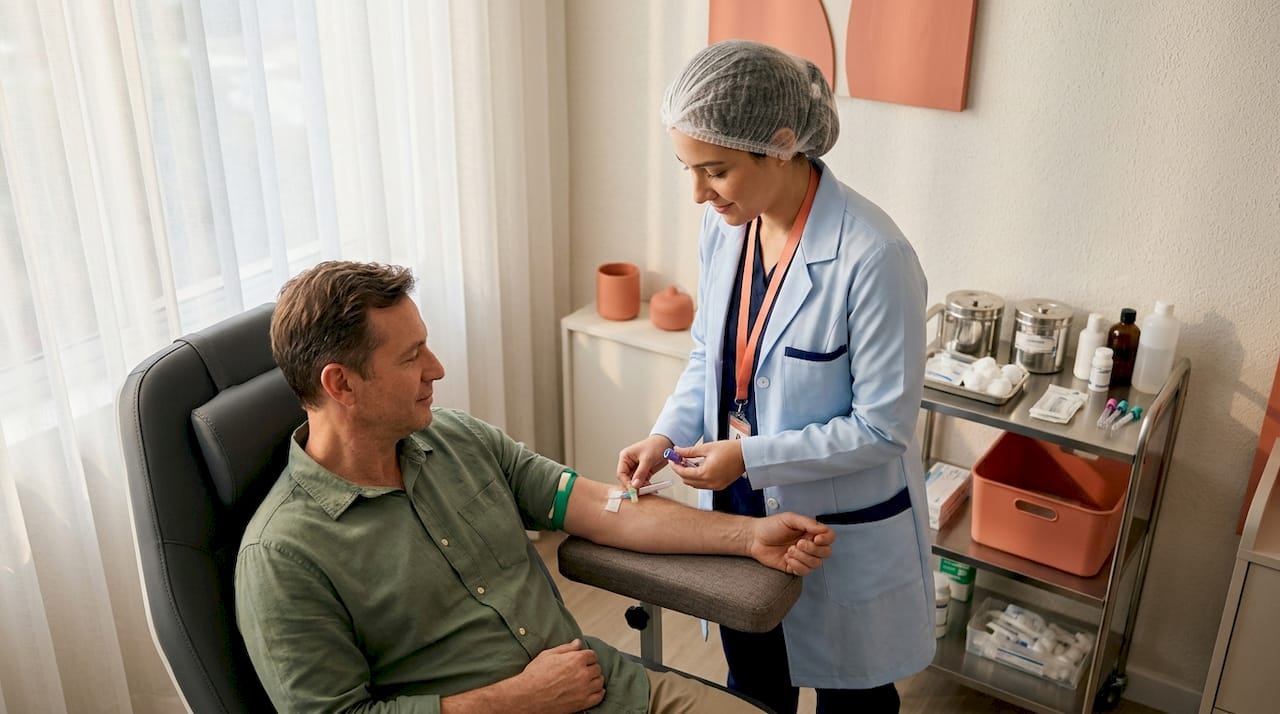
Platelet-rich plasma (PRP) therapy is defined as a biologic treatment that concentrates platelets from your own blood and injects them directly into damaged tissue to accelerate repair. The role of PRP in healing centers on one core mechanism: platelets carry growth factors that signal your body to rebuild tissue, reduce inflammation, and restore function. Clinicians in regenerative medicine have adopted PRP as a non-surgical option for patients dealing with knee osteoarthritis, tendon injuries, and soft tissue damage. At Nortextissueregeneration, we work with patients who have often tried anti-inflammatory medications or cortisone shots without lasting relief. PRP offers a different path. It works with your body’s own biology rather than suppressing it.
How does PRP biologically support the healing process?
PRP delivers healing signals directly to injured tissue through platelet alpha granules. When activated, these granules release growth factors including platelet-derived growth factor (PDGF), transforming growth factor-beta (TGF-β), vascular endothelial growth factor (VEGF), and insulin-like growth factor (IGF-1). Each of these proteins plays a specific role in recruiting repair cells, building new blood vessels, and stimulating collagen production.
The biological role of PRP extends beyond simple growth factor delivery. PRP inhibits collagenases, the enzymes that break down cartilage and connective tissue, and suppresses inflammatory signaling pathways including NF-κB. This shifts the joint environment from a state of active breakdown toward one of repair and homeostasis.
PRP also activates key signaling networks. Research shows PRP influences pathways including PI3K/AKT/mTOR, Wnt/β-catenin, and TGF-β/Smad, all of which regulate cartilage metabolism and extracellular matrix synthesis. The practical result is a shift from tissue degradation to tissue rebuilding at the cellular level.
One detail that matters clinically is the leukocyte content of the PRP preparation:
- Leukocyte-poor PRP contains fewer white blood cells and is generally preferred for osteoarthritis, where excess inflammation can worsen cartilage damage.
- Leukocyte-rich PRP retains more white blood cells and may benefit acute tendon injuries by amplifying the initial inflammatory signal that kicks off healing.
- The choice between these two formulations depends on the tissue being treated and the stage of injury.
Pro Tip: Ask your provider which PRP formulation they use and why. Leukocyte content is one of the most clinically significant variables in PRP preparation, and the answer tells you a lot about the depth of their protocol.
What does clinical evidence say about PRP treatment effectiveness?
The clinical case for PRP in joint and soft tissue conditions is well supported. A systematic review of 62 trials including 4,969 patients found that PRP provides superior pain relief and functional improvement in knee osteoarthritis compared to hyaluronic acid, corticosteroids, and saline placebo. That is a meaningful result. It means PRP outperformed the two most commonly used injection therapies in head-to-head comparisons across a large patient population.
The benefits are not short-lived. PRP symptom relief typically lasts from six months up to a year, with repeat injections possible based on clinical recommendation. Corticosteroids, by contrast, often provide relief for only four to six weeks and carry risks of tissue damage with repeated use.
Platelet dose matters significantly. Research indicates that a blood draw volume of 40 mL or more correlates with better outcomes in knee osteoarthritis compared to smaller volumes. A platelet count threshold of approximately 10 billion platelets per injection has been suggested for a sustained chondroprotective effect. That threshold matters because underdosed PRP may not deliver enough growth factors to produce a meaningful clinical response.
The evidence also has limits worth acknowledging. Study protocols vary widely in preparation methods, injection frequency, and patient selection. This variability makes direct comparisons difficult and underscores why standardized protocols are still being developed across the field.
For patients considering PRP for joint pain, the evidence is encouraging but not a guarantee. Results depend on the quality of the preparation, the condition being treated, and patient-specific factors.
What factors influence the success of PRP treatment in healing?
PRP is not a uniform treatment with predictable results for every patient. Expert consensus confirms that outcomes vary significantly based on preparation methods, patient characteristics, and injury type. Understanding these variables helps set realistic expectations before starting treatment.
Patient-specific factors that affect outcomes include:
- Age and tissue health: Younger patients with acute injuries generally respond more quickly. Older patients with chronic degeneration may see slower or more modest improvement.
- Injury type: Acute soft tissue injuries, such as muscle tears or partial tendon ruptures, tend to respond well. Severe end-stage arthritis with minimal remaining cartilage shows less consistent benefit.
- Baseline health: Conditions like diabetes, anemia, or active infection can reduce platelet quality and limit the effectiveness of the treatment.
- Medication use: Non-steroidal anti-inflammatory drugs (NSAIDs) taken around the time of injection may blunt the healing response by suppressing the very inflammatory signals PRP is designed to activate.
Preparation quality is equally important. The concentration of platelets, the leukocyte content, and the blood draw volume all affect the final product. Providers using standardized, validated preparation systems produce more consistent results than those using variable or low-volume protocols.
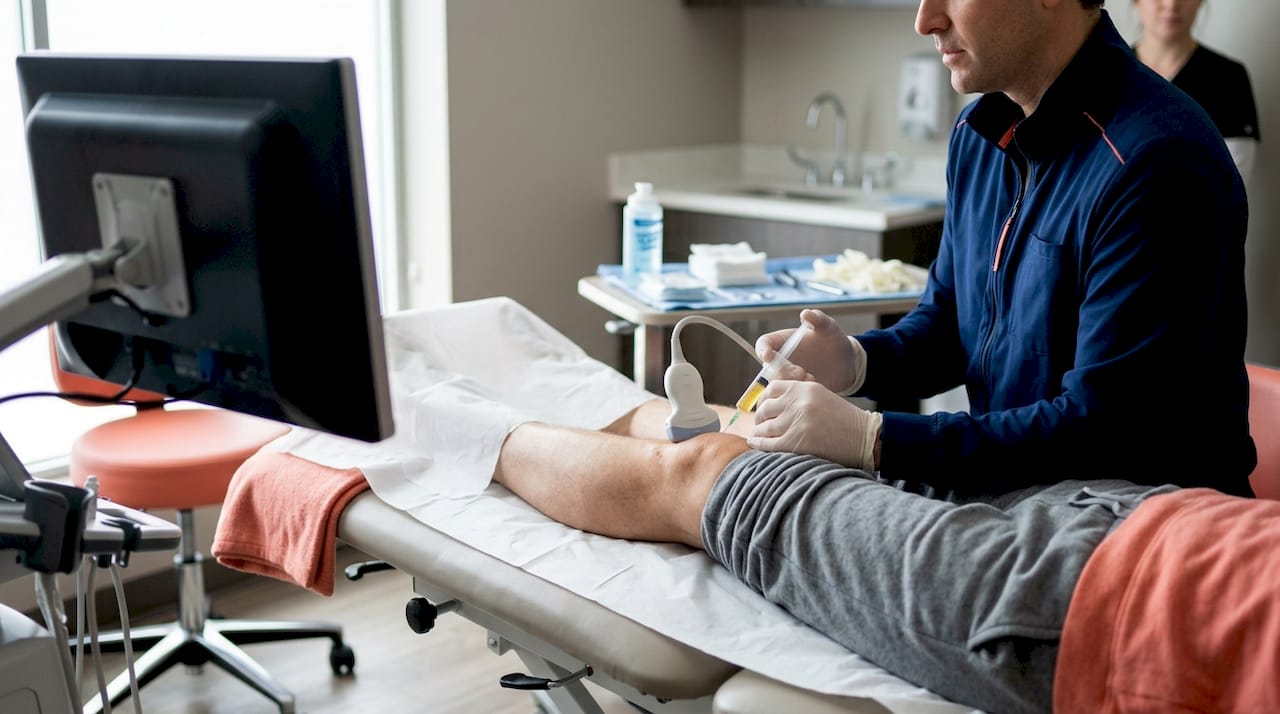
Injection technique also plays a role. Ultrasound-guided delivery places PRP precisely at the target tissue rather than relying on anatomical landmarks alone. For structures like tendons or the knee joint, accuracy in placement directly affects whether the growth factors reach the right location.
Pro Tip: If you are considering PRP, ask your provider whether they use image guidance for injection. Ultrasound guidance is not always required, but for deeper or smaller structures, it significantly improves accuracy.
Rehabilitation integration is the factor most often overlooked. Combining PRP with physical therapy guides the healing tissue through the proliferative and remodeling phases more effectively than injection alone. Patients who follow a structured rehabilitation program after PRP consistently show better functional outcomes.
What should you expect during the PRP injection healing process?
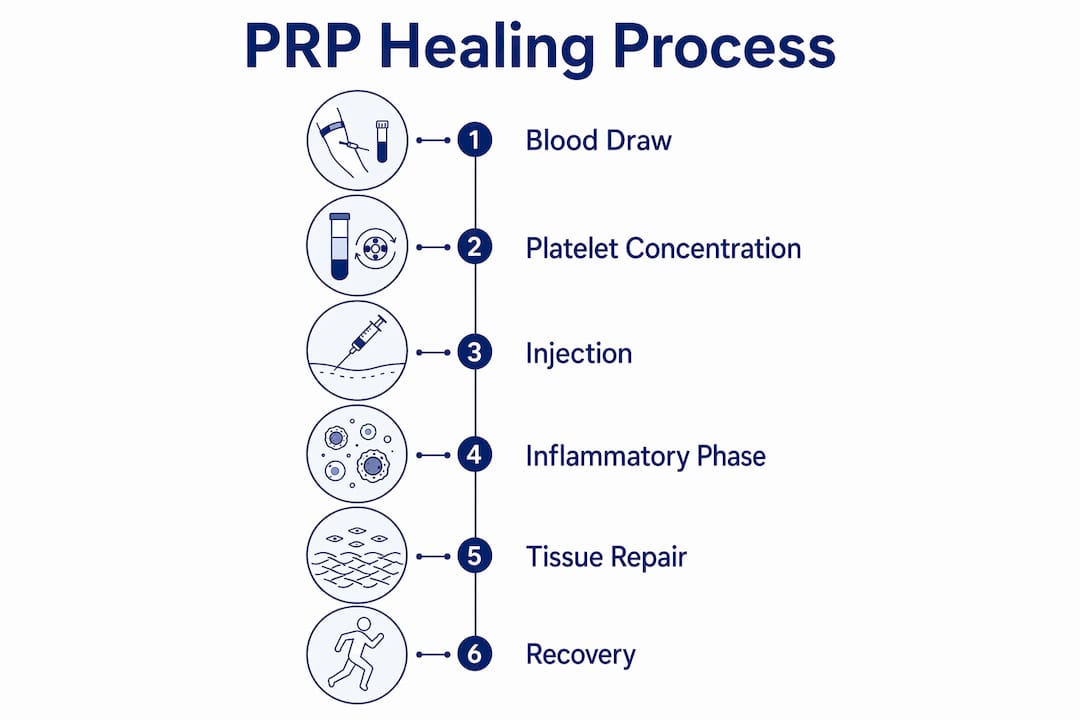
The PRP injection healing process follows a predictable biological sequence, though the timeline varies by patient and condition. Knowing what to expect at each stage helps you stay on course rather than second-guessing normal recovery signals.
-
Days 1–3: Inflammatory flare. A post-injection flare occurs in 60–70% of patients and is a normal part of the healing response. The treated area may feel more sore, swollen, or stiff than before the injection. This is not a sign that the treatment failed. It means the platelets have activated and the repair process has begun.
-
Days 3–7: Managing the response. Ice is the recommended approach for managing post-injection discomfort. NSAIDs should be avoided during this period because they suppress the inflammatory signals that PRP depends on to recruit repair cells. Acetaminophen is generally acceptable for pain management if needed.
-
Weeks 2–6: Early tissue repair. The proliferative phase begins as new collagen fibers form and blood supply to the area improves. Patients often notice a gradual reduction in baseline pain during this window. Physical activity should be guided by your provider, with a focus on gentle, progressive loading rather than rest.
-
Weeks 6–12: Functional improvement. Most patients report meaningful symptom relief in this range. Tissue remodeling continues, and the new collagen matures and aligns along lines of mechanical stress. This is when structured rehabilitation becomes most valuable, as controlled loading helps the tissue organize properly.
-
Months 3–12: Sustained benefit. For knee osteoarthritis and soft tissue injuries, benefits can persist for six months to a year. Some patients return for a second injection at the six-month mark to extend or reinforce the initial response.
For a detailed breakdown of each recovery phase, the phase-by-phase healing guide at Nortextissueregeneration covers what to expect and how to support recovery at each stage.
Key Takeaways
PRP therapy works by delivering concentrated growth factors to injured tissue, producing superior and longer-lasting pain relief than corticosteroids or hyaluronic acid when preparation quality and rehabilitation are properly integrated.
| Point | Details |
|---|---|
| Core mechanism | PRP releases growth factors from platelet alpha granules to stimulate tissue repair and reduce inflammation. |
| Clinical evidence | A review of 62 trials showed PRP outperforms corticosteroids and hyaluronic acid for knee osteoarthritis pain relief. |
| Platelet dose matters | Blood draw volumes of 40 mL or more and a threshold of 10 billion platelets per injection improve outcomes. |
| Formulation type | Leukocyte-poor PRP suits osteoarthritis; leukocyte-rich PRP may benefit acute tendon injuries more effectively. |
| Rehabilitation integration | Combining PRP with physical therapy during the proliferative and remodeling phases consistently improves functional outcomes. |
What I’ve learned about PRP after working with patients who’ve tried everything else
Most patients who come to us for PRP have already been through the standard sequence: rest, physical therapy, cortisone shots, and sometimes a second opinion. By the time they ask about PRP, they are not looking for hype. They want to know if it will actually work for them.
What I’ve found is that PRP works best when it is treated as one part of a plan, not the entire plan. Patients who pair their injection with a structured rehabilitation program and give the tissue time to remodel tend to do significantly better than those who expect the injection alone to solve the problem. That is not a criticism of PRP. It reflects how tissue healing actually works.
The patients who struggle most are those with very advanced degeneration and low expectations for lifestyle modification. PRP cannot rebuild a joint that has no cartilage left. Setting that expectation clearly before treatment is one of the most important things we do.
The other thing worth saying directly: preparation quality varies widely across providers. The platelet concentration, the leukocyte content, and the draw volume all affect what ends up in the syringe. A low-dose, poorly prepared PRP injection is not the same treatment as a properly dosed, validated preparation. If you are going to invest in this therapy, the quality of the protocol matters as much as the therapy itself.
— Felix
How Nortextissueregeneration supports your recovery with PRP therapy
Nortextissueregeneration offers PRP therapy using preparation protocols designed to deliver consistent platelet concentrations and appropriate leukocyte profiles for each condition. Every treatment plan is built around the patient’s specific injury, health history, and recovery goals. We do not use a single protocol for every case because the evidence is clear that preparation type, platelet dose, and rehabilitation integration all affect outcomes. If you are dealing with chronic joint pain, a tendon injury, or soft tissue damage and want to understand whether PRP is appropriate for your situation, a consultation with our team is a practical next step. We will give you a straightforward assessment, not a sales pitch.
FAQ
What is PRP therapy and how does it work?
PRP therapy concentrates platelets from your own blood and injects them into damaged tissue, where they release growth factors that stimulate repair and reduce inflammation. The process takes roughly 30–60 minutes from blood draw to injection.
How long does it take to feel results from a PRP injection?
Most patients notice meaningful improvement between weeks 6 and 12 after injection, with benefits for knee osteoarthritis and soft tissue injuries often lasting six months to a year.
Is PRP better than cortisone shots for joint pain?
A systematic review of 62 trials found PRP provides superior pain relief and functional improvement compared to corticosteroids for knee osteoarthritis, with longer-lasting results and no risk of tissue damage from repeated use.
Why does my joint feel worse after a PRP injection?
A post-injection inflammatory flare is a normal part of the healing process and occurs in 60–70% of patients. It signals that platelets have activated and repair is underway. Ice and avoiding NSAIDs are the recommended management strategies during this phase.
Can PRP be combined with physical therapy?
Yes. Clinical evidence supports combining PRP with physical therapy to guide tissue through the proliferative and remodeling phases, producing better functional outcomes than injection alone.