If you’ve been dealing with chronic joint pain, a slow-healing injury, or a condition your doctor says “just needs time,” you’ve probably wondered whether your body is truly capable of repairing itself. Tissue regeneration is the biological process by which damaged or lost tissue is restored to something resembling its original structure and function. It’s far more complex than basic wound closure, and understanding what is tissue regeneration can help you make sense of why some injuries heal completely while others leave lasting damage — and why an entirely different category of treatment now exists to work with that biology instead of against it.
Table of Contents
- Key takeaways
- What tissue regeneration actually means biologically
- Modern tissue regeneration methods and therapies
- Clinical applications and tissue regeneration benefits
- Obstacles still limiting tissue regeneration
- My perspective on where regenerative medicine really stands
- How Nortex Tissue Regeneration can help you heal
- FAQ
Key takeaways
| Point | Details |
|---|---|
| Regeneration differs from repair | True regeneration restores original tissue structure; typical wound repair often produces scar tissue instead. |
| Human regeneration is dormant | Research shows mammals retain regenerative abilities that are suppressed rather than absent, offering real therapeutic potential. |
| Multiple methods now exist | From PRP and stem cell therapy to guided tissue regeneration, non-surgical options are available for joints, tendons, and soft tissue. |
| Results depend on biology | Age, immune response, and the type of tissue involved all affect how well regenerative therapies work. |
| Economic demand is rising fast | The global wound care market was $22.25 billion in 2023 and is projected to surpass $29.6 billion by 2030. |
What tissue regeneration actually means biologically
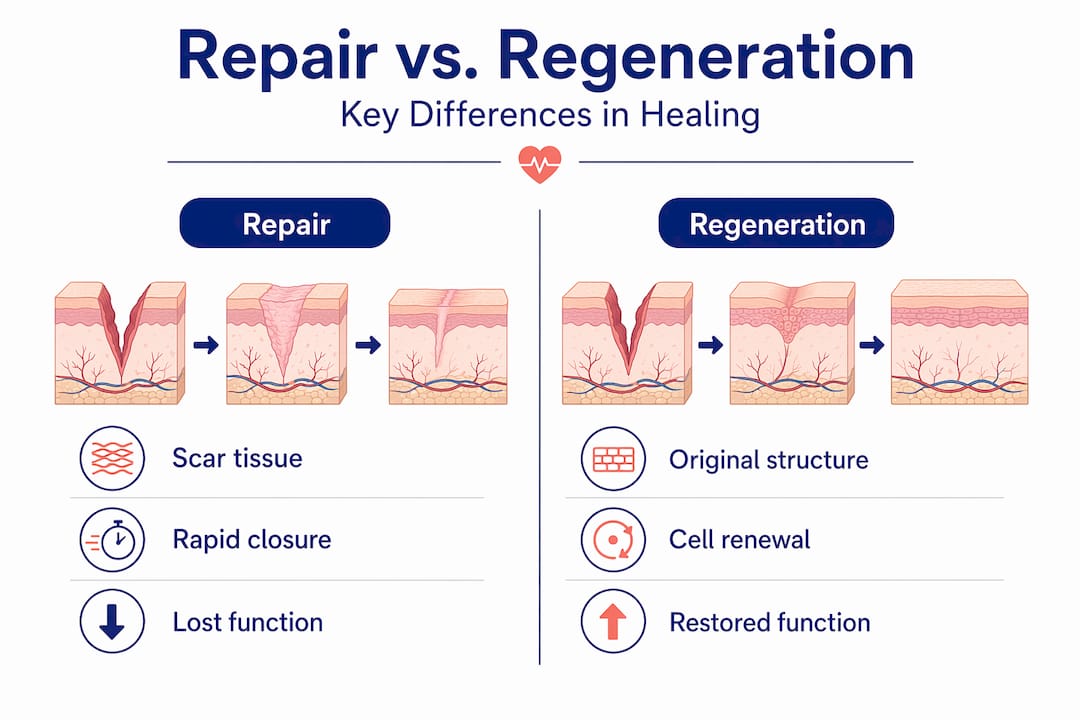
Most people assume healing and regeneration are the same thing. They are not. Healing, in the standard biological sense, is your body patching a wound with whatever material is available — most often scar tissue. True tissue regeneration means replacing what was lost with new, functioning tissue that mirrors the original. That distinction matters enormously when it comes to long-term recovery.
Your body uses several cell types to manage repair. Stem cells and progenitor cells are the most significant. Stem cells are undifferentiated, meaning they have not yet committed to becoming a specific cell type. When signaled correctly, they can differentiate into muscle, cartilage, bone, or connective tissue. Progenitor cells are slightly more specialized but still retain the ability to regenerate a defined tissue type.
Some human tissues do regenerate with reasonable efficiency. The liver is the best example. Remove up to 70% of it, and it will regrow to functional capacity within weeks. Skin regenerates continuously through the outermost layers. Bone has a meaningful ability to heal fractures through a process that includes stem cell recruitment and new mineralization. But cartilage, nerve tissue, and cardiac muscle are far more limited. When those tissues are damaged, the body tends to fill the gap with fibrous scar tissue rather than functional replacement cells.
“Mammalian regeneration abilities are dormant rather than absent, differing from salamanders which form blastemas — organized clusters of cells — for regrowth.”
Salamanders can regrow entire limbs. They form what’s called a blastema: a localized mass of dedifferentiated cells that reactivates developmental programming. Humans can’t do that, at least not yet. But the fact that mammals retain dormant regeneration is one of the most significant findings in recent biology. Under the right conditions, partial digit tip regrowth has been documented in mice. The machinery exists. The question is how to turn it on reliably.
The immune system plays a larger role here than most people realize. Macrophages, a type of immune cell, are central to this process. In regenerative species, macrophages support tissue rebuilding. In humans, they tend to trigger fibrosis and scarring when they sense injury, which closes the wound but prevents true regeneration. Modulating that immune response is now a serious area of research.
Modern tissue regeneration methods and therapies
The field of regenerative medicine has moved well beyond theory. Several approaches are now used clinically, and understanding them helps you evaluate which options may be relevant to your situation.
-
Stem cell therapy involves introducing stem cells into damaged tissue where they can either directly differentiate into replacement cells or release signaling molecules that stimulate the body’s own repair mechanisms. According to research on cell therapy and organ regeneration, both engraftment and paracrine signaling pathways play meaningful roles, and the source and delivery method of the cells significantly affects outcomes.
-
Platelet-Rich Plasma (PRP) therapy concentrates growth factors from your own blood and injects them directly into the damaged area. This accelerates the natural healing response without introducing foreign cells. PRP is widely used for tendons, ligaments, and joint conditions because it is low-risk and derived from the patient’s own biology.
-
Guided Tissue Regeneration (GTR) uses physical barrier membranes to prevent fast-growing cell types from filling a wound before slower regenerating cells arrive. GTR is a standard procedure in periodontal care, where it helps regenerate the bone and ligament structures that support teeth. The same principles are being adapted for soft tissue repair in orthopedic and wound care settings.
-
Scaffold-based therapies provide a structural framework made from biological or synthetic materials. Cells migrate into the scaffold, use it as a template, and gradually replace it with natural tissue. These are used for skin grafts, tendon repair, and, increasingly, cartilage restoration.
| Therapy | Tissue target | Surgical? | Recovery time |
|---|---|---|---|
| Stem cell therapy | Joint, bone, soft tissue | No | Days to weeks |
| PRP therapy | Tendon, ligament, joint | No | Days |
| Guided Tissue Regeneration | Periodontal, wound | Minor procedure | 1 to 4 weeks |
| Scaffold constructs | Skin, cartilage, tendon | Sometimes | Varies |
Pro Tip: If you are evaluating regenerative options for joint pain or a soft tissue injury, ask your provider specifically whether the therapy targets the source of damage or only manages symptoms. The distinction tells you whether you are getting regeneration or temporary relief.
One challenge worth knowing about is immune compatibility. Therapies using cells from another person carry rejection risk. Autologous treatments, which use your own cells or plasma, sidestep that problem. That’s one reason PRP and autologous stem cell approaches are often the starting point in non-surgical care.
Clinical applications and tissue regeneration benefits
Many patients we see at Nortex Tissue Regeneration come in after months of trying anti-inflammatory medications, physical therapy, or cortisone injections without meaningful improvement. Regenerative therapies offer something different: they aim to restore the tissue itself rather than simply manage the symptoms.
Conditions that respond meaningfully to regenerative approaches include:
- Osteoarthritis of the knee, hip, and shoulder, where cartilage has degraded and natural repair is limited. Current research funded through programs like NITRO focuses on regenerating joint cartilage using biologics rather than just reducing inflammation.
- Chronic tendon injuries such as Achilles tendinopathy and rotator cuff tears, where blood supply is poor and scar tissue accumulates over time without proper healing.
- Chronic wounds and ulcers, particularly in patients with diabetes, where impaired circulation prevents standard healing. The global wound care market reflects the scale of this need — the US alone spends over $149 billion annually on chronic wound care.
- Ligament and soft tissue injuries from sports or repetitive strain, where regenerative injections can reduce recovery time and improve long-term tissue quality.
Orthopedic surgeon Dr. Thomas Kremen has emphasized that the real goal in osteoarthritis treatment is biological restoration of joint function, not just temporary symptom relief. That framing aligns with what we hear from patients who have been managing pain for years. They want function back. They want to return to activity.
From a practical standpoint, most non-surgical regenerative treatments are outpatient procedures. You come in, receive the treatment, and return home the same day. Recovery periods vary, but most patients experience minimal downtime compared to surgery. You can learn more about what that process typically looks like in this regenerative therapy process overview.
Results are not uniform, and we are careful to set realistic expectations. Tissue regeneration is not an instant fix. Many patients see meaningful improvement over six to twelve weeks as the biological processes unfold. Some require a series of treatments.
Obstacles still limiting tissue regeneration
Understanding why tissue regeneration doesn’t always work as hoped is just as useful as knowing what it can do. There are real biological and clinical barriers that affect outcomes across the board.
| Challenge | What it means clinically |
|---|---|
| Scar tissue formation | Fibrous tissue fills damaged areas quickly, blocking new functional tissue growth |
| Epigenetic silencing | Regenerative genes are suppressed in adult humans, limiting the body’s own regenerative response |
| Immune response timing | Macrophages that help clear debris also trigger fibrosis if the inflammatory window is not managed |
| Patient-specific variables | Age, sex, metabolic health, and baseline inflammation all influence treatment response |
| Regulatory and scalability hurdles | Many advanced cell therapies face delays in clinical adoption due to manufacturing and approval challenges |
The epigenetic piece is particularly worth understanding. Research shows that human regenerative capacity is suppressed rather than deleted. Scientists are now exploring whether removing epigenetic silencing marks using tools like CRISPR-Cas9 could reawaken dormant regeneration pathways for conditions like heart disease, kidney failure, and neurological injury. These are not clinical treatments yet, but the direction is clear.
Age also plays a significant role. Younger patients tend to respond faster and more completely to regenerative therapies. As we age, stem cell populations decline and the inflammatory environment in tissue becomes less favorable for repair. The role of age in regenerative outcomes is something we discuss directly with every patient, because managing expectations around timing is a real part of the process.
Pro Tip: Combining regenerative therapy with consistent physical rehabilitation significantly improves outcomes. The biology sets the stage, but mechanical loading and movement help guide new tissue to form properly.
Scalability is another honest limitation. AI and computational modeling are being applied to improve how regenerative therapies are developed and delivered, but translating lab breakthroughs into widely available clinical treatments takes time. The field is progressing steadily, not instantly.
My perspective on where regenerative medicine really stands
I’ve spent years working closely with patients who arrive hoping regenerative therapy will be the answer after everything else has failed. What I’ve learned is that the biggest disservice we can do is position these treatments as either miracle cures or fringe science. They are neither.
What tissue regeneration therapies can do, when applied correctly to the right patient, is meaningful. PRP and stem cell approaches give the body biological tools it wasn’t producing on its own at sufficient levels. In my experience, patients with moderate cartilage loss, chronic tendon problems, or post-injury soft tissue damage often see real functional improvement over weeks and months.
What they can’t reliably do yet is fully reverse advanced joint destruction or regenerate tissue types the human body has essentially closed off from repair. That honest framing matters. A patient who understands the science is in a far better position to choose wisely, stay consistent with their treatment plan, and pair therapy with the lifestyle changes that actually support healing.
The field is genuinely advancing. Following it thoughtfully and working with a provider who explains the reasoning behind each recommendation is what makes the difference between a good outcome and a frustrating one.
— Felix
How Nortex Tissue Regeneration can help you heal
At Nortex Tissue Regeneration, we work with patients across North Texas who are dealing with chronic joint pain, sports injuries, arthritis, and degenerative soft tissue conditions. Our approach is built on the biological principles covered in this guide: support the body’s own repair mechanisms with targeted, evidence-based therapies that don’t require surgery or extended downtime.
Our primary treatments include stem cell therapy for joint and tissue restoration, PRP therapy for tendons, ligaments, and chronic pain, and personalized biologic treatment plans built around your specific diagnosis and biology. We don’t take a one-size approach. Every patient consultation starts with understanding what has and hasn’t worked, what your tissue damage actually looks like, and what a realistic recovery path involves.
If you’ve been reading this guide because you’re wondering whether regenerative medicine is a real option for your situation, we’re glad to have that conversation. You can explore your options at Nortex Tissue Regeneration and take a step toward treatment grounded in biology, not just symptom management.
FAQ
What is soft tissue regeneration?
Soft tissue regeneration refers to the biological repair or regrowth of muscles, tendons, ligaments, and connective tissues after injury or degeneration. Regenerative therapies like PRP and stem cell injections are commonly used to support this process without surgery.
How does tissue regeneration differ from scarring?
Scar tissue is a fibrous patch that closes a wound quickly but lacks the function of the original tissue. True regeneration replaces damaged cells with new, structurally appropriate tissue, which is the goal of modern regenerative therapies.
What conditions benefit most from regenerative therapy?
Osteoarthritis, chronic tendon injuries, soft tissue damage, and non-healing wounds respond well to regenerative approaches. Research shows biologic therapies for joint regeneration are now a serious area of clinical development beyond basic symptom relief.
How long does tissue regeneration take after treatment?
Most patients begin noticing changes over six to twelve weeks as regenerative processes unfold at the cellular level. Full results from a treatment series may take three to six months, depending on the tissue type and severity of damage.
Is tissue regeneration a replacement for surgery?
For many patients with moderate joint or soft tissue damage, non-surgical regenerative therapies can meaningfully reduce pain and restore function without the risks or recovery time of surgery. They are not a substitute for cases requiring structural surgical correction, but they are a legitimate first-line option for a broad range of conditions.