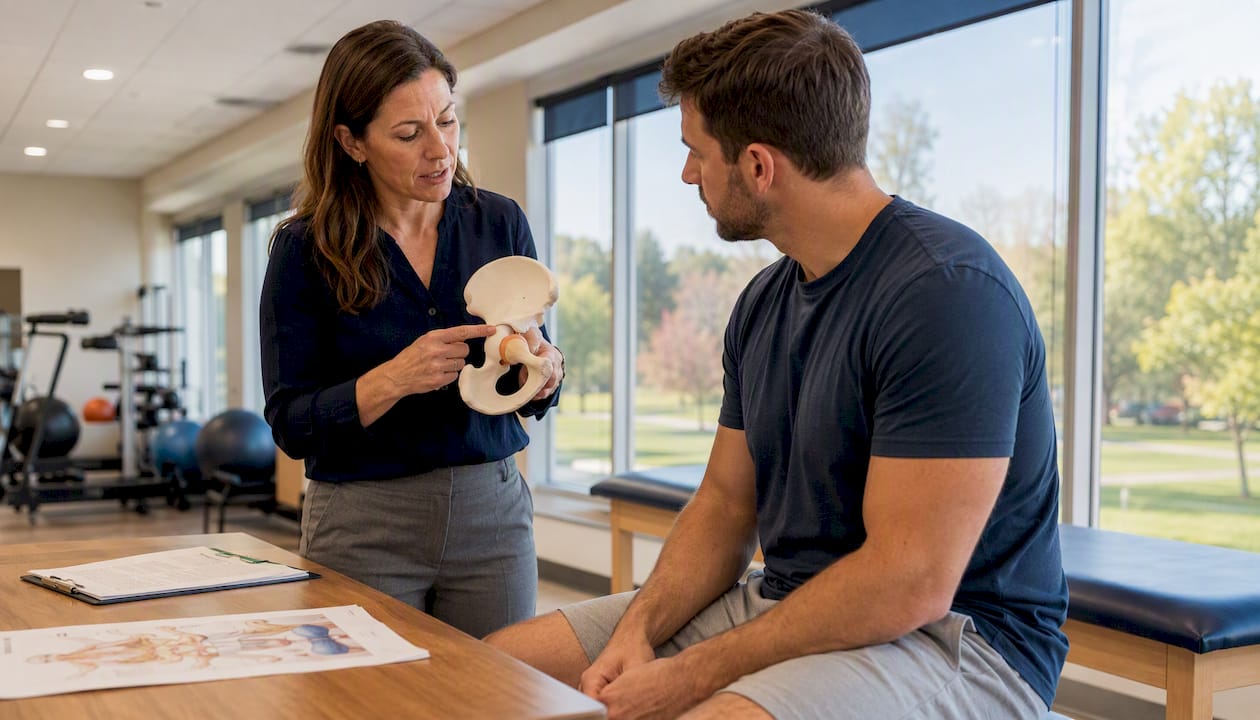
PRP for a hip labral tear is a reasonable conservative option for adults with partial tears, chronic pain lasting three or more months, and a history of failed physical therapy — provided the injection is image guided and paired with a structured rehab plan. It is not a structural repair. What it does is deliver a concentrated dose of your own platelets directly into the joint, where growth factors may reduce inflammation and support tissue health. Before booking anything, three steps matter most:
- Confirm your tear type and severity with an MRI or MR arthrogram. PRP is most appropriate for partial, non-displaced tears. A full-thickness or mechanically locking tear changes the conversation entirely.
- Complete a structured conservative care trial if you have not already. Most clinicians, including the team at Nortextissueregeneration, want to see at least six to eight weeks of targeted physical therapy before considering an injection.
- Ask specifically about image-guided delivery (ultrasound or fluoroscopy) and whether a follow-up rehab plan is included. These two factors separate a well-delivered procedure from a poorly placed one.
Peer-reviewed systematic reviews on PubMed show mixed results, and the evidence is honest about its limits. That context matters when you are deciding whether to try PRP.
Table of Contents
- What does the clinical research actually show?
- Who is a good candidate for PRP, and who is not?
- What does a PRP injection visit look like, and when will you feel better?
- What are the risks and side effects you should know about?
- How much does PRP for the hip cost, and will insurance cover it?
- How do you choose the right clinic and what should you ask?
- Key Takeaways
- What we see in practice at a regenerative clinic
- Nortextissueregeneration’s approach to PRP for hip labral tears
- Useful sources and further reading
- FAQ
What does the clinical research actually show?
The short answer: the evidence is mixed, and the highest-quality studies are sobering. Level I systematic reviews and pooled analyses show no statistically significant differences in pain or function at one to two year follow-up when PRP is used to augment hip arthroscopy for femoroacetabular impingement (FAI) and labral tears compared with controls. PRP applied intraoperatively or within one month post-surgery did not produce additional improvement at minimum two-year follow-up.
A separate systematic review published on ScienceDirect reached a similar conclusion: PRP patients did not differ significantly from controls after surgical management of acetabular labral tears. Bone marrow aspirate concentrate (BMAC) showed limited benefit in a subgroup with moderate cartilage damage, but PRP alone did not.
Smaller pilot studies tell a slightly different story. Some single-center reports show short-term pain and function improvements after intra-articular PRP in selected patients. The problem is heterogeneity: PRP preparations vary widely in platelet concentration, activation method, and leukocyte content, and study protocols differ enough that pooling results is difficult.
| Study / Source | Design | Key Finding | Follow-Up |
|---|---|---|---|
| PMC systematic review (2025) | Level I pooled analysis | No significant improvement vs. controls after hip arthroscopy | Minimum 2 years |
| ScienceDirect systematic review | Systematic review | PRP did not improve patient-reported outcomes vs. controls | Varied |
| PMC systematic review (2020) | Systematic review | Varying results; PRP combined with arthroscopy shows inconsistent benefit | 6–24 months |
| Pilot / single-center studies | Observational | Short-term symptomatic improvement in selected patients | 3–6 months |
The practical takeaway: for standalone intra-articular use in partial labral tears, the evidence is limited but not zero. For surgical augmentation, current data does not support routine use. When we discuss this with patients, we frame PRP as a biologic therapy that may reduce inflammation and support tissue health, not one that mechanically repairs a torn labrum. Setting that expectation up front changes how patients interpret their results.
Who is a good candidate for PRP, and who is not?
Patient selection is where most of the clinical judgment lives. PRP tends to work best in a fairly specific profile, and recognizing when you fall outside that profile saves time, money, and disappointment.
Characteristics that favor PRP:
- Chronic hip pain lasting three or more months
- MRI-confirmed partial, non-displaced labral tear
- Completed a structured physical therapy program without adequate relief
- Active adult motivated to avoid or delay surgery
- No significant cartilage loss or bone-on-bone changes on imaging
Characteristics that argue against PRP:
- Full-thickness or displaced labral tear causing mechanical locking or catching
- Advanced hip osteoarthritis with significant joint space narrowing
- Active infection anywhere in the body, or a known bleeding disorder
- Current use of anticoagulant medications (discuss with your physician before stopping any medication)
- Uncontrolled systemic illness, active cancer, or pregnancy
- Uncontrolled diabetes or active smoking, both of which can impair tissue response
Clinical practice summaries consistently note that severe mechanical symptoms or advanced osteoarthritis favor surgical evaluation rather than injection. If you have a labral tear that causes your hip to lock or give way, that is a conversation for an orthopedic surgeon, not a regenerative medicine clinic. For patients who do not meet PRP criteria, structured physical therapy, corticosteroid injection for short-term relief, or surgical evaluation are the appropriate next steps. You can also read more about when PRP makes sense versus surgery to help frame that decision.
What does a PRP injection visit look like, and when will you feel better?
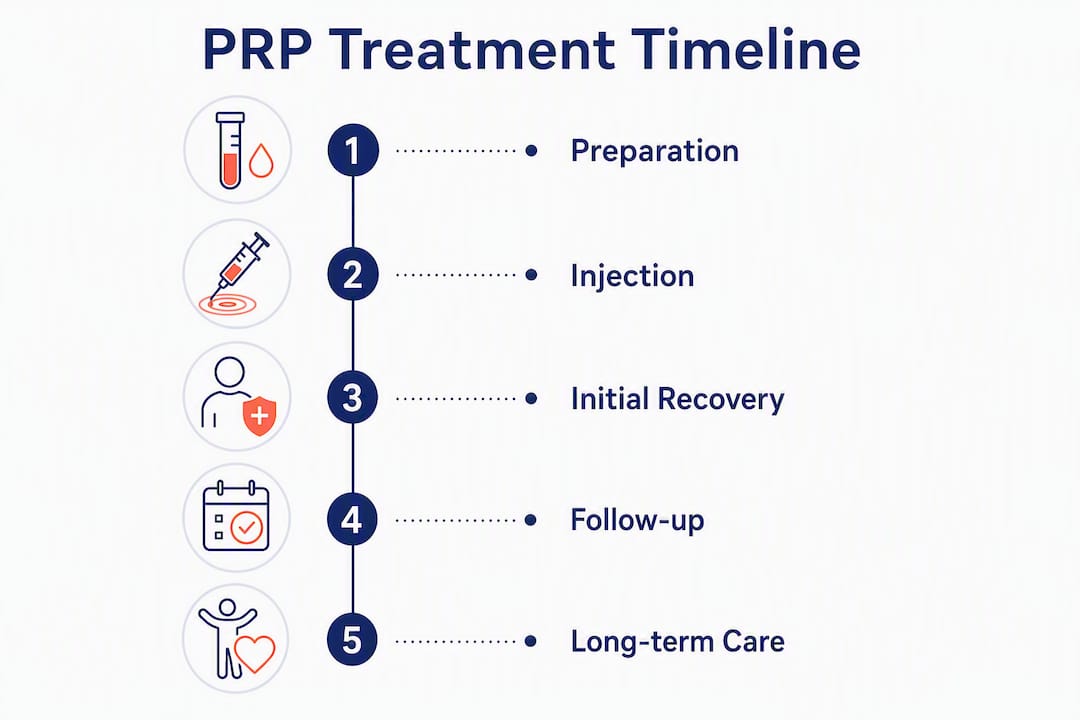
Most patients are surprised by how straightforward the visit is. Here is the typical sequence at a clinic with proper protocols.
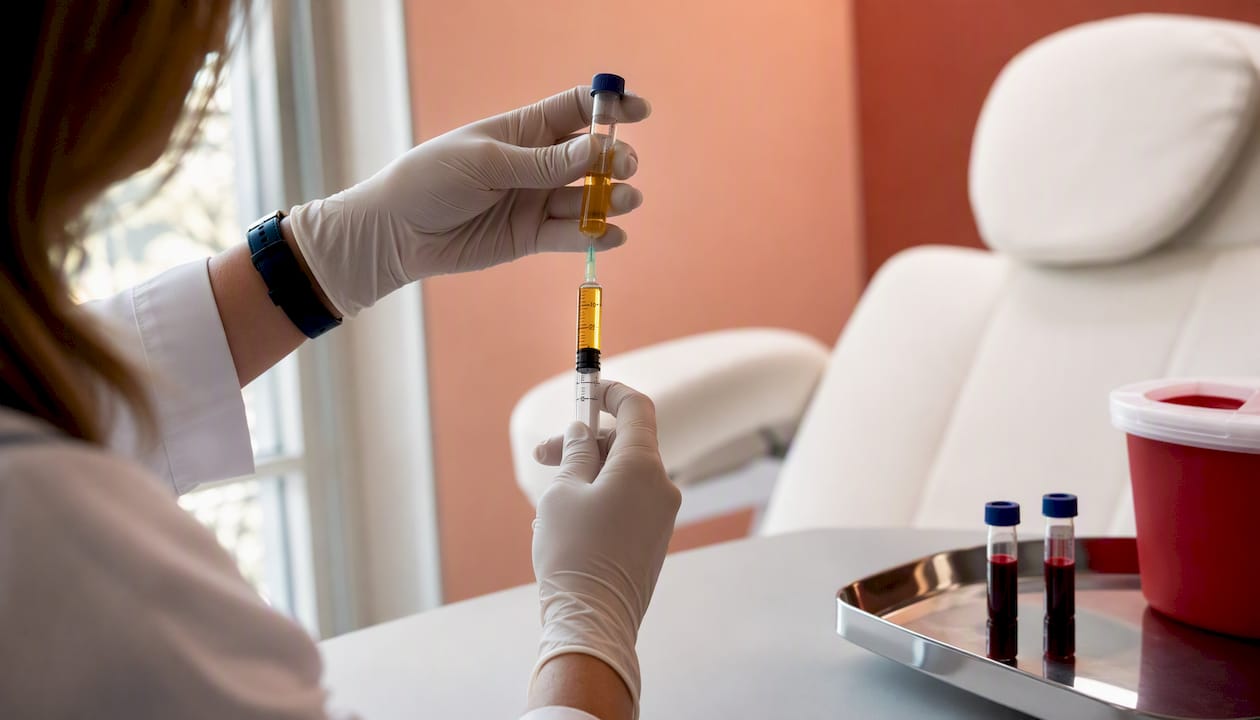
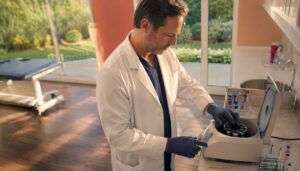
The appointment begins with a brief consult to review your imaging and confirm candidacy. A small blood draw follows, usually 15–60 mL depending on the system used. That blood goes into a centrifuge, which separates the platelet-rich plasma from red blood cells and other components in about 10–15 minutes. The resulting PRP is then loaded into a syringe for injection.
The injection itself is where image guidance becomes non-negotiable. The hip is a deep joint, and blind injection carries a real risk of missing the target entirely. Experienced injectors use ultrasound or fluoroscopy to visualize needle placement in real time. After the injection, you will typically rest for 15–30 minutes before leaving. Most clinics recommend avoiding anti-inflammatory medications for one to two weeks post-injection, since inflammation is part of the healing response PRP is meant to trigger.
| Timeframe | What to Expect |
|---|---|
| Days 1–5 | Increased soreness, swelling, and stiffness at the injection site — this is normal |
| Weeks 1–4 | Gradual reduction in baseline pain; begin or resume gentle physical therapy |
| Weeks 4–12 | Typical peak benefit window; most patients notice meaningful improvement here |
| 3–6 months | Follow-up evaluation; assess function, pain levels, and imaging if warranted |
| 6+ months | Reassess need for additional injection or alternative treatment |
Protocols vary. Some clinics offer a single injection; others recommend a series of two or three spaced four to six weeks apart. The evidence does not clearly favor one approach over the other for labral tears specifically, so the decision usually depends on your response to the first injection and your clinician’s assessment.
Pro Tip: Ask your clinic whether the quoted fee includes image guidance time and who performs and interprets the imaging. A physician performing real-time ultrasound is a different standard than a technician placing a landmark-guided injection.
What are the risks and side effects you should know about?
PRP uses your own blood, which significantly reduces the risk of allergic reaction or rejection. That said, no procedure is without risk, and it is worth knowing what is expected versus what should prompt a call to your provider.
Common, expected reactions (usually resolve within a few days):
- Increased soreness or aching at the injection site
- Localized swelling and warmth
- Brief flare of hip pain in the first 24–72 hours
- Minor bruising at the blood draw site
- Lightheadedness or mild nausea during or after the blood draw
Less common risks:
- Infection at the injection site (rare with proper sterile technique)
- Hematoma or localized bleeding
- Nerve irritation from needle placement
- No meaningful benefit, which is a real possibility given the mixed evidence
Red-flag symptoms that require prompt medical attention:
- Fever above 101°F, chills, or signs of systemic infection
- Progressive weakness, numbness, or tingling in the leg
- Severe pain that worsens significantly beyond the first 72 hours
- Uncontrolled swelling that does not respond to ice and rest
If you are on anticoagulants or have a known bleeding disorder, discuss this with your physician before scheduling. Stopping blood thinners without medical supervision carries its own risks.
How much does PRP for the hip cost, and will insurance cover it?
Most U.S. insurers classify PRP as elective or experimental for labral tears, which means you will almost certainly pay out of pocket. Per-injection costs typically range from $500 to $2,000 in the United States, depending on the clinic, the PRP system used, whether image guidance is included, and geographic location. A short course of multiple injections can therefore represent a considerable total out-of-pocket expense.
HSA and FSA funds are generally accepted at most regenerative medicine clinics, and some offer financing. For a deeper look at coverage realities specific to Texas patients, the Nortextissueregeneration blog covers PRP insurance coverage in Texas in detail.
| Cost Factor | What Drives the Price |
|---|---|
| Image guidance (US/fluoroscopy) | Adds cost but is essential for accuracy; confirm it is included |
| PRP system and preparation | Higher-quality centrifuge systems and leukocyte-poor preparations cost more |
| Number of injections | Single vs. series of 2–3 affects total out-of-pocket significantly |
| Clinic expertise and location | Academic medical centers and specialty clinics typically charge more |
| Bundled PT visits | Some clinics include follow-up rehab; others bill separately |
Questions to ask before you book: Is image guidance included in the quoted fee? Is the price per injection or per visit? Are follow-up physical therapy visits bundled or billed separately? Does the clinic accept HSA/FSA? Can they provide an itemized receipt for potential insurance submission?
How do you choose the right clinic and what should you ask?
Not all PRP injections are equal, and the quality of delivery matters as much as the therapy itself. Here is what to look for and what to ask.
Clinic selection checklist:
- MD or DO oversight with regenerative medicine or orthopedic training
- Explicit image-guidance protocol (ultrasound or fluoroscopy) stated upfront
- Transparent description of PRP preparation method and system used
- Documented follow-up rehab plan, not just an injection and a handshake
- Clear protocol for managing complications
- Willingness to discuss realistic outcomes and limitations honestly
Ten questions to ask during your initial consult:
- What are your credentials, and do you specialize in regenerative or orthopedic medicine?
- Do you use ultrasound or fluoroscopy for hip injections, and is that included in the quoted fee?
- What PRP system do you use, and what is the typical platelet concentration?
- What is the all-in cost, and what does it include?
- What does the follow-up plan look like after the injection?
- What is your protocol if I have a complication or no response?
- Do you accept HSA/FSA, and can you provide an itemized receipt?
- What timeline should I realistically expect for improvement?
- Do you have outcome data or case studies from patients with similar presentations?
- What alternatives would you recommend if PRP is not appropriate for me?
Red-flag answers: vague responses about image guidance, “flat-fee hip shot” language with no mention of real-time imaging, no medical physician on staff, or no structured rehab plan after the injection.
Pro Tip: Insist on image-guided injection. Ask directly: “Is real-time ultrasound or fluoroscopy included in the price, and will a physician be performing and interpreting the imaging?” If the answer is unclear, that is your answer.
Key Takeaways
PRP for a hip labral tear can reduce pain and support tissue health in well-selected patients with partial tears and chronic symptoms, but it does not structurally repair the labrum and current high-quality evidence does not show consistent long-term benefit over controls.
| Point | Details |
|---|---|
| Evidence is mixed | Level I systematic reviews show no significant long-term benefit of PRP vs. controls after hip arthroscopy for labral tears. |
| Candidacy matters | Best candidates have partial tears, chronic symptoms (3+ months), and failed structured PT; full-thickness tears or advanced OA favor surgical evaluation. |
| Image guidance is non-negotiable | Ultrasound or fluoroscopy is required for accurate delivery in the deep hip joint; always confirm it is included in the quoted fee. |
| Expect out-of-pocket costs | Per-injection costs typically range $500–$2,000; most U.S. insurers do not cover PRP for labral tears, but HSA/FSA funds are usually accepted. |
| Nortextissueregeneration | Offers image-guided PRP with MD oversight and individualized rehab plans for patients in North Texas considering non-surgical hip treatment. |
What we see in practice at a regenerative clinic
We often see patients who have already tried six months of physical therapy, one or two corticosteroid injections, and activity modification before they come in asking about PRP. That pattern is actually a reasonable one. Conservative care should come first, and when it has genuinely been exhausted, PRP becomes a more defensible next step.
What success looks like in practice is worth clarifying. We define it as sustained pain relief and a meaningful return to function, not structural healing on MRI. Patients who come in expecting their MRI to show a “healed” labrum after PRP are usually disappointed, even when they feel significantly better. The imaging often does not change much. What changes is how the hip feels and how much it limits daily activity.
We recommend PRP most confidently for patients with partial tears, no significant cartilage loss, and a clear motivation to avoid or delay surgery. When someone presents with mechanical locking, significant bone-on-bone changes, or a full-thickness tear causing instability, we have an honest conversation about surgical evaluation. PRP is not the right tool for every hip, and we would rather say that clearly than proceed with a procedure unlikely to help.
When PRP is appropriate, we pair it with targeted physical therapy, not as an afterthought but as a core part of the plan. The mobility restoration work that follows an injection often determines how much of the biologic response translates into functional improvement. The injection creates a window; rehab is what you do with it.
Nortextissueregeneration’s approach to PRP for hip labral tears
For patients in North Texas who have confirmed a partial labral tear on imaging, completed a conservative care trial, and are ready to explore a non-surgical path, Nortextissueregeneration delivers image-guided PRP therapy with physician oversight and a personalized rehab plan built into the process from the start. Every injection is performed under real-time ultrasound or fluoroscopy. Pricing discussions happen before you commit, and the clinic accepts HSA/FSA. To schedule a consult, bring your most recent MRI or MR arthrogram and any prior treatment notes. The first visit is a clinical conversation, not a sales pitch.
Useful sources and further reading
These primary sources are worth reviewing before your specialist consultation:
- PMC: PRP Augmentation Does Not Improve Outcomes in Hip Arthroscopy (2025) — Level I systematic review; the most current high-quality evidence on PRP and labral tear outcomes.
- PMC: Does PRP Augmentation Following Hip Arthroscopy Improve Outcomes? (2020) — Earlier systematic review with useful context on study heterogeneity.
- ScienceDirect: Systematic Review on BMAC and PRP for Acetabular Labral Tears — Compares PRP and BMAC outcomes; useful for understanding where each orthobiologic fits.
- PMC: Redmond et al. — PRP in FAI and Labral Repair — Randomized trial comparing PRP vs. saline in arthroscopic labral repair; one of the few controlled studies in this space.
- ClinicalTrials.gov: Intra-articular PRP for Acetabular Labral Tears — Active registered trial; useful for patients interested in participating in research.
- PMC: Variability in Patient-Incurred Costs for Regenerative Medicine — National data on out-of-pocket costs for regenerative procedures in the U.S.
- Nortextissueregeneration: PRP Therapy for Hip Pain — Patient-focused overview of PRP for hip conditions and candidacy criteria.
FAQ
Can PRP heal a torn hip labrum?
PRP does not structurally repair a labral tear. It delivers growth factors that may reduce inflammation and support tissue health, but current systematic reviews show no consistent long-term improvement in pain or function compared with controls.
How much do two to three sessions of PRP cost?
Per-injection costs typically range from $500 to $2,000 in the United States, depending on the clinic, PRP system, image guidance inclusion, and location. A short course of multiple injections can represent a considerable out-of-pocket expense. Most U.S. insurers do not cover PRP for labral tears; HSA/FSA funds are generally accepted.
How successful is PRP for hip labral tears?
Results vary. Small pilot studies report short-term pain and function improvements in selected patients, but Level I systematic reviews do not show statistically significant long-term benefit over controls. Success is most realistic in patients with partial tears, chronic symptoms, and no significant cartilage loss.
Who is not a good candidate for PRP?
Patients with full-thickness or displaced labral tears causing mechanical locking, advanced hip osteoarthritis, active infection, bleeding disorders, or uncontrolled systemic illness are generally not good candidates. Those on anticoagulants should discuss medication management with their physician before proceeding.
Recommended
- PRP Therapy for Hip Pain: What Patients Need to Know – Nortex Tissue Regeneration
- Can PRP Therapy Help Shoulder and Rotator Cuff Pain? What Patients Need to Know – Nortex Tissue Regeneration
- PRP for Meniscus Tears: Is Surgery Avoidable? – Nortex Tissue Regeneration
- PRP Therapy for Arthritis: Can It Help You Avoid Joint Surgery? – Nortex Tissue Regeneration