Orthobiologics are biologic substances — derived from blood, bone marrow, fat, or other naturally occurring sources — used to support the body’s own healing of musculoskeletal injuries and degenerative conditions. The AAOS defines them as materials that accelerate orthopedic healing, and the FDA regulates them based on how much they’ve been manipulated from their original state. At Nortextissueregeneration, these treatments form the core of a non-surgical approach to pain relief and tissue repair.
The short version:
- Platelet-rich plasma (PRP): Concentrated from your own blood; used for tendon injuries, early osteoarthritis, and ligament sprains
- Bone marrow aspirate concentrate (BMAC): Drawn from your hip bone; contains progenitor cells and growth factors; used for cartilage repair and bone healing
- Adipose-derived concentrates: Processed from a small fat sample; rich in stromal cells and growth factors
- Prolotherapy: A dextrose-based injection that triggers a localized healing response in loose or painful connective tissue
- Mesenchymal stromal cells (MSCs): A conceptual category of progenitor cells found in bone marrow and fat; most clinical applications use BMAC rather than culture-expanded cell products
These treatments are most commonly sought by active adults, athletes, and patients with early degenerative joint changes who want to avoid surgery or reduce reliance on medications. Results vary. Evidence is promising in some areas and still developing in others. That honest framing matters, and it shapes how we approach every consultation.
Table of Contents
- The main types of orthobiologic treatments and how they differ
- What conditions are orthobiologics used to treat?
- How orthobiologics influence the body’s healing process
- What to expect during and after orthobiologic treatment
- What the clinical research shows and where the evidence stands
- U.S. regulatory landscape, safety, and red flags to watch for
- Costs, insurance coverage, and what to plan for financially
- Who is a good candidate and what might rule someone out
- Questions to ask a provider before you book
- What we see in practice at Nortextissueregeneration
- Key Takeaways
- A candid perspective on when orthobiologics are worth considering
- Nortextissueregeneration offers non-surgical regenerative care in North Texas
- Useful sources
- FAQ
The main types of orthobiologic treatments and how they differ
Orthobiologics span a wide range of biologic materials, but most clinical applications fall into a handful of well-defined categories. Understanding how each is sourced, how invasive the harvest is, and what it’s typically used for helps you have a more informed conversation with your provider.
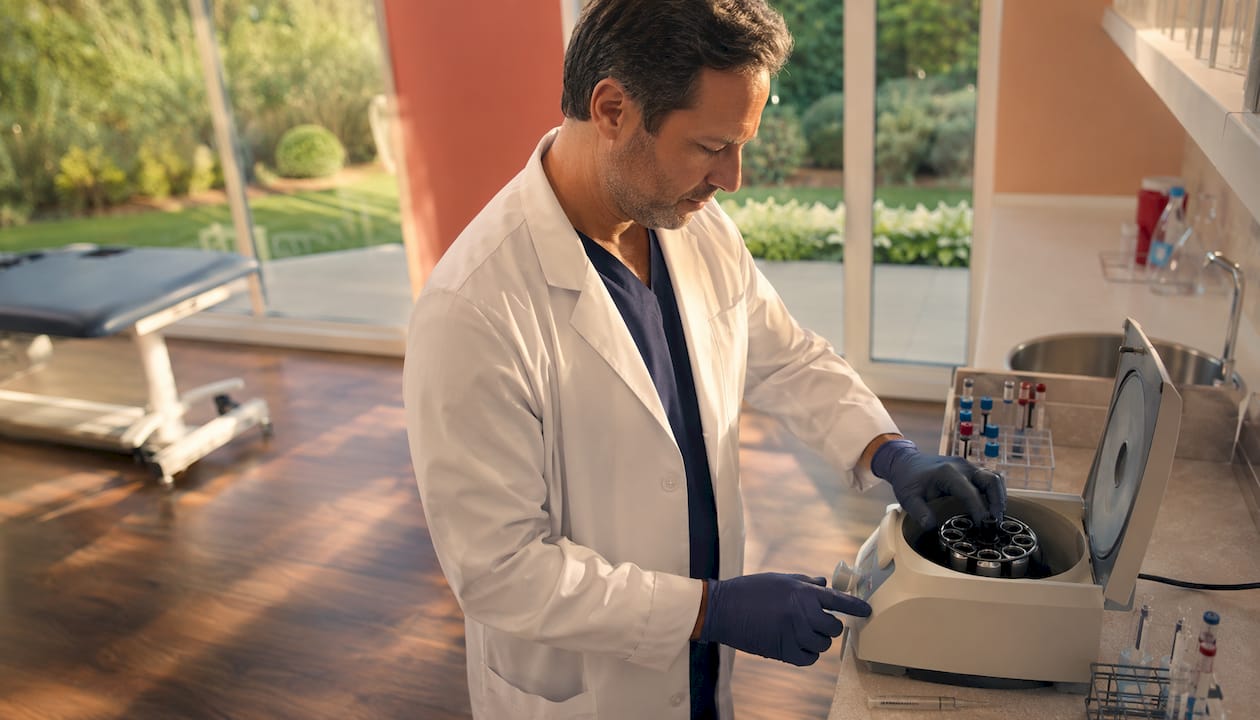
Platelet-rich plasma (PRP) is produced by drawing a small amount of your blood, spinning it in a centrifuge to concentrate the platelets, and injecting the resulting plasma into the target tissue. It releases growth factors including PDGF, TGF-β, VEGF, EGF, bFGF, and IGF-1, which modulate inflammation and signal tissue repair. The procedure is minimally invasive and typically completed in under an hour.
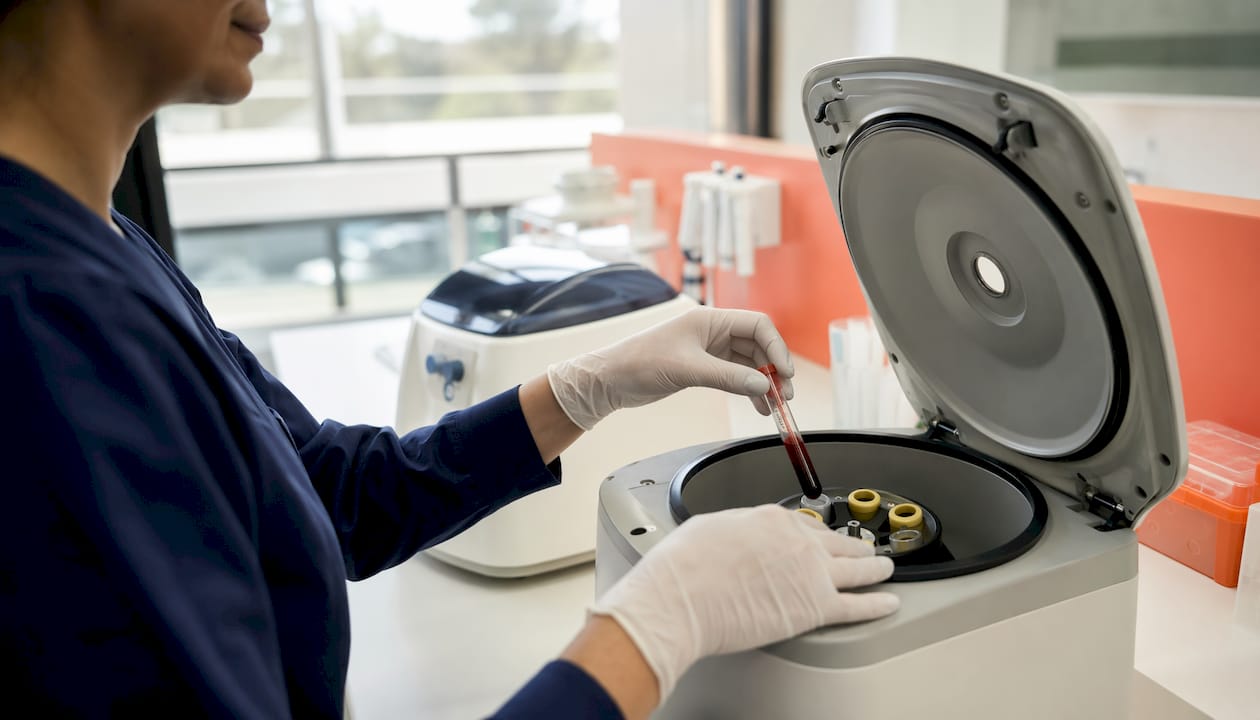
Bone marrow aspirate concentrate (BMAC) requires a bone marrow draw, usually from the posterior iliac crest of the hip under local anesthesia. The aspirate is then concentrated via centrifuge. BMAC contains progenitor cells, platelets, and growth factors, making it a more complex injectate than PRP. It’s used for cartilage repair, bone-healing adjuncts, and certain osteoarthritis applications.
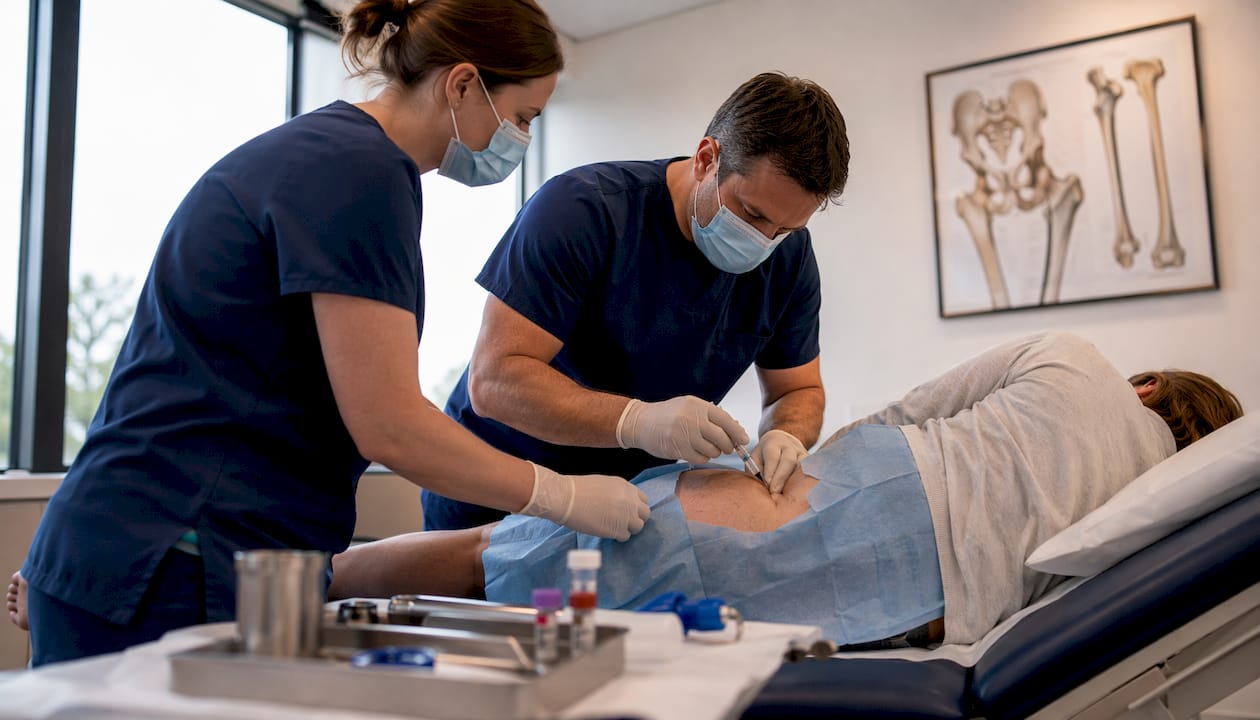
Adipose-derived concentrates are obtained through a small liposuction procedure, typically from the abdomen or flank. The fat is processed to isolate the stromal vascular fraction (SVF), which contains mesenchymal stromal cells and growth factors. This is more invasive than a blood draw but less so than a full surgical procedure.
Mesenchymal stromal cells (MSCs) are progenitor cells found in bone marrow and adipose tissue. In most U.S. clinical settings, MSCs are delivered via BMAC rather than as culture-expanded cell products. Culture-expanded MSC therapies involve more manipulation and face stricter FDA oversight.
Prolotherapy uses a dextrose (sugar water) solution injected into painful or lax ligaments and tendons to provoke a controlled inflammatory response that stimulates connective tissue repair. It’s one of the oldest orthobiologic techniques and is well-suited for ligament laxity and chronic tendon pain.
Exosome and amniotic-derived products are donor-sourced biologics that have attracted interest for their signaling properties. These are allogeneic (not from your own body), more heavily regulated, and carry a different risk profile than autologous options.
| Type | How it’s sourced | Invasiveness | Typical indications | Evidence level | Cost/insurance shape | Regulatory notes |
|---|---|---|---|---|---|---|
| PRP | Autologous blood draw | Low | Tendinopathies, early OA, ligament sprains | Mixed to moderate | Out-of-pocket; often not covered | Minimal manipulation; FDA exempt for autologous use |
| BMAC | Autologous bone marrow aspiration | Moderate | Cartilage repair, bone healing, OA | Mixed; limited RCTs | Out-of-pocket; rarely covered | Autologous; manipulation level matters |
| Adipose-derived | Autologous liposuction | Moderate to high | Soft tissue, OA, cartilage | Limited | Out-of-pocket | SVF processing scrutinized by FDA |
| Prolotherapy | Dextrose injection (no harvest) | Low | Ligament laxity, chronic tendon pain | Mixed | Out-of-pocket; rarely covered | Not a biologic per FDA; low regulatory burden |
| MSC (culture-expanded) | Autologous or allogeneic | Varies | Investigational; cartilage/bone | Limited | Not covered | High manipulation; requires IND in most cases |
| Exosome/amniotic | Allogeneic/donor | Low (injection only) | Investigational | Very limited | Out-of-pocket | Heavily regulated; FDA enforcement active |
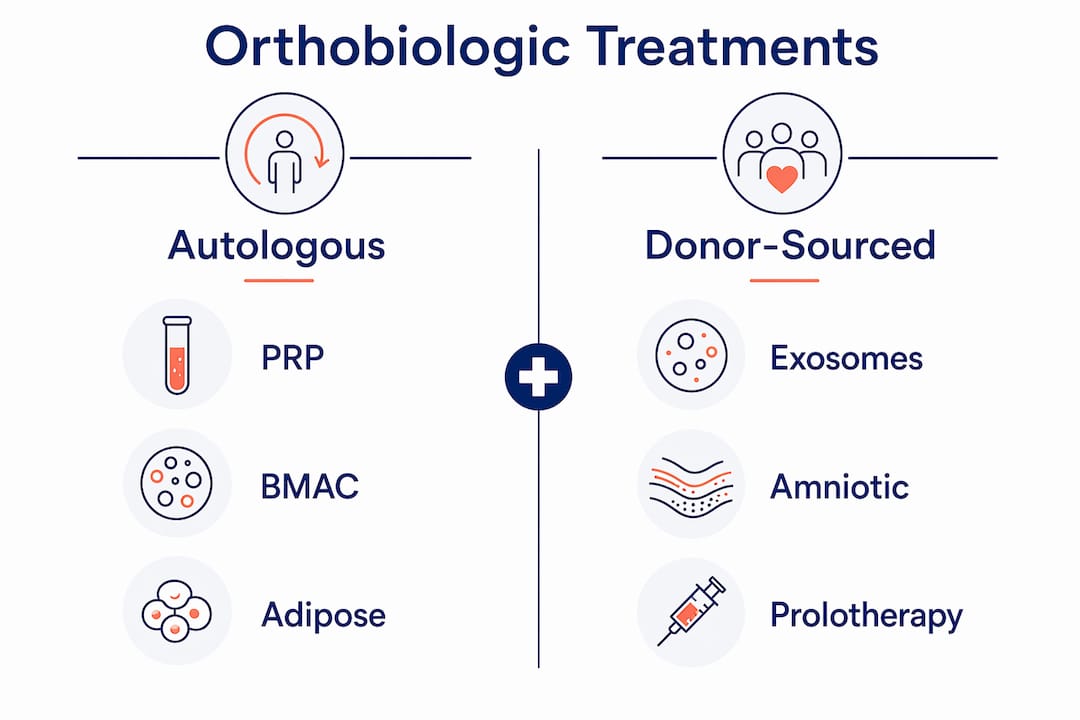
For a deeper look at how these biologic injections compare in practice, including preparation details and what to ask your provider, that resource covers the clinical specifics.
What conditions are orthobiologics used to treat?
Orthobiologics are most commonly applied to tendons, ligaments, cartilage, and bone, where the body’s natural repair capacity is limited by poor blood supply or chronic degeneration. The AAOS lists tendonitis, ligament sprains, early-stage osteoarthritis, and surgical adjuncts among the primary indications.
Common clinical uses include:
- Rotator cuff tendinopathy and partial tears: PRP is frequently used to reduce pain and support tendon healing, often as an adjunct to physical therapy
- Tennis elbow (lateral epicondylitis): One of the better-studied applications for PRP, with several trials showing pain reduction over corticosteroid injections at longer follow-up
- Plantar fasciitis: PRP injections have shown benefit in chronic cases that haven’t responded to conservative care
- Knee osteoarthritis (early to moderate): PRP and BMAC are used to reduce inflammation and slow cartilage breakdown; evidence is more supportive for early-stage disease
- Meniscus tears: Orthobiologics are used as adjuncts to surgery or in select partial tears to support healing
- Ligament sprains (ankle, knee): Prolotherapy and PRP are used for chronic laxity and incomplete healing
- Delayed-healing fractures: BMAC is used as a surgical adjunct to stimulate bone repair in non-unions
- Muscle strains: PRP is sometimes used in high-level athletes for hamstring and quadriceps injuries to support faster return to play
Athletes and active adults seeking quicker return-to-play timelines represent a large portion of patients who pursue these treatments. That said, orthobiologics are not a substitute for surgery in complete tears or advanced joint destruction. The goal is to optimize the healing environment, not replace a structural repair. For athletes specifically, biologic recovery approaches are increasingly integrated with targeted rehabilitation protocols.
Evidence is stronger for some indications (tennis elbow, knee OA with PRP) than others (muscle tears, meniscus healing). Where evidence is still developing, we’re transparent about that with patients before any treatment decision is made.
How orthobiologics influence the body’s healing process
The core mechanism is straightforward: orthobiologics optimize the local biological environment for repair rather than directly replacing damaged tissue. Think of it less as a patch and more as preparing the ground so the body’s own repair systems can do their job more effectively.
Three main pathways drive this:
- Growth factor release: PRP and BMAC release concentrated growth factors that signal cells to proliferate, migrate to the injury site, and begin producing new extracellular matrix. PDGF and TGF-β are particularly important for tendon and cartilage repair.
- Paracrine signaling: MSCs and stromal cells communicate with surrounding tissue through chemical signals, modulating the immune response and reducing chronic inflammation without directly differentiating into new tissue in most cases.
- Scaffold and structural support: Some orthobiologics, including certain BMAC preparations and amniotic products, provide a physical scaffold that supports cell attachment and tissue remodeling.
A simplified picture of the process: blood or tissue is harvested, concentrated or processed, then injected under imaging guidance into the target area. The biological response unfolds over days to weeks as growth factors are released and cellular signaling begins.
Pro Tip: PRP is not a stem-cell therapy. It contains no progenitor cells. BMAC does contain progenitor cells, but these are not the same as culture-expanded stem-cell products. Conflating these categories leads to unrealistic expectations.
One important clarification: orthobiologics act primarily through paracrine and modulatory effects. They rarely “become” new tissue themselves. Understanding this distinction, as noted in musculoskeletal regeneration research, helps set realistic expectations for what treatment can and cannot achieve.
What to expect during and after orthobiologic treatment
The patient pathway varies depending on which treatment you’re receiving, but most follow a similar sequence.
- Initial consultation: A clinician reviews your history, symptoms, and any existing imaging (MRI, X-ray). If imaging isn’t available, it’s often ordered before proceeding. This step determines candidacy and which injectate is appropriate.
- Pre-procedure preparation: For PRP, no special prep is usually needed beyond stopping certain anti-inflammatory medications. For BMAC, you’ll receive instructions about the bone marrow aspiration site and anesthesia.
- Harvest (if applicable): PRP requires a standard blood draw. BMAC requires a bone marrow aspiration under local anesthesia, typically a brief period. Adipose-derived procedures involve a small liposuction under local anesthesia.
- Processing: Blood or tissue is centrifuged or processed on-site. This takes 15–45 minutes depending on the system used.
- Injection: The concentrated material is injected into the target tissue, almost always under ultrasound or fluoroscopic guidance to confirm accurate placement.
- Immediate aftercare: Expect localized soreness and possible swelling for 3–7 days. This is a normal inflammatory response. Avoid NSAIDs during this window, as they can blunt the intended biologic effect.
- Rehabilitation: Physical therapy and targeted rehab are critical to directing the biologic response toward functional recovery. Protocols usually start light activity early and progress gradually over several weeks.
- Follow-up and reassessment: A follow-up visit at 6–8 weeks assesses response. Some patients notice meaningful improvement by weeks 4–6; others take 10–12 weeks.
Realistic expectations to keep in mind:
- Most patients don’t feel immediate relief. The response builds gradually.
- A single treatment is sometimes sufficient; others benefit from a series of 2–3 injections spaced weeks apart.
- Outcomes are closely tied to rehab compliance and overall health. Smoking, uncontrolled diabetes, and poor tissue quality all reduce response.
- Orthobiologics work best when the underlying pathology is still in a reparable state. Advanced joint destruction is less likely to respond.
For a detailed look at how rehab integrates with regenerative procedures, that guide covers the stepwise workflow from injection to return to activity.
What the clinical research shows and where the evidence stands
The honest summary: orthobiologics show real promise, but the evidence base is uneven. Safety data is generally reassuring. Efficacy data is more variable, and that variability is largely a product of inconsistent study protocols.
The 2020 NBA Orthobiologics Consensus Statement found orthobiologics to be generally safe and noted potential for reduced pain and earlier return to play in some cases, while explicitly stating that evidence remains limited and heterogeneous. That’s a fair characterization of where the field stands.
| Indication | Evidence level | Supporting literature type |
|---|---|---|
| Knee osteoarthritis (PRP) | Moderate | Multiple RCTs, systematic reviews |
| Tennis elbow (PRP) | Moderate | RCTs with active comparators |
| Plantar fasciitis (PRP) | Mixed | Small RCTs, case series |
| Rotator cuff (PRP adjunct to surgery) | Mixed | RCTs with inconsistent results |
| Bone non-unions (BMAC adjunct) | Limited to moderate | Case series, small trials |
| Muscle strains (PRP) | Limited | Mostly observational |
| Meniscus healing (BMAC/PRP) | Limited | Small trials, case series |
A major reason for mixed results across studies is preparation protocol variability. How a provider processes PRP or bone marrow concentrate can significantly change the final injectate’s platelet count, leukocyte content, and growth factor concentration. Two studies using “PRP” may be studying very different products.
Key evidence limitations to understand:
- Most trials have small sample sizes and short follow-up periods
- Placebo effects are difficult to control for in injection studies
- Patient selection criteria vary widely across studies
- Lack of standardized preparation protocols makes cross-study comparison unreliable
For a broader view of how orthopedic regenerative treatments are being evaluated in clinical practice, that resource covers current expert opinion and evidence standards.
U.S. regulatory landscape, safety, and red flags to watch for
The FDA regulates orthobiologics based on how much the material has been manipulated from its original state and whether it’s used in the same person it came from.
Autologous products like PRP and BMAC, when minimally manipulated and used for their homologous function, generally fall under an exemption from full biologics licensing. The AAOS emphasizes a clear safety distinction between these autologous options and donor-derived or heavily manipulated products, which carry higher risk and face stricter oversight. The FDA has issued specific warnings about certain stem-cell clinics marketing unapproved, heavily manipulated products.
Common safety considerations:
- Infection risk at the injection site (low with proper sterile technique)
- Local inflammatory flare in the first few days post-injection (expected and generally self-limiting)
- Rare adverse events including calcification or worsening pain (more common with imprecise technique or inappropriate patient selection)
- Higher risk with allogeneic or heavily processed products, including immune reactions and disease transmission concerns
Red flags when evaluating a clinic:
- Vague or unavailable protocol descriptions (“we use the best PRP system” without specifics)
- Claims that one treatment cures all conditions
- No imaging guidance for injections
- No outcome tracking or follow-up plan
- Pressure to commit to multiple treatments before seeing initial results
- Donor-derived or “exosome” products marketed without clear FDA status disclosure
Pro Tip: Before booking, ask the clinic for their written protocol: centrifuge system used, platelet concentration targets, leukocyte-rich vs. leukocyte-poor PRP rationale, and how they track outcomes. A clinic that can’t answer these questions clearly is one to approach with caution.
Understanding autologous therapy versus donor-sourced options is one of the most practically useful distinctions a patient can make before choosing a provider.
Costs, insurance coverage, and what to plan for financially
Most orthobiologic procedures in the U.S. are paid out of pocket. Major payers including Blue Cross classify PRP for orthopedic applications as investigational, which means they typically do not cover it. MSC therapies face similar exclusions, with many Medicare Advantage and commercial plans explicitly declining coverage for orthopedic regenerative applications.
What affects cost:
- Procedure type: A PRP injection is generally less expensive than BMAC, which requires a bone marrow aspiration and more complex processing
- Number of injections: A single injection costs less than a series; some protocols call for 2–3 treatments
- Imaging guidance: Ultrasound or fluoroscopic guidance adds cost but is a quality marker worth the investment
- Clinic setting: Academic medical centers, hospital-based clinics, and private regenerative medicine practices each have different fee structures
Practical steps before committing:
- Request an itemized cost estimate in writing before your procedure
- Ask whether the clinic charges separately for the consult, harvest, processing, and injection
- Check with your insurer whether any component (the consult, imaging, or facility fee) might be partially covered under your plan
- Ask about payment plans or medical financing options if the full cost is a barrier
- Understand the clinic’s policy on repeat treatments and whether a second injection is included in the initial fee
The fee-for-service model is the norm in this field. Going in with clear cost expectations avoids surprises and helps you evaluate whether the investment makes sense for your specific situation.
Who is a good candidate and what might rule someone out
The typical candidate is an active adult or athlete with a focal musculoskeletal problem, early to moderate degenerative changes, and a genuine interest in non-surgical options. Patients who have already tried physical therapy, activity modification, and anti-inflammatory treatments without adequate relief are often the most appropriate referrals.
Common contraindications and cautionary factors:
- Active infection at or near the injection site
- Blood disorders affecting platelet function or clotting (e.g., thrombocytopenia, hemophilia)
- Active cancer or recent cancer history (progenitor cell stimulation is a concern)
- Uncontrolled diabetes, which impairs healing response and increases infection risk
- Ongoing anticoagulation therapy without medical clearance from the prescribing physician
- Unrealistic expectations about outcomes or timeline
- Advanced joint destruction where structural repair is needed (total joint replacement is the more appropriate path)
Patient factors that influence outcomes:
- Age and baseline tissue quality affect how well the body responds to biologic signals
- Smoking significantly impairs tissue healing and reduces treatment response
- BMI and metabolic health affect both procedural safety and biologic efficacy
- Prior surgeries at the target site may alter tissue architecture and limit response
Shared decision-making is central to appropriate candidacy. A clinician should review your diagnostic imaging, prior treatment history, and rehab readiness before recommending any orthobiologic procedure. If conservative care hasn’t been tried, that’s usually the right first step.
Questions to ask a provider before you book
Choosing a provider for orthobiologic treatment is not just about finding someone who offers the procedure. It’s about finding someone who can explain exactly what they’re doing and why.
- What credentials and training does the injecting clinician have? Look for board-certified orthopedic surgeons, sports medicine physicians, or physiatrists with specific training in regenerative medicine.
- What is in the injectate, and how is it prepared? Ask for the centrifuge system, platelet concentration targets, and whether the preparation is leukocyte-rich or leukocyte-poor.
- Is the product autologous or donor-derived? Autologous products carry a different risk and regulatory profile than allogeneic ones.
- Do you use imaging guidance for injections? Ultrasound or fluoroscopic guidance is a basic quality standard for most musculoskeletal injections.
- What outcomes do you track, and can I see your data? A clinic that tracks outcomes systematically is one that takes quality seriously.
- What is the full cost, and what does it include? Get this in writing before you commit.
Trust signals worth requesting:
- Written treatment protocols available for review
- Published case series or outcomes registry data
- Device or manufacturer disclosures if a commercial PRP system is used
- Clear documentation of follow-up plans and criteria for repeat treatment
When to get a second opinion:
- If a clinic recommends immediate multiple injections without a diagnostic workup
- If you haven’t tried conservative care (physical therapy, activity modification, bracing) and the provider doesn’t mention it
- If the proposed treatment involves allogeneic or heavily manipulated products marketed with broad efficacy claims
Comparing regenerative medicine options across providers is a reasonable step before committing to any single clinic or protocol.
What we see in practice at Nortextissueregeneration
Nortextissueregeneration offers PRP, BMAC, prolotherapy, and adjunctive regenerative therapies as part of a non-surgical treatment model for musculoskeletal pain and injury. In practice, the patients who tend to do best are those who come in with a clear diagnosis, realistic expectations, and a willingness to engage with rehabilitation alongside their biologic treatment.
Many patients arrive after months of trying physical therapy, corticosteroid injections, or anti-inflammatory medications without lasting relief. Others are athletes who want to return to sport faster than surgery would allow. Both are reasonable motivations, and both require honest conversations about what orthobiologics can realistically offer.
What we look for when evaluating candidacy:
- Recent imaging (MRI or diagnostic ultrasound) to confirm the diagnosis and assess tissue quality
- Prior treatment history and response to conservative care
- Systemic health factors that affect healing (metabolic health, medications, smoking status)
- Rehab readiness and access to physical therapy post-procedure
Outcomes vary. Some patients notice meaningful pain reduction and improved function within a few weeks; others take longer, and a small number don’t respond as hoped. We track outcomes at follow-up visits and adjust protocols accordingly. Repeat treatments are considered on a case-by-case basis, not as a default.
Tissue repair and healing is a process that unfolds over weeks to months. The biologic treatment initiates and supports that process. What the patient does in the weeks following the injection shapes the final result as much as the injection itself.
Key Takeaways
Orthobiologics are biologic substances derived from the patient’s own blood, bone marrow, or fat that support musculoskeletal healing through growth factor release, paracrine signaling, and inflammation modulation.
| Point | Details |
|---|---|
| Definition and scope | Orthobiologics include PRP, BMAC, adipose-derived concentrates, prolotherapy, and MSC-based therapies used for musculoskeletal repair. |
| Evidence is uneven | Evidence is strongest for PRP in knee osteoarthritis and tennis elbow; limited for muscle tears and meniscus healing. |
| Autologous vs. allogeneic | Autologous products (PRP, BMAC) carry lower risk and less regulatory burden than donor-derived or heavily manipulated biologics. |
| Cost and coverage | Most orthobiologic procedures are out-of-pocket; major payers classify PRP and stem-cell therapies as investigational. |
| Nortextissueregeneration | Nortextissueregeneration offers PRP, BMAC, and prolotherapy with personalized protocols, imaging guidance, and outcome tracking in North Texas. |
A candid perspective on when orthobiologics are worth considering
We approach orthobiologics with measured optimism. The science is real, the safety profile for autologous treatments is generally favorable, and we’ve seen patients recover function they thought was gone. But we’re also careful not to oversell what these treatments can do.
Our recommendation: get a proper diagnosis and imaging before any injection. Ask your provider about protocol transparency. Expect to combine treatment with rehabilitation. And if conservative care hasn’t been tried, start there first. Orthobiologics are most valuable when they’re part of a thoughtful, individualized plan, not a shortcut around the work of recovery.
Nortextissueregeneration offers non-surgical regenerative care in North Texas
For patients in the Dallas-Fort Worth area who are ready to explore orthobiologic treatment, Nortextissueregeneration provides PRP therapy, BMAC, prolotherapy, and adjunctive regenerative therapies under one roof. Every treatment plan starts with a thorough diagnostic evaluation, including imaging review, before any procedure is recommended.
The clinic operates on a fee-for-service model, which means no insurance gatekeeping and no pressure to commit to a package before understanding your options. Bring your most recent imaging and a summary of prior treatments to your first visit. To schedule a consultation or learn more about available services, visit Nortextissueregeneration.
Useful sources
- AAOS OrthoInfo: Orthobiologics FAQ — The American Academy of Orthopaedic Surgeons’ patient-facing overview of orthobiologic types, safety distinctions, and clinical uses
- PMC: Orthobiologics Revisited — Regenerative Orthopedics — Peer-reviewed overview of orthobiologic mechanisms, clinical applications, and tissue repair science
- PMC: Past, Current and Future Interventional Orthobiologics Techniques — Covers PRP growth factor composition, regenerative rehabilitation, and protocol considerations
- The 2020 NBA Orthobiologics Consensus Statement — Consensus-level safety and efficacy summary with emphasis on evidence heterogeneity and athlete applications
- FDA: Warnings About Stem Cell Therapies — FDA consumer guidance on unapproved stem-cell products and what patients should know
- BCBSRI: Orthopedic Applications of Platelet Rich Plasma (2026 policy) — Payer policy document illustrating typical commercial insurer coverage exclusions for PRP
- BCBSRI: Orthopedic Applications of Stem Cell Therapy (effective 2026) — Payer policy on MSC therapy coverage limitations for orthopedic applications
- Wikipedia: Orthobiologics — Accessible overview of the field’s definition, categories, and biological rationale
FAQ
What are orthobiologics used for?
Orthobiologics are used to treat tendon injuries, ligament sprains, early osteoarthritis, and delayed-healing fractures, and as adjuncts to orthopedic surgery. Common applications include rotator cuff tendinopathy, tennis elbow, plantar fasciitis, knee osteoarthritis, and meniscus tears.
Is orthobiologics treatment covered by insurance?
Most orthobiologic procedures are not covered by insurance. Major commercial payers and many Medicare Advantage plans classify PRP and stem-cell therapies for orthopedic applications as investigational, making out-of-pocket payment the standard model.
What is the difference between PRP and stem-cell therapy?
PRP is concentrated from your own blood and contains growth factors but no progenitor cells. Stem-cell therapies, in the orthopedic context, typically refer to BMAC, which contains progenitor cells drawn from bone marrow. They are distinct products with different preparation methods, invasiveness levels, and regulatory considerations.
How long does it take to see results from orthobiologic treatment?
Most patients begin noticing improvement within a few weeks to a few months after treatment, depending on the condition, the injectate used, and how consistently they follow their rehabilitation plan. Some indications take longer, and a single treatment is not always sufficient.
How do I know if a clinic is reputable for orthobiologic treatments?
Ask for written protocols, imaging-guided injection capability, and documented outcome tracking. A reputable clinic will clearly explain what’s in the injectate, whether it’s autologous or donor-derived, and what follow-up looks like. Vague answers or pressure to commit to multiple treatments upfront are warning signs.