Platelet-rich plasma (PRP) therapy is defined as a regenerative treatment that concentrates your own blood’s growth factors and injects them directly into damaged tissue to accelerate healing and reduce pain. The benefits of PRP injections extend across joint pain, tendon injuries, and hair loss, making it one of the most versatile non-surgical options in regenerative medicine today. Clinical evidence shows PRP outperforms corticosteroids and hyaluronic acid for knee osteoarthritis, with pain relief lasting up to 12 months. At Nortextissueregeneration, we see patients regularly who have tried other treatments without lasting results and are looking for something that works with their body rather than masking symptoms.
1. What are the scientifically supported benefits of PRP injections for joint pain?
PRP injections deliver measurable pain relief and functional improvement for patients with knee osteoarthritis, tendon injuries, and other musculoskeletal conditions. The therapy works by concentrating platelets from your own blood and reintroducing them at the site of injury, where they release growth factors that trigger tissue repair and calm inflammation.
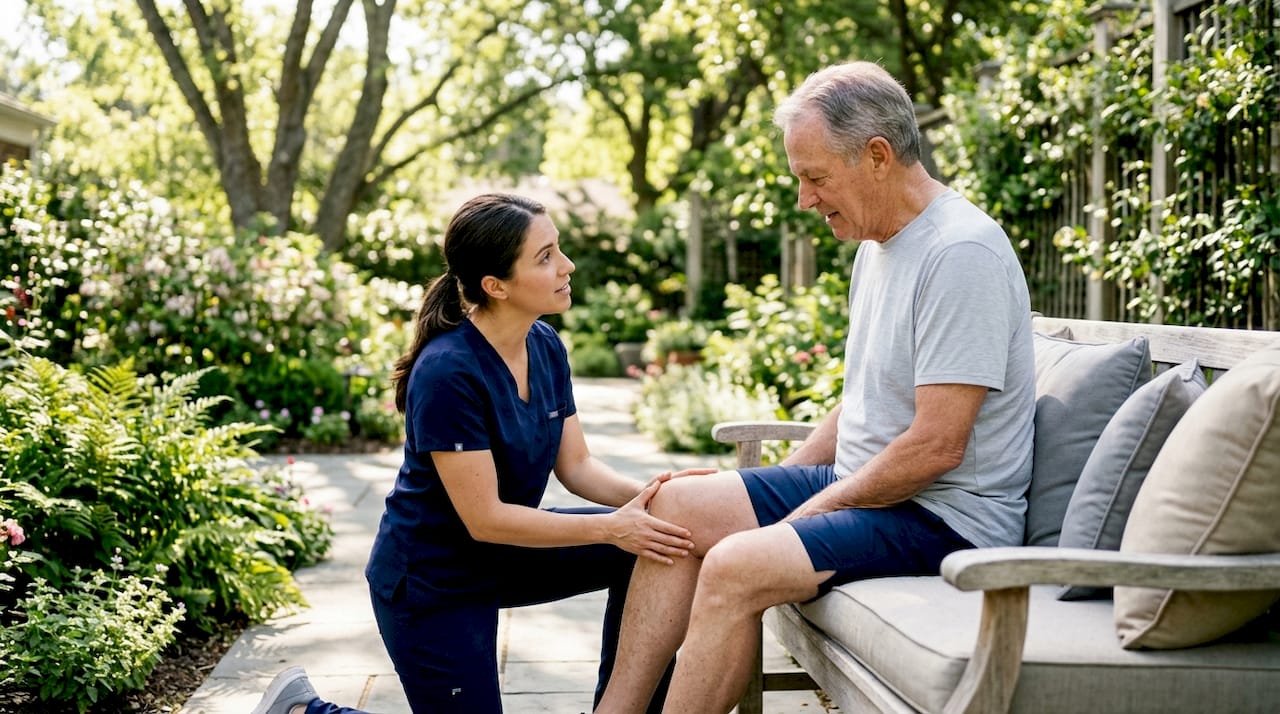
Research consistently shows PRP outperforms hyaluronic acid and corticosteroids for knee osteoarthritis pain and function. That matters because corticosteroids, while fast-acting, carry well-documented risks of tissue breakdown with repeated use. PRP, by contrast, supports the tissue rather than suppressing it.
Key clinical benefits include:
- Reduced pain and improved joint function lasting 6–12 months in patients with mild to moderate osteoarthritis
- Lower inflammation at the injection site through targeted growth factor activity
- Potential cartilage support, with early evidence suggesting PRP may slow cartilage degradation
- Tendon repair, particularly for conditions like patellar tendinopathy and lateral epicondylitis
- No systemic side effects, since the treatment uses your own blood
PRP is most effective for early to intermediate stages of joint degeneration. Patients with severe, bone-on-bone arthritis typically see limited benefit and may need to discuss other options.
2. How PRP therapy advantages compare to traditional injections
PRP is an anabolic treatment, meaning it builds and repairs tissue. Corticosteroids are catabolic, meaning they reduce inflammation quickly but may damage tissue over time with repeated injections. This distinction matters when you are weighing long-term joint health against short-term symptom control.
Many patients come in after years of cortisone shots that stopped working. What we often see is that the relief gets shorter with each injection, and some patients notice their joint feels worse between treatments. PRP does not follow that pattern. It takes longer to work, but the mechanism is fundamentally different. You can read more about this distinction in our PRP vs. cortisone comparison.
The tradeoff is patience. PRP does not provide the same rapid relief as a steroid shot. Most patients notice meaningful improvement between 6 and 12 weeks after treatment.
3. PRP for hair restoration: what benefits can patients expect?
PRP for hair restoration works by delivering concentrated growth factors directly to the scalp, stimulating dormant hair follicles and improving blood supply to the follicle base. The result is increased hair density and thicker individual strands over several months of treatment.
Meta-analyses show PRP increases hair density by about 16.4 hairs per cm² at six months for androgenetic alopecia, with response rates between 70% and 86.7%. Those numbers are meaningful for patients who have watched their hair thin gradually and felt limited by existing options.
PRP for hair loss works best when:
- Hair loss is in its early to intermediate stages, where follicle viability remains
- It is used alongside FDA-approved treatments like minoxidil, which enhances overall results
- Patients commit to a multi-session protocol, typically monthly injections over three to six months
- Maintenance sessions are scheduled every six to twelve months after the initial series
PRP is not a cure for hair loss. It does not reverse advanced follicle death. Patients who start treatment earlier tend to see better and more lasting results.
4. What the PRP treatment process looks like
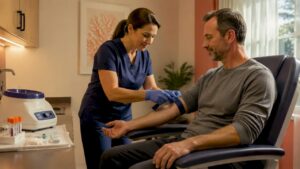
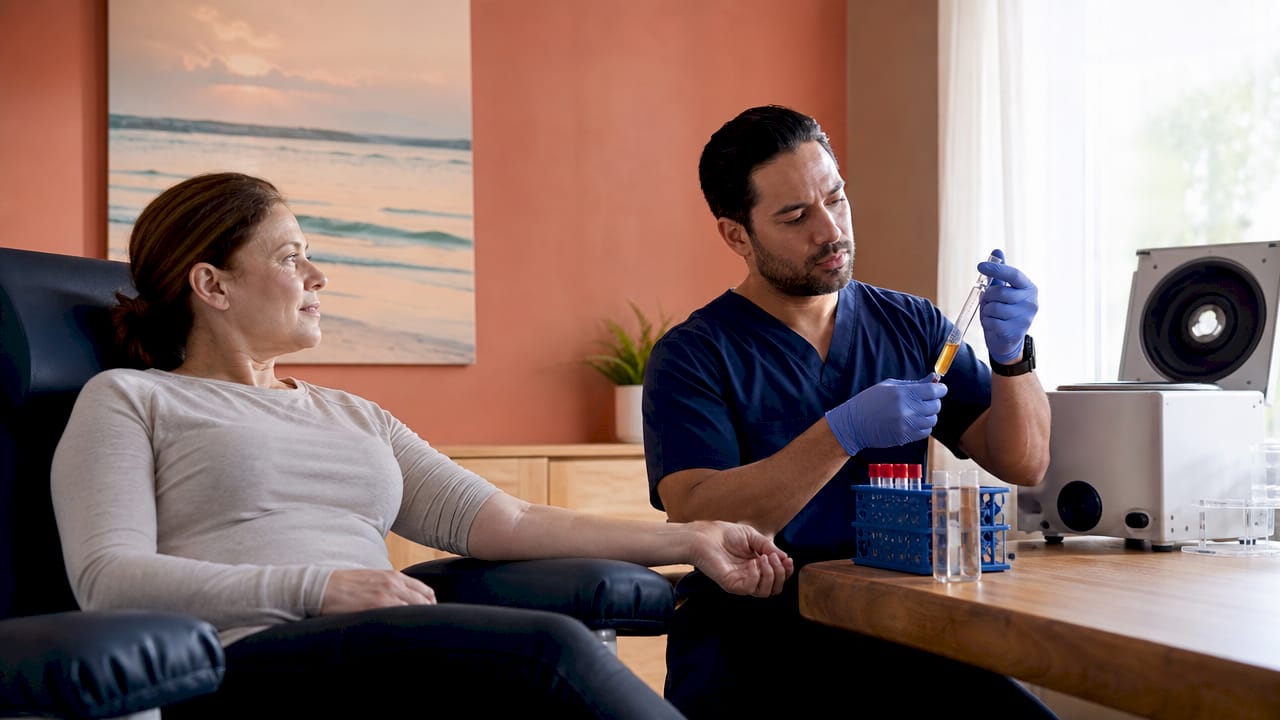
The procedure begins with a standard blood draw, typically 15–60 milliliters depending on the target area and desired platelet dose. That blood is placed in a centrifuge, which spins it at high speed to separate platelets from red blood cells and plasma. The concentrated platelet layer is then drawn into a syringe and injected into the treatment site.
For joint injections, ultrasound guidance is often used to confirm accurate needle placement. This is especially important for smaller joints or deeper structures like the hip. For scalp treatments, a series of small injections are distributed across thinning areas.
Here is what to expect after the procedure:
- Hours 0–48: Soreness and mild swelling at the injection site are normal. This is your body responding to the treatment.
- Weeks 1–3: The area may feel similar to before treatment. Growth factor activity is happening at the cellular level, not yet visible.
- Weeks 4–6: Many patients begin noticing reduced stiffness and improved mobility in joint cases.
- Weeks 6–12: Meaningful improvement typically becomes noticeable. Pain scores drop and function improves.
- Months 3–6: Full benefit is usually realized. Hair patients begin seeing density changes in this window.
Pro Tip: Avoid anti-inflammatory medications like ibuprofen for at least one week before and after your injection. These drugs blunt the inflammatory response that PRP relies on to trigger healing.
Combining PRP with physical therapy significantly improves outcomes. Active rehabilitation helps the repaired tissue adapt to load and function properly. PRP is not a passive treatment. Your participation in recovery directly affects your results.
5. What factors influence the effectiveness of PRP injections?
Not all PRP is the same. The concentration of platelets, the volume of blood drawn, and the formulation method all affect how well the treatment works. Higher total platelet doses, particularly over 10 billion platelets, correlate with better clinical outcomes. That means the quality of the preparation process matters as much as the injection itself.
Two main formulation types exist. Leukocyte-poor PRP removes most white blood cells and is generally preferred for joint conditions, where excess inflammation can worsen symptoms. Leukocyte-rich PRP retains white blood cells and may be more effective for certain tendon injuries. Matching the formulation to the condition is a clinical decision, not a one-size-fits-all choice.
Pro Tip: Ask your provider specifically about platelet concentration and blood draw volume before your treatment. These details directly affect your outcome and are worth discussing openly.
Other factors that shape results include:
- Patient biology: Platelet quality varies between individuals. Age, medications, and overall health all play a role.
- Number of sessions: Most protocols involve two to three injections spaced weeks apart. Single injections often produce weaker results.
- Rehabilitation adherence: Patients who follow through with physical therapy consistently outperform those who do not.
- Condition severity: Mild to moderate cases respond better than advanced degeneration.
PRP injection uses in joints and tendons are currently off-label under FDA guidelines, since FDA clearance covers PRP devices only for bone graft handling. That does not mean the treatment is unsafe. It means the evidence base is still growing and individualized clinical judgment remains central to good outcomes.
6. PRP therapy side effects and safety profile
PRP injections carry a low risk of serious adverse effects. Because the treatment uses your own blood, the risk of allergic reaction or rejection is minimal. Adverse effects are generally mild and transient, limited to localized soreness, swelling, or bruising at the injection site.
Systemic reactions are rare. Infection is possible, as with any injection, but the risk is low when performed under sterile conditions by a trained provider. Patients on blood thinners or with certain platelet disorders may not be good candidates and should discuss their full medical history before proceeding.
The safety profile makes PRP a reasonable option for patients who want to avoid surgery or reduce reliance on long-term pain medications. It is not risk-free, but the risk profile is well within the range of standard outpatient procedures.
7. Realistic timelines for noticing PRP injection benefits
Setting accurate expectations is one of the most important parts of PRP care. Patients who expect immediate relief often feel discouraged in the first few weeks, when the treatment is still working at the cellular level. Understanding the recovery timeline helps you stay the course.
For joint pain, most patients notice a meaningful shift between weeks 6 and 12. Hair restoration patients typically see visible density changes between months three and six. Full benefit for both applications is usually assessed at the six-month mark.
Maintenance matters. Joint benefits can last up to 12 months, after which a repeat injection may be appropriate depending on your response. Hair restoration requires ongoing maintenance sessions, typically every six to twelve months, to sustain gains. PRP is not a one-time procedure for most patients. It is part of a longer-term approach to managing a chronic condition or progressive hair loss.
Key takeaways
PRP injections promote natural tissue repair using your own blood’s growth factors, making them a credible non-surgical option for joint pain, tendon injuries, and hair loss when matched to the right patient and condition.
| Point | Details |
|---|---|
| Joint pain relief | PRP outperforms corticosteroids and hyaluronic acid for knee osteoarthritis, with benefits lasting up to 12 months. |
| Hair restoration results | PRP increases hair density by about 16.4 hairs per cm² at six months, with response rates of 70%–86.7% for androgenetic alopecia. |
| Formulation quality matters | Higher platelet doses and correct leukocyte content directly affect how well PRP works for your specific condition. |
| Recovery requires participation | Combining PRP with physical therapy and avoiding anti-inflammatory medications improves outcomes significantly. |
| Realistic expectations | Meaningful improvement typically appears between weeks 6 and 12; full benefit is assessed at six months. |
What I’ve learned about PRP after years of working with regenerative medicine patients
The most common misconception I encounter is that PRP is a quick fix. Patients sometimes arrive expecting the same fast relief they got from a cortisone shot, just without the side effects. That is not how it works, and I think it is worth being direct about that.
PRP is a biological process. You are asking your body to do something it already knows how to do, just more efficiently and at a site where healing has stalled. That takes time. The patients who do best are the ones who treat PRP as one part of a broader recovery plan, not the whole plan.
What I find genuinely encouraging is the anabolic nature of PRP compared to steroids. Corticosteroids can weaken tendons and cartilage with repeated use. PRP does the opposite. It supports the tissue. That distinction matters enormously for patients managing chronic conditions who need a long-term strategy, not just short-term relief.
The evidence base is still maturing. Standardization in PRP preparation remains inconsistent across clinics, which is part of why study results vary. That is not a reason to dismiss the treatment. It is a reason to ask your provider detailed questions about how they prepare and dose their PRP. The quality of the preparation is not a minor detail. It is central to whether you get a good result.
My honest view is that PRP works well for the right patient at the right stage of their condition. It is not for everyone, and it is not a replacement for surgery when surgery is genuinely needed. But for patients with mild to moderate joint degeneration, chronic tendon pain, or early-stage hair loss, it offers something that most other options do not: a chance to heal rather than just manage.
— Felix
Nortextissueregeneration’s approach to PRP therapy
At Nortextissueregeneration, our PRP protocols are built around one principle: the quality of your treatment determines the quality of your results. We use higher blood draw volumes to achieve meaningful platelet concentrations, and we match the formulation type to your specific condition rather than applying a single protocol to every patient. Our team also integrates PRP with physical therapy guidance and ongoing care planning, because we know that the injection alone is only part of the picture. If you are dealing with joint pain, a tendon injury, or hair loss and want to understand whether PRP is appropriate for your situation, you can learn more about our PRP therapy services or reach out to schedule a consultation.
FAQ
How long do PRP injection benefits last for joint pain?
PRP injection benefits for joint pain typically last 6–12 months. A repeat injection may be appropriate after that window depending on your individual response.
Are PRP injections safe?
PRP injections are generally safe, with side effects limited to mild, localized soreness or swelling. Serious systemic reactions are rare because the treatment uses your own blood.
How many PRP sessions are needed?
Most protocols involve two to three injections spaced several weeks apart. A single injection often produces weaker results than a full multi-session protocol.
Can PRP be combined with physical therapy?
Yes. Combining PRP with physical therapy consistently improves outcomes. Active rehabilitation helps repaired tissue adapt to load and function properly after treatment.
Is PRP FDA-approved for joint injections?
PRP devices are FDA-cleared for bone graft handling only. All joint and tendon injection uses are currently off-label, which means clinical judgment and preparation quality are especially important in determining patient outcomes.
Recommended
- PRP vs Cortisone Shots: Which One Is Better for Joint Pain Relief? – Nortex Tissue Regeneration
- Platelet-Rich Plasma Uses for Joint Pain and Injuries
- How Does PRP Compare to Prolotherapy for Joint Healing? – Nortex Tissue Regeneration
- PRP vs Cortisone: Which Injection Is Better for Joint Pain? – Nortex Tissue Regeneration