
Platelet-rich plasma (PRP) therapy is defined as a regenerative treatment that concentrates your own platelets to accelerate tissue repair, reduce joint pain, and support healing without surgery. Knowing how to maximize PRP outcomes means actively managing what you do before, during, and after each session. The difference between a good result and a great one rarely comes down to the injection alone. It comes down to preparation, protocol, and recovery. This guide walks you through the science-backed strategies that give your body the best possible conditions to heal.
What is PRP and how does it work to promote healing?
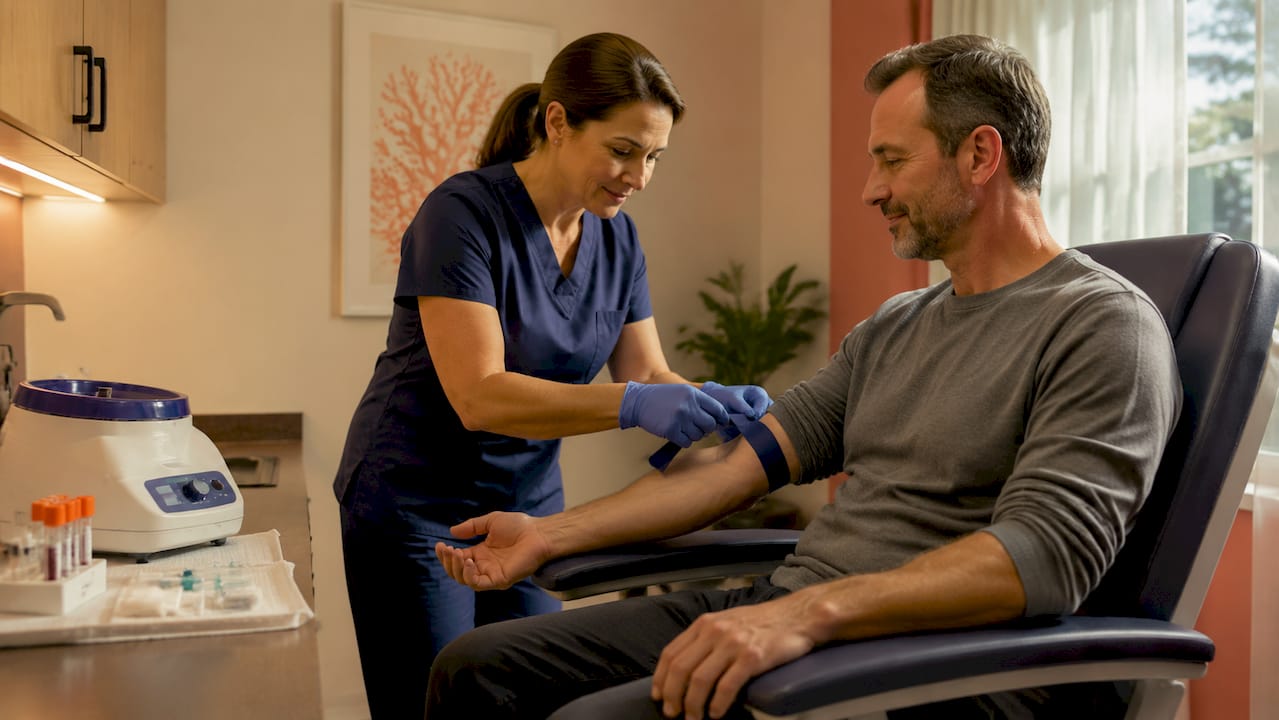
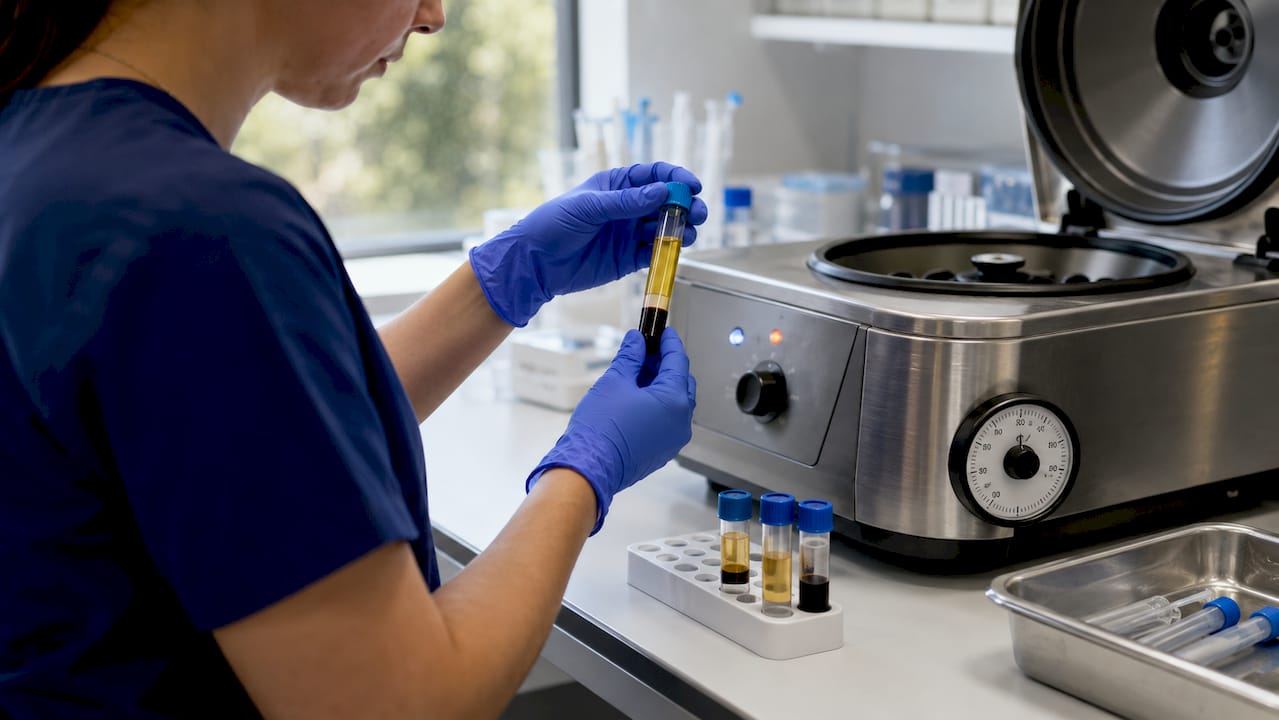
PRP therapy works by drawing a small amount of your blood, spinning it in a centrifuge to separate and concentrate the platelets, then injecting that concentrated plasma directly into the damaged tissue. Platelets carry growth factors that signal the body to repair injured cells, reduce inflammation in a controlled way, and build new tissue. The process triggers what clinicians call a healing cascade, a sequence of biological events that mirrors what happens naturally after an injury, but with greater intensity.
PRP for joint pain and tendon injuries is among the most common clinical applications. Conditions that respond well include:
- Knee osteoarthritis and cartilage degeneration
- Rotator cuff tendinopathy and partial tears
- Tennis elbow and golfer’s elbow
- Plantar fasciitis and Achilles tendinopathy
- Hip labral irritation and sacroiliac joint pain
Two factors shape how well PRP works: platelet concentration and injection technique. A higher platelet yield means more growth factors delivered to the target tissue. Precise delivery, particularly with ultrasound guidance, means those growth factors reach the right location. Both are within your control or your clinician’s control, which is why understanding the full process matters.
How should you prepare your body for PRP treatment?
Preparation is the most underestimated part of PRP therapy. Many patients focus entirely on the injection day and overlook the two weeks before it. What you eat, how you move, and what medications you take all affect the quality of the platelets your body produces.
Medications and supplements to stop before treatment
Anti-inflammatory medications like ibuprofen and aspirin should be stopped at least 7 days before your procedure. These drugs directly inhibit platelet activity, which is the exact mechanism PRP relies on. Fish oil, turmeric, and high-dose vitamin E supplements carry similar risks and should be paused during the same window.
Nutrition and hydration
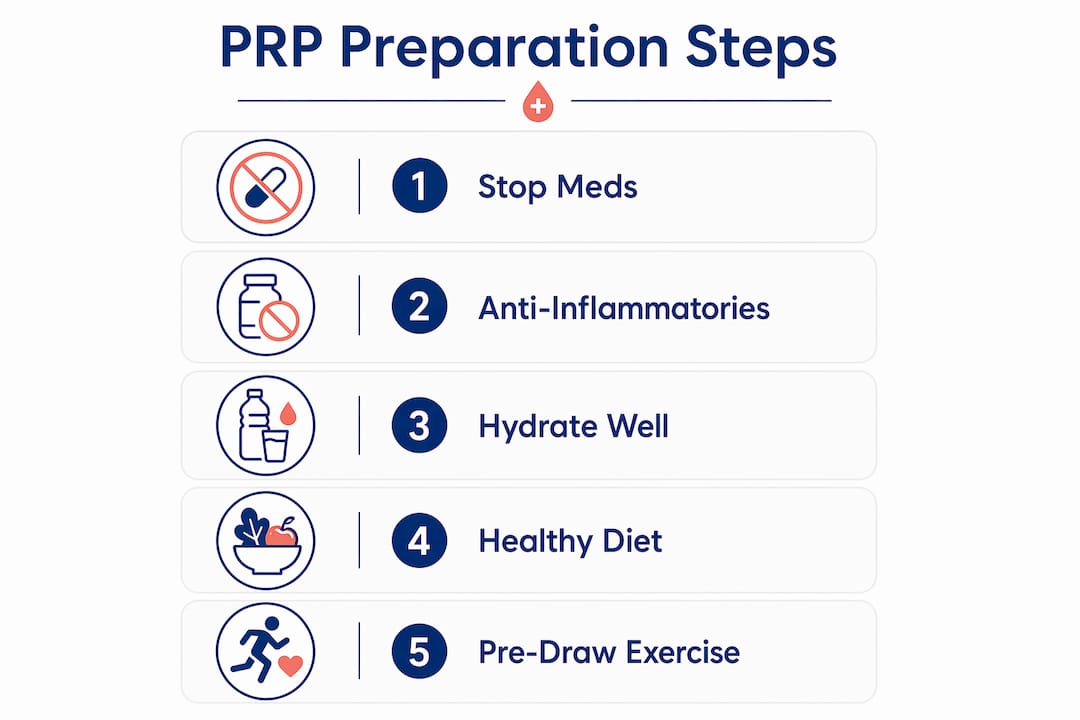
An anti-inflammatory diet rich in folate supports platelet production and improves blood quality before your draw. Focus on leafy greens, berries, lean proteins, and whole grains in the days leading up to treatment. Proper hydration before and after PRP maintains optimal blood volume and improves how well platelets separate during centrifugation. Drink several glasses of water the morning of your appointment.
Exercise timing
High-intensity aerobic exercise performed 1–2 hours before your blood draw significantly elevates platelet count and activation. Studies show vigorous cycling at 70–85% of maximum heart rate enhances PRP quality and increases regenerative factors. This is one of the most practical and underused preparation strategies available.
Lifestyle factors
- Avoid smoking and alcohol for at least several days before treatment. Nicotine reduces blood flow and impairs platelet function. Alcohol thins the blood and disrupts the healing response.
- Get adequate sleep the night before. Sleep deprivation affects platelet behavior and immune function.
- Eat a light, nutritious meal before your appointment. Fasting is not recommended.
Pro Tip: There is an “optimization window” in the 1–2 hours before your blood draw. Combining 20 minutes of vigorous aerobic exercise with branched-chain amino acids (BCAAs) ingestion during this window can maximize platelet yield and activation signaling. Talk to your clinician about whether this protocol fits your health status.
What happens during and immediately after the PRP procedure?
The procedure itself takes roughly 45–90 minutes from blood draw to injection. Your blood is drawn, placed in a centrifuge, and spun to separate the platelet-rich layer from red blood cells and plasma. The concentrated PRP is then prepared for injection.
Ultrasound-guided injection of 1–3 mL of PRP into damaged tendons, combined with dry needling, optimizes delivery and stimulates a localized healing response. Ultrasound guidance removes guesswork from targeting. Dry needling creates micro-trauma that amplifies the body’s repair signals.
Immediately after the injection, you will likely feel soreness, swelling, and warmth at the site. This is not a complication. It is the inflammatory phase of healing, and it signals that the growth factors are activating. Suppressing this response with anti-inflammatory drugs defeats the purpose of the treatment.
Post-procedure restrictions to follow:
- Avoid ibuprofen, aspirin, and naproxen for at least 2–4 weeks after injection
- Do not apply ice directly to the injection site in the first 72 hours
- Avoid strenuous physical activity for 48–72 hours
- Do not smoke or drink alcohol during the initial recovery window
- Rest the treated area, but gentle movement is generally encouraged after 24 hours
Most patients experience peak soreness between days 2 and 5. After that, gradual improvement typically begins. Results build over 4–12 weeks as tissue regenerates.
How can the TAMIS framework improve your PRP therapy?
Generic PRP protocols treat every patient the same. The TAMIS framework does the opposite. TAMIS stands for Tissue, Area, Method, Inflammation, and Scheduling. It is a clinical approach that personalizes PRP treatment by accounting for the specific tissue being treated, the location of the injury, the injection method used, the patient’s current inflammatory state, and the timing between sessions.
The TAMIS protocol represents a significant shift in how clinicians approach PRP, replacing one-size-fits-all injections with pathology-specific strategies that improve predictability and outcomes. A patient with knee osteoarthritis needs a different platelet concentration, injection volume, and scheduling interval than a patient with Achilles tendinopathy. TAMIS makes those distinctions explicit.
Generic vs. personalized PRP: a comparison
| Factor | Generic PRP | TAMIS-Guided PRP |
|---|---|---|
| Platelet concentration | Standard dose for all patients | Adjusted to tissue type and severity |
| Injection method | Single technique | Selected based on area and pathology |
| Inflammation management | Not assessed | Evaluated and factored into timing |
| Session scheduling | Fixed intervals | Tailored to healing response |
| Patient communication | Minimal | Ongoing, collaborative |
The practical implication is clear. Patients who communicate openly with their clinician, share their symptoms between sessions, and ask about protocol adjustments get better results than those who show up, get injected, and leave.
Pro Tip: Before each session, write down any changes in pain, swelling, or function since your last treatment. Bring that list to your appointment. This information directly informs how your clinician adjusts your protocol.
What are the best aftercare practices to sustain your PRP results?
The healing process continues for weeks after the injection. What you do during that window either supports or undermines the work the growth factors have started.
Structured physical therapy after PRP accelerates functional recovery and extends the duration of results. Rehabilitation timing matters. Starting too early can disrupt the healing tissue. Starting too late allows scar tissue to form. Most protocols recommend beginning gentle, guided movement within 1–2 weeks and progressing to strengthening exercises at 4–6 weeks, depending on the treated area.
Key aftercare practices:
- Continue avoiding anti-inflammatory medications for 4–6 weeks post-injection
- Maintain the anti-inflammatory diet and hydration habits established before treatment
- Attend all scheduled follow-up evaluations so your clinician can track tissue response
- Avoid smoking throughout the recovery period, as nicotine restricts blood flow to healing tissue
- Do not return to high-impact sport or heavy lifting until cleared by your provider
Common mistakes patients make during recovery include taking over-the-counter pain relievers out of habit, skipping physical therapy sessions, and returning to full activity too soon after feeling better. Feeling better is not the same as fully healed. Tissue regeneration takes time, and protecting that process is part of the treatment.
For a detailed phase-by-phase breakdown of what to expect, the PRP injection recovery guide from Nortextissueregeneration covers each stage of healing with specific timelines and activity guidance.
Key Takeaways
Maximizing PRP outcomes requires consistent preparation, precise delivery, and disciplined aftercare working together across the full treatment cycle.
| Point | Details |
|---|---|
| Stop anti-inflammatories early | Pause NSAIDs and supplements like fish oil at least 7 days before treatment to protect platelet function. |
| Exercise before your blood draw | 20 minutes of vigorous aerobic activity 1–2 hours before the draw raises platelet count and activation. |
| Use TAMIS-guided protocols | Personalized treatment based on tissue type, inflammation, and scheduling produces more predictable results. |
| Protect the healing window | Avoid anti-inflammatory drugs, smoking, and strenuous activity for 4–6 weeks after injection. |
| Combine PRP with physical therapy | Structured rehabilitation after PRP accelerates recovery and extends long-term results. |
What I’ve learned from watching patients go through PRP
The patients who get the most from PRP are almost never the ones who simply show up and hope for the best. They are the ones who treat preparation as part of the treatment itself. We see this pattern consistently. A patient who stops their anti-inflammatory supplements two weeks early, hydrates well, does a short aerobic session before their blood draw, and follows through with physical therapy will almost always outperform someone with a similar diagnosis who skips those steps.
What surprises many patients is how much variability exists in outcomes, even among people with identical diagnoses. Age, baseline inflammation, tissue quality, and lifestyle all shift the result. That variability is not a reason for pessimism. It is a reason for personalization. The TAMIS framework exists precisely because clinicians recognized that a single protocol cannot account for the full range of human biology.
Realistic expectations matter here. PRP is not a quick fix. Most patients see meaningful improvement over 6–12 weeks, with some continuing to improve for up to six months. Patients who understand that timeline stay the course. Those who expect dramatic results in two weeks often abandon the process before it has a chance to work.
If you are considering PRP or are already mid-treatment, the single most useful thing you can do is stay in close contact with your care team. Ask questions. Report changes. Push for a protocol that reflects your specific condition, not a generic template. The reasons some PRP treatments work better than others almost always trace back to how well the treatment was individualized and how actively the patient participated in their own recovery.
— Felix
PRP therapy at Nortextissueregeneration: personalized from the start
Nortextissueregeneration specializes in PRP therapy built around the kind of personalized protocols described throughout this article. Every treatment plan accounts for your specific condition, tissue type, and healing timeline, not a generic template. The clinic’s approach integrates preparation guidance, TAMIS-informed injection planning, and structured aftercare to give each patient the best possible foundation for recovery. If you are dealing with chronic joint pain, a tendon injury, or a degenerative condition and want to understand whether PRP is the right fit, a consultation with the Nortextissueregeneration team is a practical next step. You can also explore the full range of regenerative options at Nortextissueregeneration.com.
FAQ
What medications should I stop before PRP treatment?
Stop anti-inflammatory medications like ibuprofen and aspirin at least 7 days before your procedure. Supplements including fish oil, turmeric, and high-dose vitamin E should also be paused during this window.
How long does it take to see results from PRP therapy?
Most patients notice meaningful improvement between 6 and 12 weeks after injection. Some continue to improve for up to six months as tissue regeneration progresses.
Does exercise before PRP actually improve results?
Yes. Vigorous aerobic exercise at 70–85% of maximum heart rate performed 1–2 hours before the blood draw elevates platelet count and activation, improving the quality of the PRP concentrate.
What is the TAMIS protocol in PRP therapy?
TAMIS stands for Tissue, Area, Method, Inflammation, and Scheduling. It is a personalized PRP framework that tailors platelet concentration, injection technique, and session timing to the patient’s specific condition rather than applying a standard protocol.
Can I take pain relievers after my PRP injection?
Anti-inflammatory pain relievers like ibuprofen and naproxen should be avoided for at least 4–6 weeks after injection. They suppress the inflammatory healing response that PRP depends on to work effectively.
Recommended
- How Many PRP Sessions Do I Need? A Clear Guide for Real Results – Nortex Tissue Regeneration
- What Real PRP Results Look Like (Before, After, and Timeline)
- Does PRP Therapy Work Better on Certain Body Parts? | Expert Guide to PRP Effectiveness – Nortex Tissue Regeneration
- Why Some PRP Treatments Work Better Than Others – Nortex Tissue Regeneration