Tissue repair is defined as the biological process that restores structural integrity and function to damaged tissue through a coordinated sequence of cellular and molecular events. The role of tissue repair in healing goes well beyond simply closing a wound. It involves four overlapping phases: hemostasis, inflammation, proliferation, and remodeling. Each phase depends on the one before it, and disrupting any stage can delay or permanently impair recovery. Whether you are healing from a sports injury, a surgical procedure, or a degenerative joint condition, understanding how this process works gives you a clearer picture of what your body is doing and what can help it do that better.
What are the main biological phases of tissue repair?
The four overlapping phases of wound healing are hemostasis, inflammation, proliferation, and tissue remodeling. Normal skin wounds typically heal within 1 to 2 months, though deeper or more complex injuries take considerably longer. Each phase has a distinct biological purpose, and they do not run in strict sequence. They overlap, with one phase beginning before the previous one fully ends.
Hemostasis: stopping the bleeding
Hemostasis begins within seconds of injury. Platelets aggregate at the wound site and form a clot, which physically seals the damage and releases chemical signals that recruit immune cells. This clot is not just a plug. It serves as a temporary scaffold for the cells that arrive next.
Inflammation: clearing the way
Inflammation follows hemostasis and is often misread as a problem. Neutrophils arrive first to kill bacteria and clear debris. Macrophages follow and take over the longer work of removing dead cells and releasing growth factors. This phase sets the entire healing environment. Without it, the repair process cannot advance.
Pro Tip: Inflammation is not the enemy of healing. It is the starting signal. Suppressing it too early with anti-inflammatory medications can actually stall the repair process rather than speed it up.
Proliferation: rebuilding tissue
The proliferation phase is where new tissue forms. Fibroblasts produce collagen and other extracellular matrix proteins to fill the wound. New blood vessels grow through a process called angiogenesis. Epithelial cells migrate across the wound surface to restore the outer layer. This phase is the most visible part of healing because the wound closes during this time.
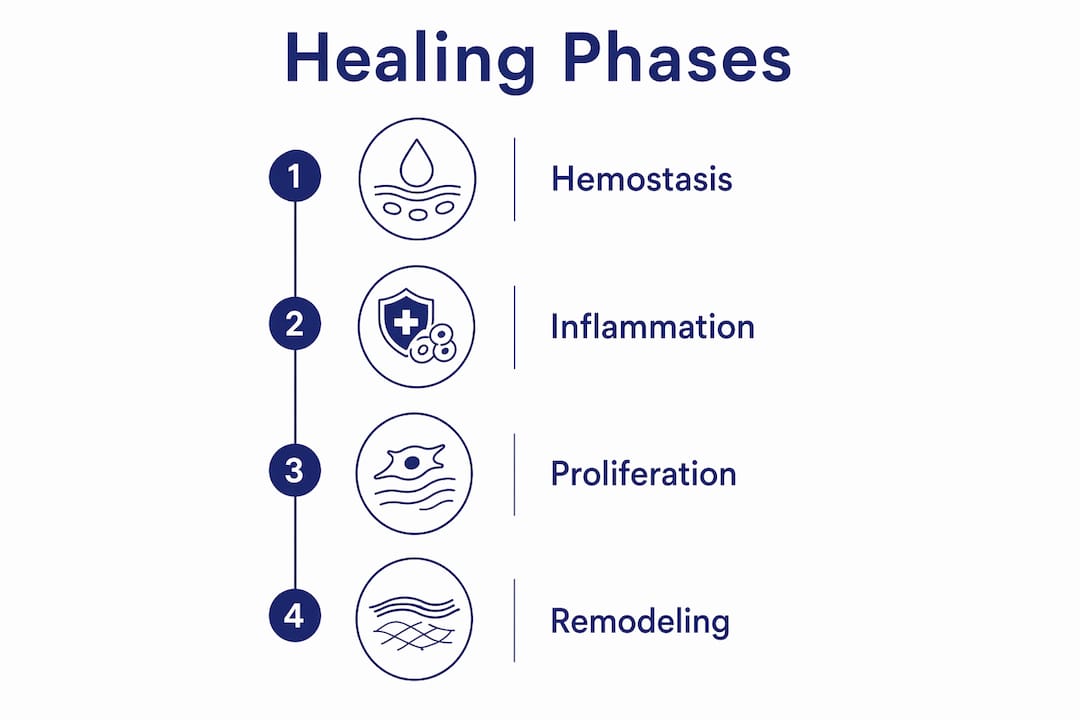
Remodeling: strengthening the repair
The remodeling phase begins approximately 2 to 3 weeks post-injury and involves replacing weaker type III collagen with stronger type I collagen. Collagen fibers realign along lines of mechanical stress, and the tissue gradually regains tensile strength. This phase can last months to years depending on the wound type and location. Patients often feel healed long before remodeling is complete.
How does tissue repair differ from regeneration?
Not all healing produces the same result. The outcome depends heavily on the tissue type, the patient’s age, and the biological environment at the injury site.
Fetal tissues heal by near-perfect regeneration with minimal scarring, while adult human tissues primarily heal through collagen deposition and scar formation. This difference is not a flaw in adult biology. It reflects a trade-off between speed and perfection. Adult repair prioritizes rapid closure over perfect restoration.
The table below compares the two outcomes directly.
| Feature | Regeneration | Fibrotic repair (scarring) |
|---|---|---|
| Tissue architecture | Fully restored | Altered, scar tissue replaces original |
| Collagen type | Normal distribution | Predominantly type I, dense deposition |
| Functional outcome | Near-complete | Reduced, especially in load-bearing tissue |
| Common examples | Fetal wound healing, liver regeneration | Adult skin wounds, tendon injuries |
| Therapeutic target | Preserve or restore | Minimize fibrosis, improve function |
Adult tissue repair primarily results in fibrotic scar formation rather than full regeneration. Therapeutic approaches aim to reduce fibrosis by modulating mechanical tension and signaling pathways such as TGF-β/Smad. This is one reason regenerative medicine has attracted serious clinical attention. The goal is not to replace surgery but to shift the repair environment toward better functional outcomes.
What cellular and molecular mechanisms govern healing outcomes?
The quality of tissue repair depends on which cells are present, how they communicate, and whether the molecular environment supports resolution rather than chronic inflammation.
Key cellular players include:
- Platelets: Release growth factors immediately after injury to initiate the repair cascade.
- Neutrophils: Arrive within hours to clear bacteria and damaged tissue.
- Macrophages: Coordinate the transition from inflammation to repair through phagocytosis and cytokine release.
- Fibroblasts: Produce collagen and extracellular matrix proteins during the proliferation phase.
- Mesenchymal stem cells (MSCs): Modulate the repair microenvironment through paracrine signaling rather than direct tissue replacement.
A process called efferocytosis is central to successful healing. Efferocytosis by macrophages clears dead and dying cells from the wound site. When this process is impaired, dead cells accumulate, inflammation persists, and the wound stalls. Chronic wounds are frequently the result of failed efferocytosis rather than a lack of healing signals.
Cytokines and growth factors coordinate the entire process. TGF-β drives fibroblast activation and collagen production. VEGF promotes angiogenesis. IL-10 helps resolve inflammation. These signals do not operate in isolation. They form a network, and disrupting one pathway affects the others. MSCs, in particular, coordinate tissue-level responses through structural, immune, and metabolic functions that influence healing outcomes at every phase.
Pro Tip: Many patients assume that a wound that looks closed is fully healed. The molecular remodeling process continues long after the surface closes. Returning to full activity too soon can disrupt collagen alignment and reduce the final tensile strength of the repaired tissue.
How do biological therapies improve the tissue repair process?
Emerging therapies do not replace the body’s natural repair process. They work by modifying the biological environment to support better outcomes. This is a meaningful distinction. The goal is to shift the repair environment toward regeneration and away from fibrosis.
Key approaches include:
- Platelet-rich plasma (PRP): PRP therapy delivers concentrated growth factors that support cellular recruitment and angiogenesis. It amplifies the signals the body already uses in the early phases of repair.
- Mesenchymal stem cell therapy: MSCs act primarily through their secretome, releasing bioactive molecules that instruct native cells to accelerate and improve healing. Stem cell therapies work mainly through these paracrine effects rather than by engrafting into damaged tissue.
- Extracellular vesicles and nanovesicles: These cell-free therapies carry the same signaling molecules as MSCs without requiring live cell delivery. Research in 2026 continues to refine their clinical application.
- Secretome-based approaches: Regenerative medicine experts focus on creating a pro-regenerative microenvironment by modulating cytokines and extracellular matrix turnover rather than merely replacing cells.
Conventional wound care focuses on protecting the wound and preventing infection. Regenerative approaches go further by actively modifying the cellular signals that determine whether a wound heals with scar tissue or with more functional repair. For patients dealing with chronic joint pain, tendon injuries, or degenerative conditions, this difference matters. If you want a broader view of how these therapies compare, the 2026 recovery guide from Nortextissueregeneration covers the current options in practical detail.
Key Takeaways
Tissue repair is a multi-phase biological process, and the quality of healing depends on how well each phase resolves, not just whether the wound closes.
| Point | Details |
|---|---|
| Four phases govern healing | Hemostasis, inflammation, proliferation, and remodeling each serve a distinct biological role. |
| Inflammation must resolve, not be suppressed | Premature suppression of inflammation stalls healing and increases the risk of chronic wounds. |
| Regeneration vs. scarring | Adult tissues default to scar formation; therapies aim to shift this toward functional regeneration. |
| Remodeling takes time | Collagen realignment continues for months to years after a wound appears closed. |
| Biological therapies modify the environment | PRP and MSC therapies improve healing by amplifying natural repair signals, not replacing them. |
What I have learned about healing that most patients do not expect
Patients often come to us after months of frustration. They followed the standard advice, rested, protected the injury, waited. And yet the pain persisted or function never fully returned. What we see consistently is that the problem was not a lack of healing. It was healing that stalled or resolved in the wrong direction.
The part that surprises most people is that inflammation is a vital checkpoint, not a symptom to eliminate. We have seen patients who aggressively iced and medicated their way through the early days of an injury, only to find that the repair process never fully advanced. The body needed that inflammatory signal to recruit the right cells and set the repair environment. Interrupting it too early left the wound in a kind of biological limbo.
The other thing I want to be direct about is that biological therapies are not a shortcut. PRP and stem cell treatments work because they support and amplify a process the body is already trying to run. They are most effective when the patient’s overall biology is cooperating, when nutrition, sleep, and activity levels are managed appropriately. We do not promise outcomes we cannot guarantee. What we can say is that for the right patient with the right injury, these therapies shift the odds meaningfully toward better function and less fibrosis.
Healing is not a single event. It is a months-long biological negotiation. Respecting that timeline, and supporting each phase rather than fighting it, is the most reliable path to recovery.
— Felix
Advanced tissue repair therapies at Nortextissueregeneration
Nortextissueregeneration works with patients across North Texas who are dealing with injuries, chronic joint pain, and degenerative conditions that have not responded well to conventional care. The clinic offers PRP therapy to support cellular recruitment and growth factor delivery at the injury site, as well as stem cell therapy focused on modulating the repair microenvironment through paracrine signaling. Both approaches are non-surgical and designed to work with the body’s natural repair process rather than around it. Treatment plans are built around the individual patient, the injury type, and realistic expectations for recovery. If you are ready to understand your options, the Nortextissueregeneration team is available to walk you through what the evidence supports for your specific situation.
FAQ
What is the role of tissue repair in healing?
Tissue repair restores structural integrity and function to damaged tissue through four coordinated phases: hemostasis, inflammation, proliferation, and remodeling. Each phase builds on the previous one, and disrupting any stage can impair the final outcome.
How long does the tissue remodeling phase last?
The remodeling phase begins approximately 2 to 3 weeks after injury and can continue for months to years depending on the wound type. Collagen fibers realign and cross-link during this period, gradually restoring tensile strength.
What is the difference between tissue regeneration and scar formation?
Regeneration restores the original tissue architecture with minimal scarring, as seen in fetal wound healing. Adult tissues primarily heal through collagen deposition and scar formation, which restores structure but reduces full functional capacity.
How do stem cells support tissue repair?
Mesenchymal stem cells act primarily through paracrine signaling, releasing bioactive secretomes that instruct native cells to accelerate and improve healing. They do not primarily engraft into damaged tissue but instead modify the repair microenvironment.
Why does chronic inflammation prevent healing?
Chronic inflammation develops when macrophages fail to clear dead cells through efferocytosis, causing the repair process to stall before reaching the proliferation phase. Resolving inflammation, rather than suppressing it prematurely, is the key to advancing through the healing stages.