
Tendon regeneration is defined as the biological process of restoring damaged tendon tissue to its original structure, cellular composition, and load-bearing function, not simply closing a tear with scar tissue. Most adults who injure a tendon heal with fibrotic scar tissue that lacks the organized collagen architecture and mechanical strength of healthy tendon. That gap between “healed” and “fully restored” is exactly what regenerative medicine targets. Understanding the difference matters because it shapes every decision you make about treatment, rehabilitation, and long-term joint health.
What is the tendon healing process, and how does regeneration differ from repair?
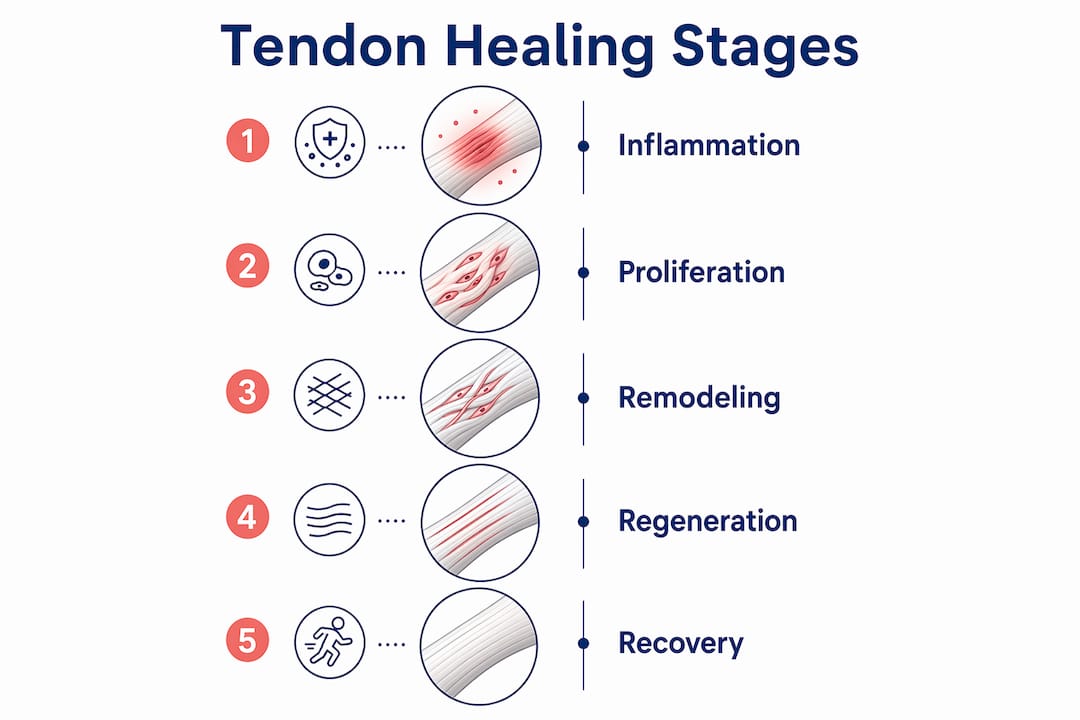
The tendon healing process moves through three distinct biological phases. First comes inflammation, which clears debris and recruits cells to the injury site. Next is proliferation, during which the body deposits extracellular matrix, primarily type III collagen. Finally, remodeling begins, a phase that can last months to years as type III collagen gradually matures into the stronger type I collagen found in healthy tendon.
The problem is that adult tendon healing rarely completes this process cleanly. The remodeling phase often stalls, leaving behind disorganized, fibrotic scar tissue. That scar tissue lacks the parallel collagen alignment that gives healthy tendons their tensile strength. Patients frequently describe a tendon that feels “healed” but still weak, stiff, or prone to re-injury. That description is accurate at the tissue level.
True tendon regeneration goes further than repair. Repair closes the defect. Regeneration restores tendon-specific cells, re-establishes aligned collagen architecture, and returns the tissue to near-normal biomechanics. The distinction is not just academic. A tendon that heals with scar tissue is structurally inferior and more likely to fail under load.
| Feature | Scar-based repair | True regeneration |
|---|---|---|
| Collagen type | Predominantly type III | Type I, hierarchically organized |
| Collagen alignment | Disorganized, random | Parallel, load-bearing alignment |
| Cellularity | Fibroblasts, low tenocyte content | Tendon-specific tenocytes restored |
| Biomechanical strength | Reduced compared to native tendon | Near-native tensile properties |
| Long-term outcome | Higher re-injury risk | Improved functional durability |
What biological and cellular mechanisms drive tendon regeneration?
Tendon regeneration depends on more than collagen production. The outcome is shaped by the behavior of tenogenic progenitor cells, the local immune environment, and the physical signals the tissue receives during healing.
Tenogenic progenitor cells are the building blocks of regenerated tendon. These cells must commit to a tendon-specific fate rather than differentiating into bone or cartilage-forming cells. When the local microenvironment is disrupted, progenitor cells make the wrong choice, contributing to calcification or fibrosis instead of functional tendon tissue.
Immune regulation plays a larger role than most patients expect. A 2025 study published in Science Advances found that regulatory T cells (Tregs) are essential for functional tendon regeneration. When Tregs were depleted in experimental models, regenerative healing was impaired and fibrotic outcomes increased. A regenerative immune profile actively recruits tenocytes and suppresses the signals that drive scar formation.
The local microenvironment also includes signals from the lymphatic system. A 2025 study in Nature Communications showed that lymphatic-derived Reelin supports tendon stem and progenitor cell behavior. Loss of Reelin impaired healing and reduced mechanical properties. Slow-release Reelin delivery improved regeneration in preclinical models. This finding points to a layer of microenvironmental control that goes beyond immune cells alone.
Key cellular and molecular factors that influence regeneration outcomes include:
- Tenogenic progenitor cells: Must receive the right signals to differentiate into tenocytes rather than fibroblasts or osteoblasts.
- Regulatory T cells (Tregs): Suppress fibrotic signaling and promote a regenerative immune profile at the injury site.
- Lymphatic endothelial signals (Reelin): Support progenitor cell behavior and improve mechanical properties of regenerating tissue.
- Mechanosensitive tenocytes: Respond to physical loading by producing and organizing extracellular matrix.
Pro Tip: Timing matters as much as treatment. Applying mechanical load too early overwhelms fragile new tissue. Waiting too long allows scar tissue to consolidate. The window between these two extremes is where rehabilitation has the greatest impact on regeneration quality.
Which modern techniques and therapies support tendon regeneration?
Several approaches now target tendon regeneration at the biological level rather than simply managing symptoms or performing surgical repair. Each works through a different mechanism, and the best option depends on injury type, severity, and patient biology.
Tissue engineering and biomimetic scaffolds
Tissue engineering uses biomimetic scaffold design to create structures that mimic the architecture of native tendon. These scaffolds replicate the anisotropy, porosity, and viscoelasticity of healthy tissue, giving regenerating cells a physical template to follow. Without that template, cells deposit collagen randomly, producing the disorganized matrix seen in scar tissue.
3D bioprinting has added precision to scaffold fabrication. AI-based optimization now assists in designing scaffolds that match specific mechanical requirements and improve cell viability. The goal is a construct that behaves like tendon from the moment it is implanted, reducing the time the body spends remodeling inferior tissue.
Orthobiologics: PRP and stem cell therapy
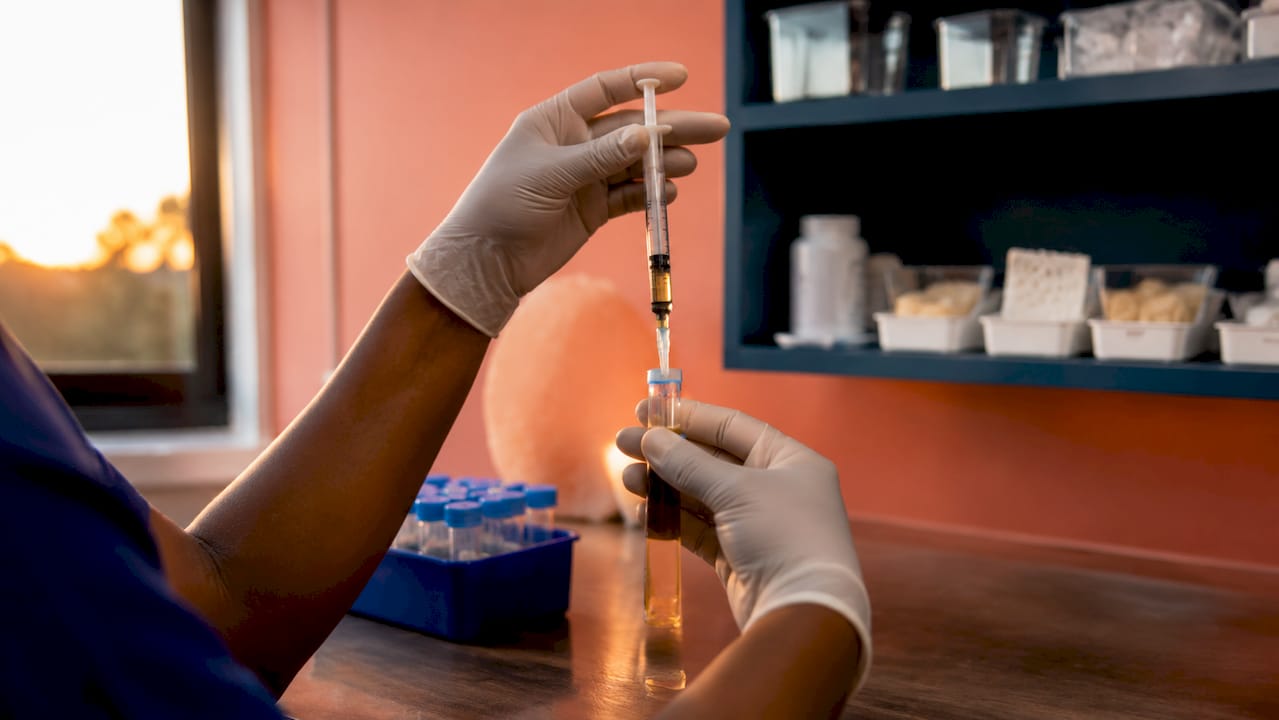
Orthobiologics are biologically derived treatments that supply the signals or cells needed for regeneration. Platelet-rich plasma (PRP) concentrates growth factors from your own blood and delivers them directly to the injury site. Those growth factors accelerate the proliferative phase and may reduce fibrotic signaling. Many patients we see at Nortextissueregeneration come in after months of physical therapy with persistent pain. PRP often changes the trajectory of their recovery by addressing the biological environment, not just the mechanical load.
Stem cell therapy introduces progenitor cells capable of differentiating into tendon-specific tissue. When delivered into a tendon injury, these cells can support tissue regeneration by contributing directly to new matrix formation and by modulating the local immune environment. The combination of cellular input and immune modulation is what separates stem cell therapy from conventional treatments.
Electroactive biomaterials and electrical stimulation
A newer category of treatment uses electroactive biomaterials that generate piezoelectric signals from normal body movement. Healthy tendons produce small electrical fields when loaded, and these signals influence cell behavior and matrix organization. Electroactive scaffolds recreate that electrical microenvironment, potentially boosting regenerative activity in tissue that would otherwise heal with scar.
Key regenerative approaches currently available or in active development:
- PRP therapy: Concentrates autologous growth factors to accelerate healing and reduce fibrosis.
- Stem cell therapy: Delivers progenitor cells that contribute to tendon-specific matrix and modulate immune response.
- Biomimetic scaffolds: Provide structural templates that guide collagen alignment during regeneration.
- 3D bioprinted constructs: Replicate native tendon architecture with AI-assisted precision.
- Electroactive biomaterials: Recreate the electrical microenvironment of healthy tendon to promote regenerative cell behavior.
How do mechanical and immune factors shape tendon healing in practice?
Mechanical loading and immune regulation are not separate considerations. They interact continuously during the tendon healing stages, and managing both is what separates a good recovery from a prolonged one.
Mechanosensitive tenocytes respond to physical force by producing and organizing extracellular matrix. Load applied during the remodeling phase stimulates collagen alignment and improves the mechanical properties of healing tissue. Load applied too early, before the proliferative phase has established sufficient matrix, disrupts fragile new tissue and triggers a secondary inflammatory response.
Immune modulation strategies can steer healing toward regeneration rather than fibrosis. Therapies that support Treg activity, reduce pro-inflammatory cytokines, or deliver anti-fibrotic signals at the right time can shift the biological balance. PRP, for example, delivers growth factors that influence both immune cell behavior and matrix production simultaneously. That dual action is part of why it performs well in tendon injury recovery when applied at the right stage.
We often see patients who have been told to rest completely for weeks, then return to full activity without a structured loading program. Both extremes produce poor outcomes. Complete rest allows scar tissue to consolidate without the mechanical signals needed for alignment. Abrupt return to load overwhelms tissue that has not yet matured. A structured rehabilitation approach that gradually increases load during the remodeling phase consistently produces better functional results.
Pro Tip: Ask your clinician to define the specific loading phase you are in, not just the week of recovery. Knowing whether you are in proliferation or early remodeling changes what exercises are appropriate and what loads are safe.
Key Takeaways
Tendon regeneration requires restoring tendon-specific cells, aligned collagen, and near-native biomechanics, not just closing the injury with scar tissue.
| Point | Details |
|---|---|
| Regeneration vs. repair | Scar-based repair leaves weaker tissue; true regeneration restores collagen alignment and load-bearing function. |
| Immune regulation matters | Regulatory T cells (Tregs) are essential for regenerative healing and must be supported, not suppressed. |
| Microenvironment signals | Lymphatic-derived Reelin and other local cues guide progenitor cell fate and mechanical recovery. |
| Mechanical loading timing | Loading during the remodeling phase improves collagen organization; loading too early or too late impairs outcomes. |
| Regenerative therapies | PRP, stem cell therapy, and biomimetic scaffolds each target different biological mechanisms to promote true regeneration. |
What I’ve learned about treating tendon injuries as a biology problem, not a structural one
The most common mistake I see in tendon injury recovery is treating it as a plumbing problem. Fix the tear, close the gap, wait for healing. That framing misses most of what actually determines whether a patient recovers full function.
Tendons are low-vascularity, low-cellularity tissues. They do not heal the way muscle does. The biological environment at the injury site, including immune cell populations, lymphatic signals, and progenitor cell fate decisions, determines whether the outcome is functional tendon or fibrotic scar. Anatomy alone does not tell you which way it will go.
What I find most promising in recent research is the convergence of immune biology and tissue engineering. The discovery that Tregs drive functional regeneration, and that lymphatic signals like Reelin shape progenitor behavior, opens real therapeutic targets. These are not distant possibilities. They are informing how we think about PRP timing, stem cell delivery, and rehabilitation protocols right now.
The honest reality is that timelines are longer than patients want to hear. Tendon remodeling can take a year or more to reach maturity. Patients who push through that window without guidance often consolidate scar tissue that limits them for years. Patients who receive biologically informed treatment and structured loading during the right phases consistently do better. Not always dramatically better, but meaningfully better in ways that show up in daily function.
The science of tendon regeneration is advancing faster than most clinical protocols have caught up with. That gap is where we focus our work.
— Felix
Advanced regenerative therapies for tendon recovery at Nortextissueregeneration
Nortextissueregeneration offers stem cell therapy and PRP therapy as clinically applied regenerative options for patients dealing with tendon injuries, chronic joint pain, and degenerative conditions. Both treatments are grounded in the same biological principles covered in this article: supporting the right immune environment, delivering growth factors or progenitor cells at the right time, and giving the body what it needs to heal beyond scar tissue. If you are weighing your options after a tendon injury or a prolonged recovery that has not delivered the results you expected, a consultation with our team is a practical next step. We build personalized treatment plans based on your injury stage, biology, and functional goals.
FAQ
What is tendon regeneration in simple terms?
Tendon regeneration is the process of restoring damaged tendon tissue to its original structure and function, including proper collagen alignment and tendon-specific cells, rather than healing with weaker scar tissue.
Can tendons fully regenerate after injury?
Full regeneration is possible but not guaranteed. Adult tendons tend to heal with some degree of fibrotic scar tissue, and achieving near-native biomechanics typically requires targeted biological support such as PRP, stem cell therapy, or structured rehabilitation during the remodeling phase.
How long does tendon regeneration take?
The tendon healing stages span months to years. The remodeling phase alone can last a year or more as type III collagen gradually matures into the stronger type I collagen found in healthy tendon.
What factors affect tendon regeneration outcomes?
The main factors are immune cell activity (especially Treg populations), mechanical loading timing, local microenvironment signals such as Reelin, and the availability of tenogenic progenitor cells to rebuild organized tissue.
How does PRP support tendon regeneration?
PRP delivers concentrated growth factors from your own blood directly to the injury site. Those growth factors accelerate the proliferative phase, influence immune cell behavior, and may reduce the fibrotic signaling that leads to scar-based healing.