
For most adults with mild-to-moderate joint degeneration, Platelet-Rich Plasma (PRP) is the typical first-line orthobiologic, with Bone Marrow Aspirate Concentrate (BMAC) and clinic-delivered stem-cell approaches reserved for cases where PRP hasn’t provided enough relief or where disease stage warrants a more concentrated intervention.
Here’s a quick orientation to the three main clinic-delivered options:
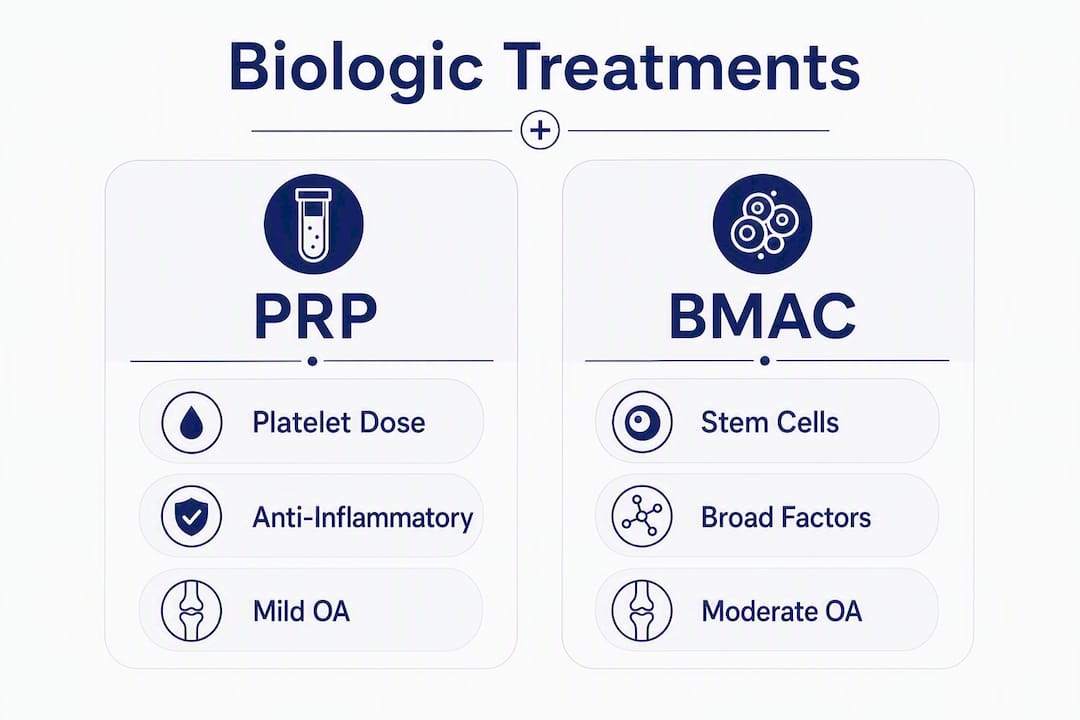
- PRP (Platelet-Rich Plasma): Drawn from your own blood, spun to concentrate growth factors. Best considered for mild-to-moderate osteoarthritis (OA) and tendon-related joint pain.
- BMAC (Bone Marrow Aspirate Concentrate): Harvested from the posterior iliac crest, processed at point of care. Considered when PRP alone is insufficient or for selected moderate-stage OA.
- Clinic stem-cell approaches: Minimally manipulated bone marrow or adipose-derived products delivered under physician oversight. Used selectively, typically for patients with more advanced degeneration or specific clinical indications.
Mayo Clinic data shows a substantial chance of achieving significant pain improvement lasting several months with PRP in their treated patient population.
Table of Contents
- What do “biologic treatments” actually mean in a joint pain clinic?
- How do these treatments work, and what does the evidence show?
- Who is most likely to benefit from orthobiologic injections?
- What happens during a treatment visit, and when will you feel better?
- PRP vs. BMAC vs. clinic stem-cell approaches: how do they compare?
- How do you choose a trustworthy clinic?
- What does orthobiologic treatment typically cost in the U.S., and does insurance cover it?
- Key Takeaways
- What we see in clinic, and what realistic outcomes look like
- Nortextissueregeneration offers physician-led orthobiologic care in North Texas
- Useful sources
- FAQ
What do “biologic treatments” actually mean in a joint pain clinic?
The phrase “biologic treatments for joint pain” covers a specific category of clinic-delivered procedures, formally called orthobiologics, that use substances derived from your own body (or processed biological material) to reduce inflammation and support tissue healing. This is distinct from pharmaceutical biologic drugs prescribed for systemic autoimmune conditions. Those are a different category entirely, and this article doesn’t address them.
The three core orthobiologic procedures are:
- PRP: Concentrated platelets and growth factors from your own blood, prepared by centrifugation. Platelet concentrations typically range from 2–5× baseline, and formulations differ meaningfully in leukocyte (white blood cell) content.
- BMAC / bone marrow cell therapy: — A concentrate drawn from bone marrow, containing a mix of cells, growth factors, and cytokines. Point-of-care BMAC contains very low proportions of mesenchymal stem cells (MSCs), typically comprising a minute fraction of total cells.
Two adjunct modalities are often used alongside these biologics to enhance the treatment environment:
“Many biologic therapies remain investigational or are used off-label in the U.S. Viscosupplementation is among the few intra-articular interventions with FDA clearance for knee OA. Informed consent and protocol transparency are not optional — they are the baseline standard of care.” — StatPearls, Regenerative Therapy in Pain
How do these treatments work, and what does the evidence show?
The most honest answer: the primary benefit of PRP and BMAC is most consistently explained by anti-inflammatory and immunomodulatory effects, not by proven cartilage regrowth. This distinction matters when you’re setting expectations.
Proposed mechanisms include:
- Growth-factor signaling (PRP): Concentrated platelets release PDGF, TGF-β, and IGF-1, which modulate local inflammation and may support soft-tissue repair.
- Paracrine effects (BMAC/MSCs): Cells in BMAC communicate with surrounding tissue through signaling molecules rather than directly replacing damaged cartilage.
- Mechanical environment changes: Adjunct therapies like SoftWave alter the local cellular environment, potentially amplifying biologic effects.
Mayo Clinic experts are direct on this point: there is currently no definitive human evidence that BMAC regrows joint cartilage. Improvements patients experience are likely due to anti-inflammatory and immunomodulatory mechanisms.
Randomized trials and systematic reviews show that both PRP and cell-based therapies can improve pain and function over 6–24 months. High-quality trials have not demonstrated consistent structural regeneration. Protocol heterogeneity, including differences in platelet dose, leukocyte content, and cell counts, makes direct study comparisons difficult. Many trials are also limited by small sample sizes and follow-up periods under two years.
Regulatory bodies note that evidence remains insufficient to broadly endorse orthobiologics as standard care, reinforcing why protocol transparency and physician oversight are non-negotiable when choosing a clinic.
Who is most likely to benefit from orthobiologic injections?
Earlier-stage degeneration and activity-focused goals tend to respond best. Patients with mild-to-moderate OA who want to stay active, delay surgery, or reduce reliance on pain medication are the clearest candidates. Cell-based approaches are considered when PRP hasn’t provided adequate relief, or when imaging and clinical assessment suggest a more advanced presentation. You can read more about when to consider stem cell therapy as part of your decision process.
A practical self-assessment checklist:
- Disease stage: Mild-to-moderate OA or soft-tissue injury typically responds better than end-stage joint destruction.
- Prior treatments: Have you tried physical therapy, NSAIDs, or corticosteroid injections? Biologics are generally considered after conservative care.
- Activity goals: Are you trying to return to sport, maintain daily function, or avoid surgery? Goals shape which option fits.
- Medical history: Certain blood disorders, active infections, uncontrolled systemic illness, or pregnancy may affect candidacy.
- Imaging findings: X-ray and MRI findings help clinicians match the biologic to the joint’s actual condition.
Contraindications and cautions to discuss with your physician:
- Active joint or systemic infection
- Blood disorders affecting platelet function or clotting
- Uncontrolled diabetes or autoimmune conditions
- Pregnancy
- Advanced bone-on-bone OA where surgical evaluation is more appropriate
What happens during a treatment visit, and when will you feel better?
A single clinic visit for PRP typically takes 60–90 minutes. BMAC and stem-cell protocols run longer due to the harvest step.
- Consent and pre-procedure review: Your clinician reviews imaging, confirms the target joint, and explains the protocol.
- Harvest (PRP): A blood draw of roughly 30–60 mL from your arm.
- Harvest (BMAC): A bone marrow draw from the posterior iliac crest under local anesthesia. This adds time and mild procedural discomfort.
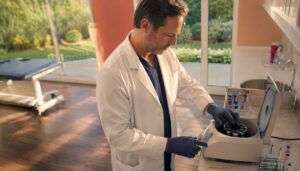
- Processing: Centrifugation separates the biologic concentrate, typically taking 10–20 minutes.
- Image-guided injection: Ultrasound or fluoroscopy confirms needle placement before the concentrate is delivered to the joint.
- Brief recovery: Most patients rest for 15–30 minutes post-injection and are discharged the same day.
Expect some injection-site soreness and mild swelling for 2–5 days after the procedure. This is a normal inflammatory response, not a sign of failure. Strenuous activity on the treated joint is typically restricted for 1–2 weeks.
Typical timelines to symptom improvement:
- PRP: Noticeable improvement often begins at 6–8 weeks, with many patients reporting 6–12 months of pain relief. A series of 1–3 injections is common depending on protocol.
- BMAC: Variable; some patients notice improvement within 4–8 weeks, others take longer. Single-injection protocols are standard at most clinics.
- Clinic stem-cell approaches: Timeline varies by product and protocol; follow-up at 3 and 6 months is standard practice.
PRP vs. BMAC vs. clinic stem-cell approaches: how do they compare?
No single option is universally superior. High-quality randomized trials found no consistent superiority of stem cell-based therapies over PRP for knee OA through 6–24 months. The right choice depends on disease stage, budget, and what a given clinic can deliver with proper protocol controls.
| Dimension | PRP | BMAC | Clinic stem-cell approaches |
|---|---|---|---|
| Best for | Mild-to-moderate OA, tendon injuries | Moderate OA, PRP non-responders | Selected moderate-to-advanced cases |
| Mechanism / evidence level | Growth-factor signaling; moderate RCT evidence | Paracrine/immunomodulatory; moderate evidence, variable trials | Paracrine/immunomodulatory; early-stage evidence |
| Procedure complexity | Low; 1–3 sessions typical | Moderate; bone marrow harvest required | Moderate-to-high; depends on protocol |
| Timeline to relief | 6–12 weeks | 4–12 weeks (variable) | Variable; 4–8 weeks |
| Expected durability | 6–12+ months | Variable; 6–12 months reported | Variable; limited long-term data |
| Risks / side effects | Injection-site pain, transient swelling | Above + harvest-site discomfort | Above; depends on product source |
| Typical U.S. cost | $500–$2,500 per injection | $2,000–$5,000+ per session | $3,000–$10,000+ depending on protocol |
| Insurance coverage | Rarely covered | Rarely covered | Rarely covered |
Three clinical use-case scenarios we often see:
- Active adult, mild knee OA, wants to stay on the tennis court: PRP is typically the first recommendation, with a series of 2–3 injections over 6 weeks.
- Patient who had two rounds of PRP with partial relief, moderate OA on MRI: BMAC becomes a reasonable next step, given the prior partial response and imaging findings.
- Post-surgical patient with persistent joint pain and soft-tissue involvement: A combination protocol, potentially including SoftWave or EMTT alongside a biologic, may be considered.
Pro Tip: Ask any clinic for the specific platelet dose (in platelets per microliter), leukocyte content classification (leukocyte-rich vs. leukocyte-poor), and whether injection is performed under ultrasound or fluoroscopic guidance. Vague answers to these questions are a red flag.
How do you choose a trustworthy clinic?
Prioritize medical oversight, protocol transparency, and documented outcome tracking. Those three criteria separate clinics doing this carefully from those treating it as a revenue line.
Questions to ask before booking:
- Who performs the procedure — a physician or a mid-level provider under physician supervision?
- What is your specific PRP preparation method, and what platelet concentration do you target?
- Do you use image guidance (ultrasound or fluoroscopy) for every injection?
- How do you track patient outcomes, and can you share aggregate data?
- What follow-up is included, and what happens if I don’t respond?
- Do you perform a diagnostic evaluation before recommending a protocol?
Red flags to watch for:
- Protocol described only in vague marketing terms (“super-concentrated,” “most advanced”)
- Guaranteed outcomes or promises of cartilage regeneration
- Bundled treatment packages sold before any diagnostic workup
- No mention of imaging guidance or cell/platelet quantification
A quick three-point evaluation scorecard:
| Criterion | What to look for |
|---|---|
| Medical oversight | Physician-led program with clear credentialing |
| Protocol transparency | Specific preparation details, dosing, and image guidance confirmed |
| Documented outcomes | Clinic tracks and can discuss aggregate patient response data |
What does orthobiologic treatment typically cost in the U.S., and does insurance cover it?
Most clinic-delivered orthobiologics are fee-for-service. Insurance rarely covers them, and many remain investigational or off-label under current FDA guidelines.
Typical U.S. cost ranges:
- PRP: $500–$2,500 per injection; a 3-injection series may run $1,500–$5,000 total.
- BMAC (single visit): $2,000–$5,000+, reflecting the additional harvest procedure and processing.
- Clinic stem-cell approaches: $3,000–$10,000+ depending on product source and protocol complexity.
Practical insurance and payment tips:
- Call your insurer before your consult and ask specifically about “orthobiologic injections” and “PRP” under your plan’s experimental/investigational policy.
- FSA and HSA funds can generally be used for these procedures when ordered by a physician for a diagnosed condition.
- Request an itemized treatment plan from the clinic to support any out-of-network benefit claim or insurance appeal.
- Ask whether the clinic offers payment plans, as many do for higher-cost procedures.
Key Takeaways
Clinic-delivered orthobiologics like PRP and BMAC reduce joint pain primarily through anti-inflammatory effects, not proven cartilage regrowth, and outcomes depend heavily on disease stage, protocol quality, and realistic expectations.
| Point | Details |
|---|---|
| PRP is typically first-line | Mild-to-moderate OA and tendon injuries respond best; Mayo Clinic reports substantial improvement rates lasting several months. |
| BMAC for PRP non-responders | Consider BMAC when PRP provides insufficient relief; randomized trials show comparable outcomes to PRP through 6–24 months. |
| Cartilage regrowth is not proven | Mayo Clinic experts confirm no definitive human evidence for cartilage regeneration; benefits are anti-inflammatory and immunomodulatory. |
| Protocol details matter | Ask for platelet dose, leukocyte content, cell counts, and image guidance — vague answers signal poor protocol standards. |
| Nortextissueregeneration | Offers PRP, BMAC, and stem-cell approaches in North Texas with physician oversight, protocol transparency, and personalized treatment plans. |
What we see in clinic, and what realistic outcomes look like
Many patients who come to us have already tried cortisone shots, physical therapy, and sometimes a round of NSAIDs. They’re not looking for a miracle. They want to know whether there’s a non-surgical option that can give them enough relief to stay active, sleep through the night, or get back to work without pain.
What we find is that patients with mild-to-moderate OA who are still functionally active tend to respond best to PRP. We see a meaningful portion of them report sustained improvement at their 3- and 6-month follow-ups. Patients with more advanced degeneration, or those who’ve had partial responses to PRP, sometimes do better with BMAC, though the timeline to improvement is less predictable and we’re careful to say so upfront.
We document outcomes at each follow-up visit using standardized pain and function scores. That data shapes how we adjust protocols over time. We don’t promise a specific result, but we do commit to tracking what happens and having an honest conversation about next steps if the response isn’t what we hoped for.
Nortextissueregeneration offers physician-led orthobiologic care in North Texas
For patients who want a non-surgical path forward, Nortextissueregeneration delivers PRP, Bone Marrow Cell Therapy (BMAC), Stem Cell Therapy, SoftWave acoustic therapy, and EMTT under direct physician oversight. Every treatment plan starts with a diagnostic evaluation, not a sales conversation. Protocols are specific: platelet concentrations are measured, injections are image-guided, and follow-up is built into the process.
To book a consult, bring any recent imaging (X-ray or MRI) and notes from prior treatments. That information lets the clinician match a protocol to your actual diagnosis rather than a general category. Schedule your consultation at Nortextissueregeneration.com and come prepared with the questions from this article.
This article provides general educational information about orthobiologic procedures and is not a substitute for individualized medical advice. Consult a qualified physician to determine whether these treatments are appropriate for your specific condition.
Useful sources
- JASSM: Comparative efficacy of stem cell therapies vs. PRP — Systematic review and narrative synthesis across RCTs with 6–24 month follow-up.
- StatPearls: Regenerative Therapy in Pain — Clinical overview of PRP preparation methods, regulatory status, and protocol variables.
- BOA: Injectable Orthobiologic Treatments for Osteoarthritis — Regulatory and evidence summary from the British Orthopaedic Association, including NICE’s position on evidence sufficiency.
FAQ
What is the difference between PRP and BMAC for joint pain?
PRP concentrates growth factors from your blood to reduce inflammation; BMAC draws from bone marrow and delivers a broader mix of cells and signaling molecules. Randomized trials show comparable pain and function outcomes for both through 6–24 months in knee OA.
Does insurance cover orthobiologic injections in the U.S.?
Most plans do not cover PRP or BMAC, as many remain investigational or off-label under current FDA guidelines. FSA and HSA funds can typically be applied when a physician orders the procedure for a diagnosed condition.
How many PRP sessions are usually needed?
Most protocols involve 1–3 injections, often spaced 2–4 weeks apart. The number depends on the joint, disease stage, and how you respond after the first session.
Can orthobiologics regrow cartilage?
Mayo Clinic experts state there is currently no definitive human evidence that BMAC or PRP regrows cartilage. Symptom relief is most likely explained by anti-inflammatory and immunomodulatory effects rather than structural regeneration.
How do I know if I’m a candidate for biologic joint injections?
Mild-to-moderate OA, activity-focused goals, and prior conservative care that hasn’t resolved the pain are the clearest indicators. A physician evaluation with current imaging is the only reliable way to confirm candidacy.