
Regenerative medicine is defined as a category of treatments that use the body’s own biological materials, such as platelet-rich plasma (PRP) and stem cells, to accelerate tissue repair and reduce recovery time after injury. For active individuals and athletes, understanding how regenerative medicine reduces downtime is not just reassuring. It is the foundation for making smarter decisions about injury care. These therapies work by concentrating healing factors directly at the injury site, triggering a controlled biological repair process that produces organized, functional tissue rather than scar tissue. Clinical evidence shows patients can experience 30–50% pain reduction by weeks 4–6, with relief reaching 70–90% by six months. That kind of timeline matters when staying active is central to your life.
How does regenerative medicine biologically accelerate recovery?
Regenerative medicine accelerates recovery by delivering concentrated healing factors directly to the injury site, bypassing the slow, diffuse process of natural healing. Treatments like PRP and stem cell therapy flood damaged tissue with growth factors, cytokines, and cellular signals that the body would otherwise take weeks to accumulate on its own. The result is a faster, more organized repair response.
The biological process follows three overlapping phases: inflammatory, proliferative, and remodeling. Each phase builds on the last, and regenerative therapies are designed to support all three rather than suppress them.
- Inflammatory phase (days 1–5): Controlled inflammation signals the body to send repair cells to the injury. This phase is necessary. Suppressing it with ice or anti-inflammatory medications actually slows healing.
- Proliferative phase (weeks 2–6): New tissue forms. PRP and stem cells promote the growth of organized collagen fibers rather than the disorganized scar tissue that forms with standard healing.
- Remodeling phase (months 2–12): The new tissue matures and strengthens. This is where long-term structural improvement happens, and it continues well after you feel better.
One distinction that matters for athletes: pain relief and structural healing are not the same thing. You may feel significantly better at six weeks while internal tissue remodeling continues for months. Understanding this difference prevents the common mistake of returning to full intensity too soon.
The tissue repair process in regenerative medicine also minimizes scarring. Scar tissue is weaker and less flexible than healthy tissue. By promoting organized collagen growth, PRP and stem cell therapies restore tissue that performs closer to its original state.
Pro Tip: Ask your provider to distinguish between your pain relief timeline and your structural healing timeline. They are different targets, and training around that distinction protects your long-term results.
What are typical recovery timelines from regenerative medicine?
Recovery timelines from regenerative medicine vary by injury type and treatment, but the clinical benchmarks are consistent enough to plan around. The table below reflects evidence-based milestones for stem cell and PRP therapies applied to musculoskeletal injuries.
| Recovery phase | Typical timeline | What patients experience |
|---|---|---|
| Early pain reduction | Weeks 4–6 | 30–50% reduction in pain and inflammation |
| Significant functional improvement | Months 2–3 | Improved range of motion, 87.5% sustained improvement at 3 months |
| Near-full pain relief | Month 6 | 70–90% pain reduction; return to most activities |
| Structural tissue remodeling | Months 6–12 | Continued strengthening of repaired tissue |
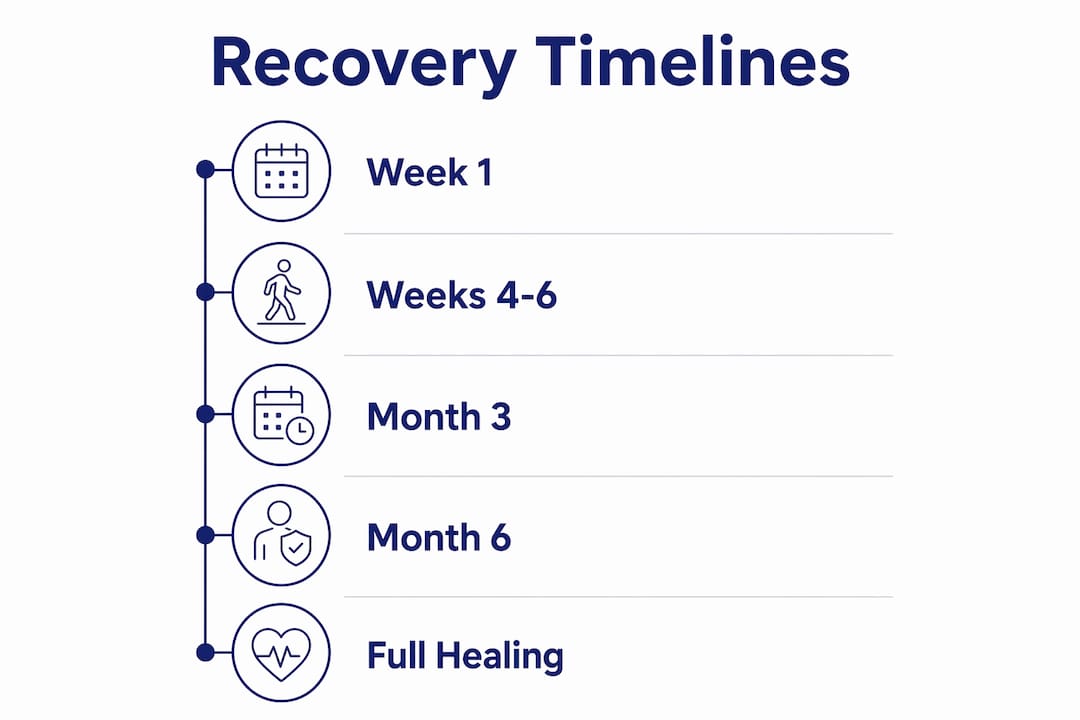
These milestones come from clinical tracking of stem cell therapy outcomes across functional metrics. They represent durable gains, not temporary relief.
Progress during recovery is not always linear. Many patients feel a noticeable improvement early, then experience minor aches as the tissue transitions from the inflammatory to the proliferative phase. This is normal. Minor discomfort during phase transitions signals active tissue bridging, not a complication. We often see patients worry unnecessarily during this window, when in fact their body is doing exactly what it should.
Functional improvement follows a similar arc. Patients typically regain meaningful mobility and strength well before the remodeling phase completes. Gradual, progressive loading during this period is not optional. It is what shapes the new tissue into something durable and functional. Passive rest during recovery actually slows the process.
For athletes specifically, regenerative therapy speeds recovery in ways that translate directly to return-to-sport timelines. Light activity is often possible within days of treatment. Full return to competitive sport typically falls in the 2–4 month range depending on injury severity.
How to optimize regenerative medicine recovery and minimize downtime
The treatment itself is only part of the equation. What you do in the weeks following a regenerative procedure determines how much of that biological potential you actually realize.
1. Avoid NSAIDs and ice for the first 72 hours. This is the most commonly violated rule in regenerative recovery. NSAIDs and ice inhibit the controlled inflammation that triggers your healing cascade. They block prostaglandins and platelet activation, which are the very signals your treatment is designed to amplify. Skipping ibuprofen for three days feels counterintuitive, but it protects your investment.
2. Start controlled movement early. Bed rest is not recovery. Pain-tolerated movement maintains circulation, preserves neuromuscular function, and signals the new tissue to organize properly. Your provider will give you a specific protocol, but the principle is consistent: move within your limits from day one.
3. Apply the 3/10 Rule during rehabilitation. The 3/10 Rule advises you not to exceed a pain level of 3 out of 10 during exercises, and your pain should return to baseline within 24 hours after any session. This rule prevents overload without encouraging passivity. It builds tissue capacity progressively, which is exactly what the remodeling phase requires.
4. Prioritize sleep and nutrition. Growth hormone released during deep sleep is critical for tissue repair. Protein intake of 1.8–2.4g per kilogram of body weight supports soft tissue healing. Collagen peptides combined with vitamin C have shown benefit for tendon and ligament recovery specifically.
5. Consider adjunct therapies. Blood flow restriction training allows you to build muscle strength with very low loads, which is ideal during early recovery when heavy loading is not yet appropriate. Aquatic therapy reduces joint stress while maintaining movement and cardiovascular conditioning.
Pro Tip: Keep a simple daily log of your pain levels and activity. It helps your provider adjust your protocol in real time and gives you objective evidence of progress during the weeks when subjective feelings can mislead you.
How does regenerative medicine compare with surgery regarding downtime?
The downtime difference between regenerative medicine and surgery is significant, and it is not just about the procedure itself. It is about the entire recovery arc.
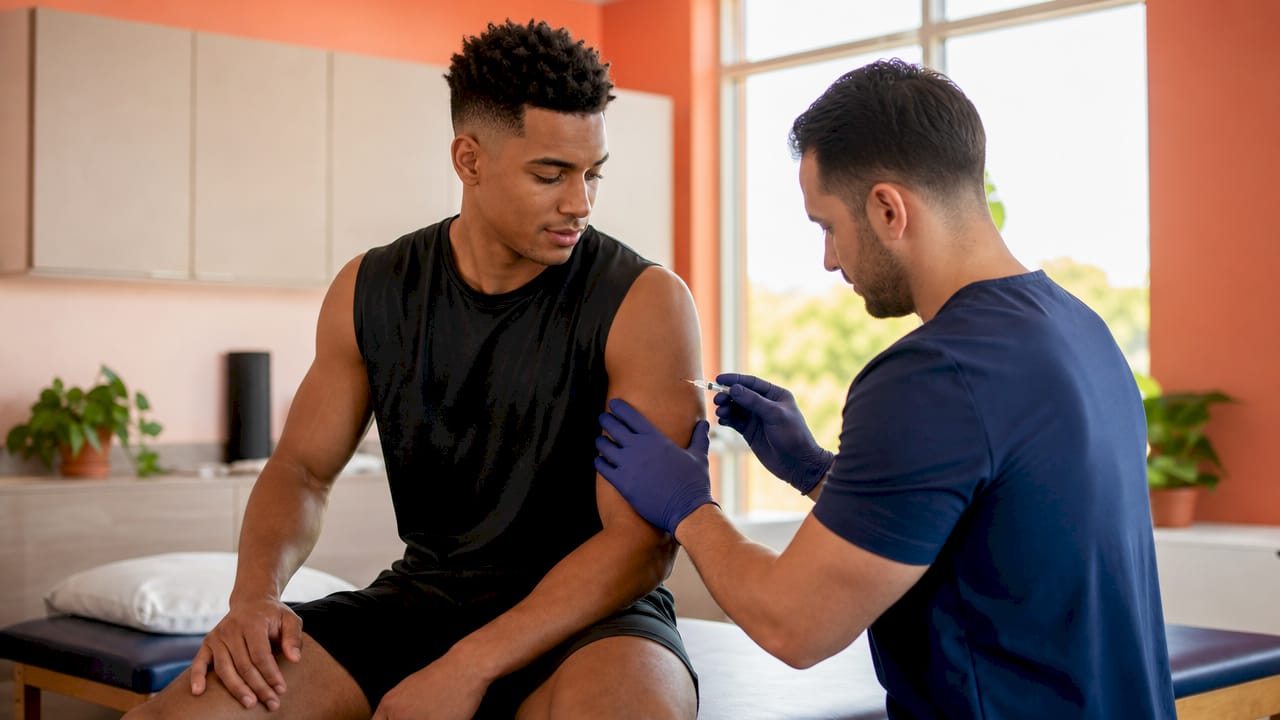
Regenerative procedures like PRP and stem cell injections are outpatient treatments. Most patients return to light activity within a few days. Full return to sport typically occurs in 2–4 months, depending on the injury. There is no general anesthesia, no surgical incision, and no hospital stay.
Surgical recovery for comparable musculoskeletal injuries often requires 6–12 months before full return to competitive activity. Post-surgical rehabilitation is longer, more structured, and carries risks including infection, nerve damage, and hardware complications. For many athletes, that timeline is not just inconvenient. It is career-altering.
Regenerative medicine also serves as a bridge to improve joint environment before surgery, or as a post-surgical adjunct that accelerates healing and reduces total recovery time. This is an important nuance. The choice is not always regenerative versus surgical. In many cases, the two approaches work together, with regenerative therapies reducing inflammation and improving tissue quality before or after a procedure.
PRP can reduce healing time by up to 30% in some surgical contexts. That figure matters when you are calculating how quickly you can return to training.
Patient suitability does influence the decision. Severe structural damage, complete ligament tears, or advanced joint degeneration may require surgery regardless of regenerative options. What regenerative medicine offers is a meaningful opportunity to delay or avoid surgery for a significant portion of patients, particularly those with early-to-moderate degeneration or soft tissue injuries. Knowing when to consider regenerative treatment is a conversation worth having before committing to an operating room.
Key takeaways
Regenerative medicine reduces downtime by accelerating the body’s natural repair cascade through targeted delivery of PRP and stem cells, producing organized tissue and measurable pain relief within weeks.
| Point | Details |
|---|---|
| Biological mechanism | PRP and stem cells deliver concentrated healing factors directly to the injury site, promoting organized tissue over scar formation. |
| Recovery timeline | Patients typically see 30–50% pain reduction by weeks 4–6 and 70–90% relief by six months. |
| Post-treatment protocol | Avoid NSAIDs and ice for 72 hours; use the 3/10 Rule to guide progressive loading during rehabilitation. |
| Surgery comparison | Regenerative procedures are outpatient with return to light activity in days; surgical recovery often spans 6–12 months. |
| Complementary use | Regenerative therapies can work alongside surgery to shorten total recovery time and improve tissue quality. |
What I’ve learned about realistic expectations in regenerative recovery
One pattern I see consistently is that athletes are great at tolerating hard training but struggle with the nuance of recovery. They want a clear date when they can go full intensity again, and regenerative medicine does not always give you that. What it gives you is a faster, better-quality healing process. That is genuinely valuable, but it still requires patience.
The biggest mistake I see is patients feeling good at six weeks and immediately returning to the load levels they were at before injury. The pain is gone. The tissue is not fully remodeled. Those two things are not the same, and confusing them leads to setbacks that add months to the overall timeline.
What actually works is treating the 3/10 Rule as a non-negotiable, not a suggestion. Patients who follow it consistently tend to reach full function faster than those who push through discomfort and then need to back off. The body responds to progressive challenge. It does not respond well to being rushed.
Regenerative medicine genuinely complements an active lifestyle because it works with your biology rather than around it. The benefits of regenerative medicine are real and well-documented, but they require you to be an active participant in your own recovery. Show up for your rehabilitation, protect the early healing window, and trust the process even when progress feels slow. The tissue remodeling happening beneath the surface is doing more than you can feel.
— Felix
Nortextissueregeneration treatments for faster recovery
Nortextissueregeneration offers PRP therapy and stem cell treatments designed specifically for active patients who need to get back to training and competition without the downtime that surgery demands. Both therapies are outpatient, non-surgical, and built around evidence-based protocols that support each phase of tissue repair. If you are dealing with a joint injury, chronic pain, or a soft tissue condition that has not responded to rest or medication, a consultation with the Nortextissueregeneration team is a practical next step. The goal is straightforward: restore your function, reduce your pain, and give your body the biological support it needs to heal well.
FAQ
How quickly does regenerative medicine reduce pain?
Most patients experience 30–50% pain reduction within 4–6 weeks of treatment, with relief reaching 70–90% by six months. Individual results vary based on injury type and severity.
Can I exercise after a regenerative medicine treatment?
Light, pain-tolerated movement is encouraged from the early days after treatment. Follow the 3/10 Rule and avoid high-intensity loading until your provider clears you for progressive rehabilitation.
Why should I avoid ibuprofen after PRP or stem cell therapy?
NSAIDs block the prostaglandins and platelet activation that regenerative treatments depend on to trigger tissue repair. Avoiding them for at least 72 hours protects the healing cascade your treatment is designed to initiate.
Is regenerative medicine a replacement for surgery?
Not always, but it can delay or prevent surgery for many patients with early-to-moderate musculoskeletal damage. It also works as an adjunct to surgery, improving tissue quality and reducing total recovery time when used alongside surgical procedures.
How long does full tissue healing take after regenerative therapy?
Structural tissue remodeling continues for up to 12 months after treatment, even when pain resolves much earlier. Gradual progressive loading during this period shapes the new tissue and supports long-term durability.