
Maximizing treatment results means taking deliberate, evidence-based actions alongside your medical care to accelerate healing and improve long-term outcomes. For patients managing joint pain, sports injuries, or degenerative conditions, the difference between a slow recovery and a meaningful one rarely comes down to the therapy alone. Research consistently shows that what you do between appointments, how honestly you communicate with your care team, and how systematically you track your progress all shape the final result. The strategies in this article reflect what we see working in clinical practice, grounded in current research on therapeutic alliance, physical activity, and symptom monitoring.
How to maximize treatment results through patient-practitioner partnership
The single most underestimated factor in treatment success is the quality of the relationship between you and your care provider. A meta-analysis of 295 studies found that therapeutic alliance accounts for 7.5% of treatment outcome variance. Specific techniques, by comparison, account for less than 1%. That gap is significant. It means the trust, communication, and shared goals you build with your provider matter far more than which exact protocol is used.
This does not mean the treatment itself is unimportant. It means the relationship amplifies the treatment. Patients who feel heard are more likely to follow through on recommendations, report side effects early, and stay engaged when progress slows. Collaborative choice-making is the primary driver of stronger therapeutic alliances and better adherence over time.
Building that partnership takes active effort on your part. A few practices make a real difference:
- Share honest feedback at every appointment, including what is not working
- Ask your provider to explain the reasoning behind each recommendation
- Bring a written list of symptoms or concerns rather than relying on memory
- Confirm your understanding of the treatment plan before leaving each session
Pro Tip: Keep a brief note on your phone after each appointment. Write down what changed, what your provider recommended, and any questions that came up later. This makes your next session far more productive.
Treatment failure often reflects poor communication rather than therapy ineffectiveness. When patients provide real-time honest feedback, providers can adjust dosing, timing, and intensity before small problems become setbacks.
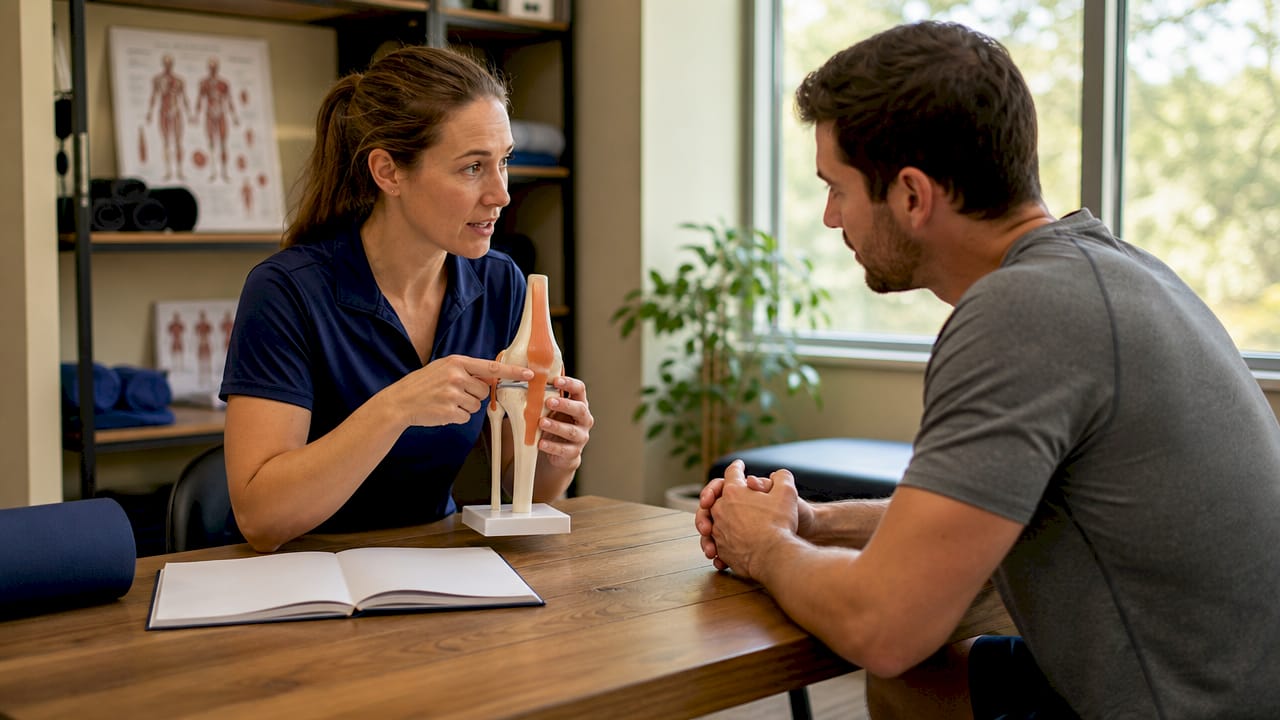
Does physical activity really help during joint injury recovery?
Complete rest is one of the most common mistakes patients make during recovery. The instinct to protect an injured joint by stopping all movement is understandable, but the evidence points in the opposite direction. Targeted resistance training even during pain prevents muscle atrophy and actively supports joint recovery. Muscle tissue surrounding a joint provides stability and reduces mechanical load on the damaged area. When that muscle weakens from inactivity, healing slows.
The goal is not to push through sharp pain. The goal is to maintain controlled, structured movement that keeps supporting tissues strong. Here is a practical framework for staying active during recovery:
- Start with range-of-motion work. Gentle, pain-free movement through the joint’s available range preserves mobility and reduces stiffness. This is the foundation before any loading begins.
- Add resistance training 3–5 days per week. Resistance training at this frequency preserves lean tissue and supports recovery during intensive tissue therapies. Bodyweight exercises, resistance bands, or light weights all qualify.
- Pair exercise with adequate protein intake. Regular resistance training combined with high-protein intake prevents muscle loss and facilitates tissue repair. Aim for protein at each meal, not just post-workout.
- Track body composition, not just body weight. The scale does not distinguish between fat loss and muscle loss. DEXA scans every 8–12 weeks provide a more reliable picture of whether your recovery is preserving lean tissue.
- Adjust intensity based on daily feedback. Some days will feel harder than others. Reducing load on high-pain days is not failure. It is smart pacing.
Pro Tip: If you are unsure which exercises are safe for your specific injury, ask your provider for a referral to a physical therapist who can build a program around your current limitations. A few guided sessions are worth far more than months of guessing.
Learning how to heal tissue damage effectively requires understanding that movement is medicine when applied correctly.
What is the best way to track symptoms during treatment?
Systematic symptom tracking is one of the most practical ways to improve treatment outcomes, yet most patients skip it entirely. Memory is unreliable. Pain levels, sleep quality, and mobility tend to blur together over weeks, making it hard to tell whether a treatment is working or not. Daily logs remove that ambiguity.
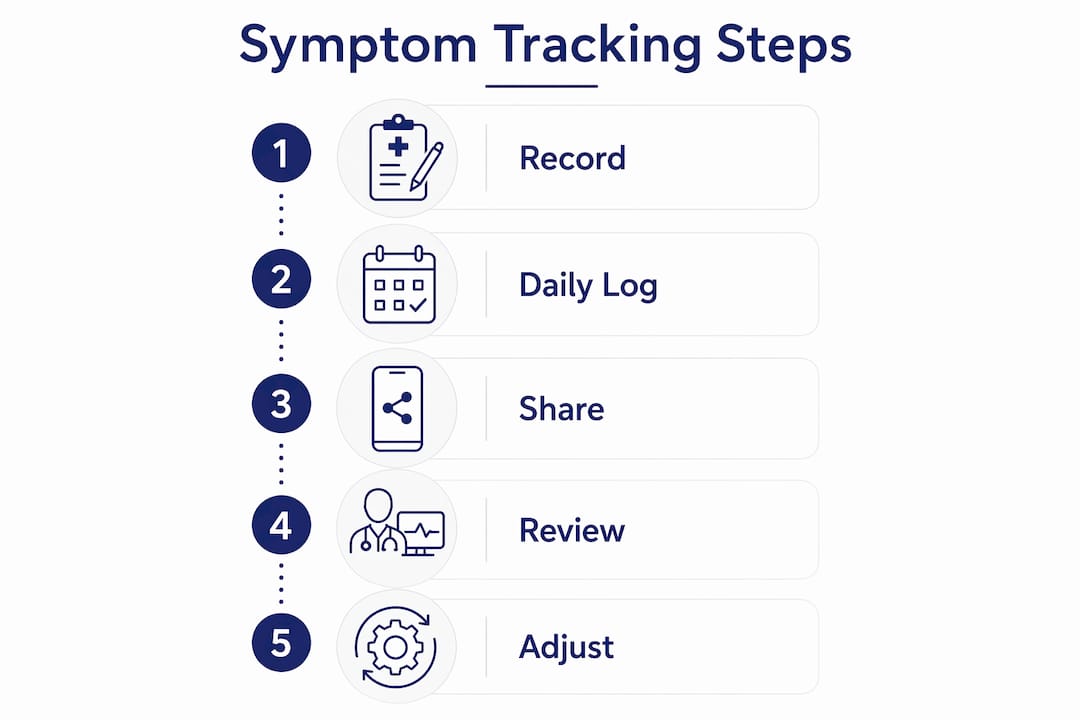
The evidence for structured monitoring is strong. AI-assisted symptom tracking reduces hospital stays by 14% and mortality by 3.6 percentage points compared to standard care. The mechanism is straightforward: early detection of changes allows providers to intervene before problems escalate. You do not need an AI platform to benefit from this principle. A simple daily log captures the same signal.
Effective symptom tracking covers these areas:
- Pain level: Rate on a 0–10 scale at the same time each day, ideally morning and evening
- Mobility: Note which movements feel restricted or improved compared to the previous day
- Sleep quality: Poor sleep slows tissue repair and amplifies pain perception
- Energy and mood: Both are reliable early indicators of whether treatment is helping or causing strain
- Side effects: Any new symptoms, even minor ones, should be recorded with the date and time
| Tracking method | Best for | Limitation |
|---|---|---|
| Paper journal | Low-tech, always accessible | Hard to spot trends over time |
| Smartphone notes app | Quick daily entries | Requires manual review |
| Dedicated health apps | Trend visualization, reminders | Requires consistent use |
| Wearable devices | Passive data like sleep and heart rate | Does not capture subjective pain |
Outcomes depend heavily on patient daily symptom logs more than session time alone. Bring your log to every appointment. It gives your provider objective data to work with instead of impressions.
Why staged recovery produces better long-term results
Starting intensive treatment too early is a pattern we see regularly. A patient comes in with significant joint pain, wants fast relief, and pushes for the most aggressive intervention available. The instinct is understandable. The result is often increased distress, poor tolerance, and dropout before the treatment has a chance to work.
Progressive staged treatment approaches reduce patient distress and dropout while improving overall treatment efficiency. The logic is simple: the body and mind need a foundation before they can absorb intensive intervention. Skipping that foundation does not speed things up. It usually slows them down.
A well-structured recovery moves through clear phases:
- Foundation phase. Stabilize pain, reduce acute inflammation, and establish basic movement patterns. This phase builds the physical and psychological readiness for deeper treatment.
- Engagement phase. Introduce targeted therapies such as PRP or stem cell treatment once baseline function is established. The body responds better when it is not in a state of acute stress.
- Consolidation phase. Reinforce gains through continued exercise, nutrition, and monitoring. This is where evidence-based regenerative treatments deliver their full benefit.
- Maintenance phase. Sustain results through long-term habits. Recovery does not end when pain resolves. Protecting the repaired tissue requires ongoing attention.
Patients who actively choose their treatment pace report feeling more understood and engage better with care. Collaborative decision-making about when to advance to the next phase is not just good communication. It is a clinical tool that directly improves outcomes.
Psychological flexibility, meaning the ability to stay engaged with your recovery even when progress feels slow or uncomfortable, is a consistent predictor of sustained results. Patients who can tolerate temporary discomfort without abandoning their plan tend to reach better endpoints than those who stop and restart repeatedly.
Key Takeaways
Maximizing treatment results requires active patient participation, consistent symptom tracking, structured physical activity, and a staged approach to care that builds readiness before intensive intervention.
| Point | Details |
|---|---|
| Therapeutic alliance drives outcomes | The patient-provider relationship accounts for 7.5% of outcome variance, far more than specific techniques. |
| Movement supports healing | Resistance training 3–5 days per week preserves lean tissue and prevents the muscle loss that slows joint recovery. |
| Daily tracking improves care | Systematic symptom logs give providers objective data to refine treatment before small problems become setbacks. |
| Staged recovery reduces dropout | Building a foundation before intensive therapy reduces distress and improves long-term treatment efficiency. |
| Honest communication is a clinical tool | Real-time feedback on symptoms and side effects enables providers to adjust treatment for better results. |
What I have learned from watching patients recover
I have seen patients come in after months of rest, convinced that protecting the joint meant not using it. The muscle loss they accumulated during that time made their recovery significantly harder than it needed to be. Movement, done carefully and consistently, is not a risk. It is part of the treatment.
The patients who do best are not necessarily the ones with the least severe injuries. They are the ones who show up prepared, track what is happening between appointments, and tell us honestly when something is not working. That feedback loop is where real progress happens. A provider can only adjust what they know about.
One pattern I find worth naming directly: many patients set an internal deadline for recovery and then lose confidence when they pass it. Recovery from joint injury or tissue damage rarely follows a straight line. Incremental progress is still progress. Staying engaged through a plateau, rather than abandoning the plan, is often what separates a full recovery from a partial one. The work you do outside the clinic matters as much as what happens inside it.
— Felix
Regenerative therapies that work with your recovery effort
Nortextissueregeneration offers non-surgical treatments designed to work alongside the habits described in this article, not replace them. Stem cell therapy, PRP therapy, and bone marrow cell therapy each support the body’s natural repair process by delivering concentrated biologic signals directly to damaged tissue. These treatments are most effective when patients arrive with a stable foundation, maintain physical activity during recovery, and track their response closely. If you are managing chronic joint pain, a sports injury, or a degenerative condition and want to understand which therapy fits your situation, the Nortextissueregeneration clinical team can help you build a plan that matches your current stage of recovery.
FAQ
How does therapeutic alliance affect treatment outcomes?
Therapeutic alliance accounts for 7.5% of outcome variance, which is seven times more than the specific treatment technique used. Patients who trust their provider and communicate openly tend to adhere better and respond more consistently to care.
Is exercise safe when recovering from a joint injury?
Targeted resistance training is not only safe during recovery but actively supports it. Complete rest leads to muscle atrophy, which reduces joint stability and slows healing.
What should I track during treatment?
Track pain level, mobility, sleep quality, energy, and any side effects on a daily basis. Bringing this log to appointments gives your provider objective data to refine your treatment plan.
When is the right time to start intensive regenerative therapy?
Intensive therapies like PRP or stem cell treatment work best after a foundation phase that stabilizes pain and restores basic movement. Starting too early increases the risk of poor tolerance and dropout.
How do I know if my treatment plan is working?
Progress in joint recovery is often gradual. Consistent improvement in daily function, reduced pain frequency, and better sleep are reliable indicators. If none of these improve over several weeks, discuss adjustments with your provider rather than stopping treatment entirely.